
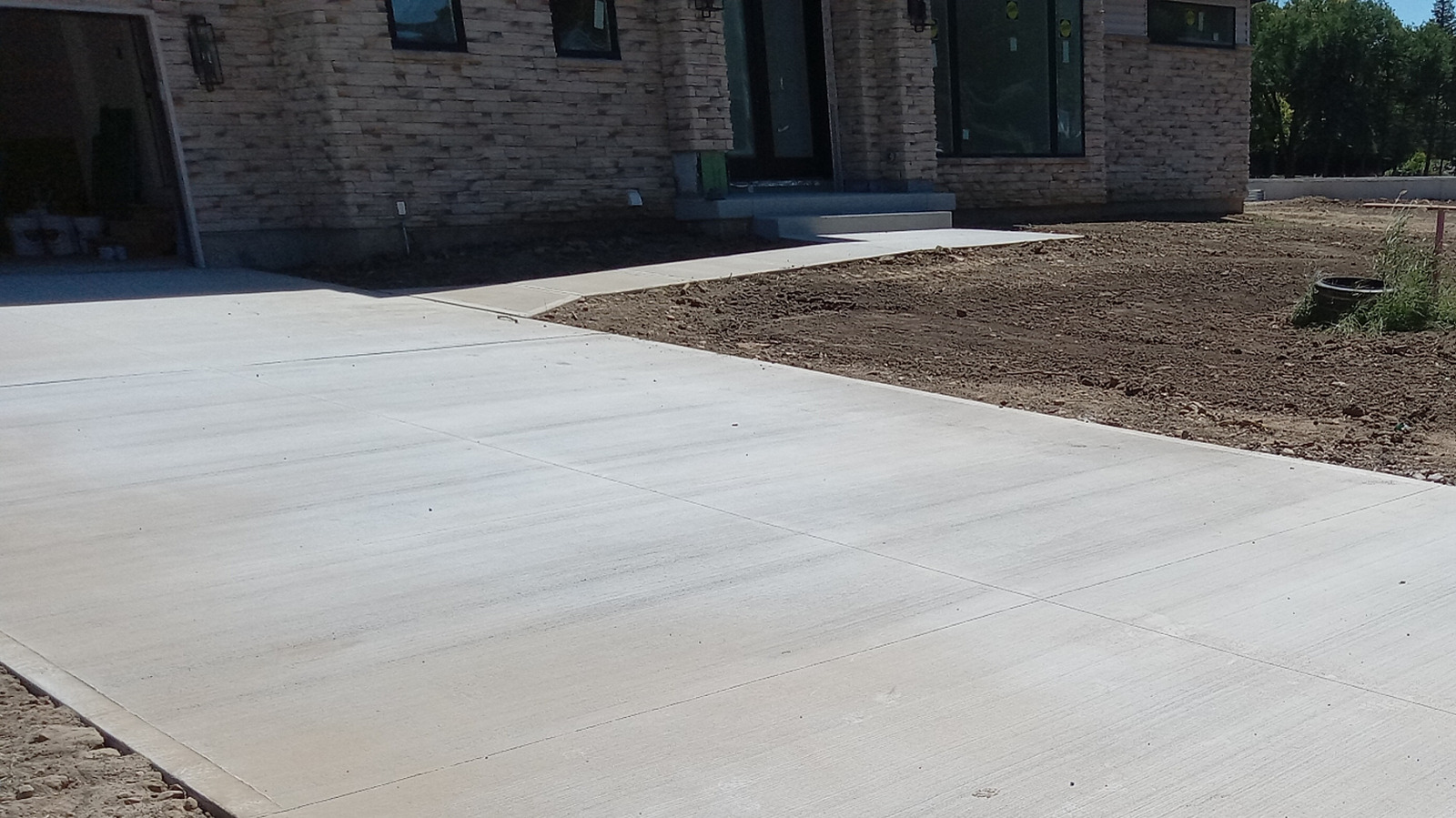
Concrete driveways mostly break down into two clear choices: a single poured slab or a surface made from individual pavers. Both are known for strength, but they behave differently over time and under different conditions. This piece walks through what to expect from each option so you can decide what fits your property and budget.
Poured concrete gives you a smooth, monolithic surface that feels solid underfoot and under tires. It resists shifting because it is one continuous piece, which can be a big advantage on level ground. That stability is why poured concrete is often chosen for long, straight drives and for homeowners who want a clean, simple look.
Pavers, on the other hand, are individual units set into a prepared base, and that modular nature is both their strength and their trick. When a single unit cracks or sinks, you can lift and replace it without ripping up the whole driveway. That repairability makes pavers appealing when freeze and thaw cycles or tree roots are a worry, because you can address small problems locally before they spread.
Longevity is where the debate usually heats up. Poured concrete, when mixed and poured properly and protected from freeze-thaw stress, often gives decades of service with minimal intervention. But poor grading, subbase failure, or hairline cracking that expands can become a headache and require patching or resurfacing. A well-installed slab is tough, but mistakes during installation show up later and can be expensive to fix.
Pavers wear differently: because they are set on a flexible base, they can cope with movement better than a rigid slab. That means in some climates pavers will look better longer because they avoid the large, obvious cracks that plague concrete slabs. Still, the joints can settle, sand can wash out, and weeds or ants can create cosmetic issues that need occasional attention.
Maintenance and repair costs tilt the decision. Routine maintenance for a poured slab is usually simple cleaning, sealing every few years, and addressing cracks as they appear. For pavers, maintenance includes replenishing joint sand, occasional re-leveling, and keeping the surface clean to prevent staining. Over a 20-year period, either option can be cost-effective, depending on installation quality and local conditions.
Climate and soil matter more than most homeowners expect. In areas with expansive clay or where frost heave is common, a flexible paver system often outperforms a rigid slab because it tolerates movement instead of cracking. Conversely, in stable soils and dry climates, a poured slab can be the lower-maintenance, longer-lasting choice. Assessing local soil and weather patterns before choosing will save money and frustration down the road.
Aesthetics and customization play into the choice too. Pouring concrete gives a sleek, uniform appearance and allows for stamping, staining, or exposed aggregate finishes for visual interest. Pavers offer a wide palette of colors, shapes, and patterns and make it easy to create a custom look with borders and designs. If curb appeal is a priority, both systems can be made attractive but in different ways.
Installation quality is the single biggest factor that determines which option lasts longer. A poured slab with a shallow subbase or improperly controlled joints is likely to fail earlier than a well-prepared paver installation. Likewise, sloppy paver subbase work or poor edge restraints will undermine a paver driveway fast. Choosing experienced contractors and confirming proper site prep, drainage, and materials matters more than the label poured versus paver.
Budget, long-term plans, and tolerance for maintenance should guide the decision. If you want a set-it-and-forget-it surface and your ground is stable, a poured slab is often the pragmatic pick. If you expect movement, want easier repairs, or prefer a textured look, pavers are worth the investment. Either way, focusing on proper preparation and installation will deliver the best return on your driveway dollars.
