
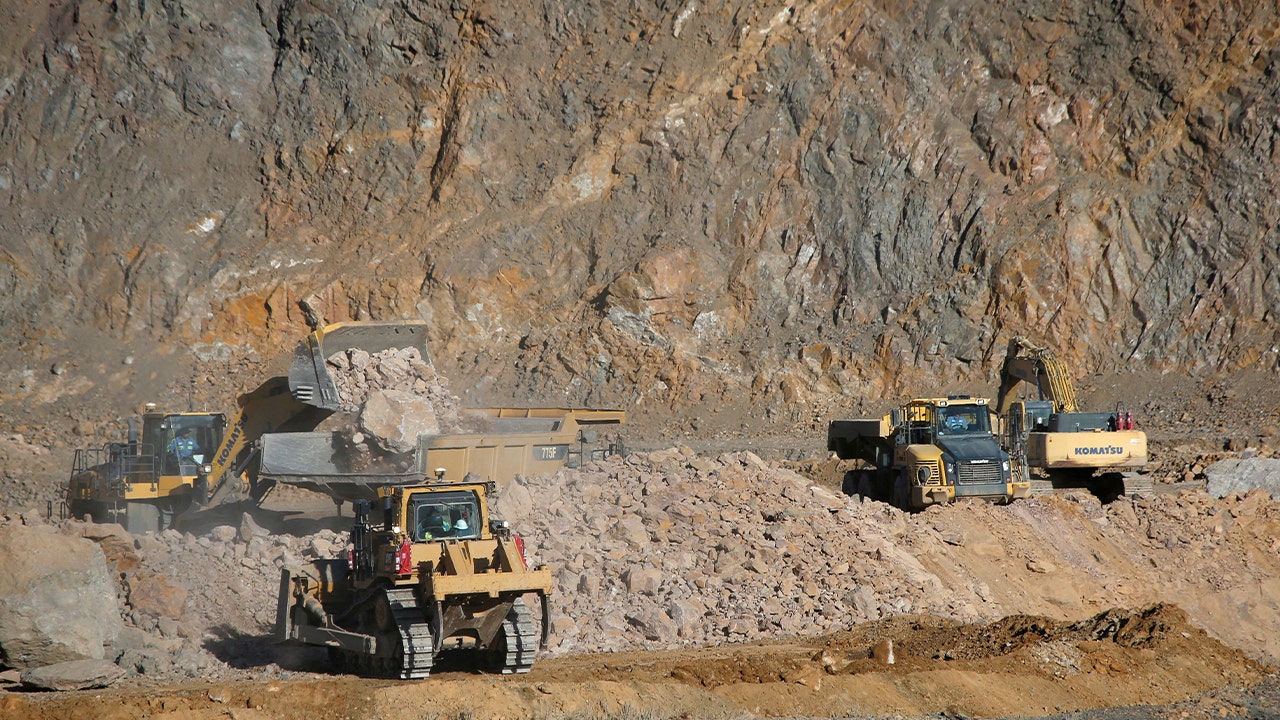
China’s control over heavy rare earths has quietly reshaped global industry and national security, and its export moves are not temporary bargaining chips but a deliberate strategy to keep the highest-value stages of the supply chain at home. This article explains why those tiny elements matter, how Beijing is redirecting value toward finished goods, and why Western leaders must stop assuming access to raw materials will continue. It also outlines the economic logic that drives China’s decisions and the urgent choices facing the United States and Europe.
If you drive a hybrid or an EV, fly on a modern jet, or expect precise weapons to function, you rely on heavy rare earths. For more than a decade China has been the dominant supplier of these elements, and last year it tightened exports in a way that should be deeply concerning. Those moves look less like temporary pressure and more like the next phase of a long-term industrial plan.
China is not treating export controls as a bargaining chip. It is deliberately moving the mine-to-magnet-to-factory chain inside its borders so the high-value steps stay Chinese. That means Western companies get finished products built with dysprosium and terbium, not the raw oxides that let them make their own magnets and motors.
Keeping the entire chain at home makes basic economic sense for Beijing. A kilogram of dysprosium sold as powder brings a few hundred dollars and touches a handful of jobs. The same kilogram, embedded inside an electric motor in a $40,000 car made in China, becomes part of a product that supports millions of workers and entire industrial ecosystems.
THE CCP CONTROLS THE MOST INTIMATE ELEMENTS OF OUR LIFE. MOST AMERICANS HAVE NO IDEA
This is not accidental. The Communist Party’s priorities include maximizing employment and minimizing unrest, and capturing high-value manufacturing delivers both. Denying Western militaries access to critical inputs in a crisis would be a convenient strategic bonus, even if the official rationale centers on economic development and security.
Market signals underline the shift. Dysprosium oxide sells for a fraction of what it fetches abroad, and terbium shows the same pattern. Beijing has quietly prioritized its own factories by restricting some sales, a behavior consistent with resource hoarding rather than open export policy. Those price spreads are not random; they reflect a deliberate allocation of scarce materials to domestic industry.
TEXAS RARE-EARTH PROJECT AIMS TO CURB US RELIANCE ON CHINA, STRENGTHEN NATIONAL SECURITY
China’s heavy rare earth deposits are not infinite, and its richest sources have been running down for years. To fill the gap, the country has relied on imports from places like Myanmar, but those supplies are unstable and shrinking. Every kilogram Beijing keeps at home comes from a pool that is getting smaller.
The chemistry matters in real-world terms. Tiny amounts of dysprosium or terbium in permanent magnets let them withstand heat and retain strength, which is essential for EV motors, jet systems, and modern weapons. Strip those elements out or lose access to them and performance drops or systems fail outright.
This is not about sudden weaponization of trade; it is about cold economic logic. Licensing rules, export suspensions, and preferential allocations add up to a steady turning of the screws. Beijing is lowering the raw-export tap while cranking up production of finished goods that embed the rare elements.
President Donald Trump recognizes the direction of travel and pushed to build domestic mine-to-manufacturer chains, including early Pentagon investments in critical materials. Those moves are a start, but Europe and the United States need faster, bolder action to create reliable alternatives. Assuming permits or temporary access will preserve supply is wishful thinking backed by poor economics.
The Pentagon’s decision to ban Chinese magnets in American weapons systems by 2027 and the recent surge of mine and magnet projects are not protectionism in the narrow sense; they are emergency measures to preserve a critical supply chain. The real question is whether the West can scale up mining, refining, and magnet production quickly enough to matter.
Time is the scarce resource now. Building resilient supply chains requires sustained investment, clearer industrial policy, and tough choices about where to site facilities and how to underwrite initial costs. If Western leaders keep waiting for China to reopen its markets, they will discover too late that the opening was never coming. The stakes are industrial strength, economic security, and national defense, and action has to match that urgency.
