
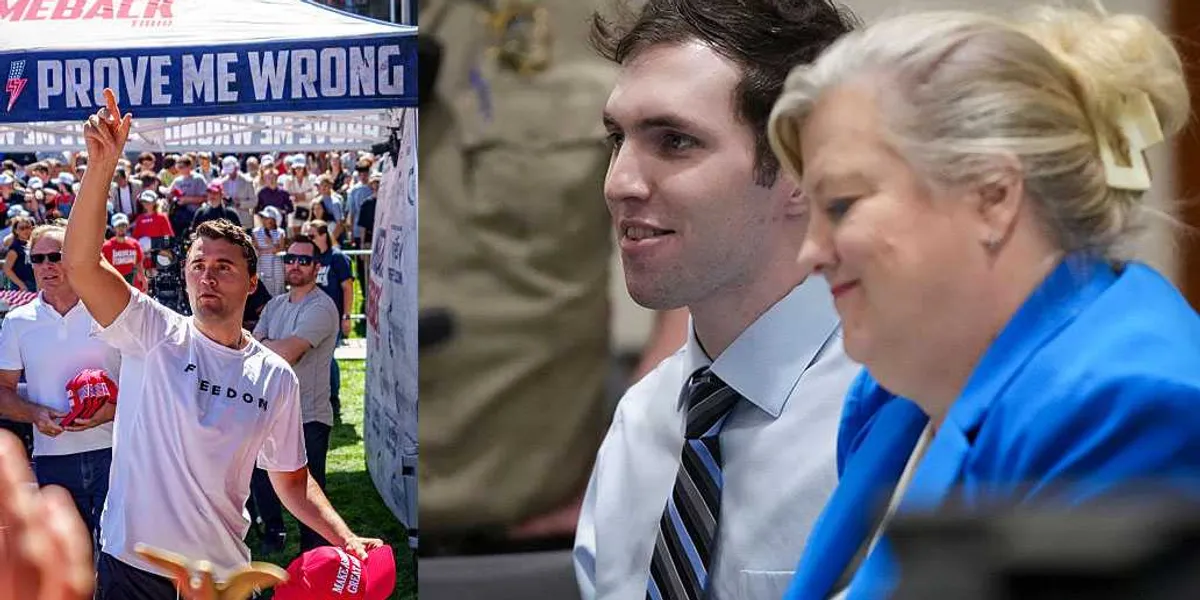
Charlie Kirk was killed during a crowded event at Utah Valley University, and authorities have built a case that ties a single suspect to the shooting through forensic evidence, surveillance, witness accounts, and a trail of text messages; prosecutors opened a preliminary hearing this week aiming to prove the elements needed for trial and to justify the most serious penalties while the defense raises doubts about identification and handling of key items.
The shooting on Sept. 10 left a political movement reeling and a community demanding answers. Within days, a 23-year-old, Tyler Robinson, turned himself in, and law enforcement moved quickly to charge him with aggravated murder and related counts. This is about accountability and ensuring justice for a killed father and for public safety at political events.
Prosecutors say physical evidence links Robinson to the scene, including DNA findings on items tied to the attack and spent rounds recovered near the shooter’s position. FBI testimony quoted how DNA on a screwdriver was “positively processed for the suspect in custody.” That kind of lab work is what convinces juries when the chain of custody and methods are solid.
Witness video and officer testimony helped map the shooter’s path on the roof and the drop to ground level afterward. A former local officer described finding a makeshift firing position and a shoe print in the grass consistent with someone running along the rooftop edge. Those small details add up in a case where proving who pulled the trigger matters more than the politics around the victim.
Courtroom scenes also exposed questions about evidence handling. One defense attorney pressed on an empty pistol holster found after the crowd fled, and an officer admitted uncertainty about whether that item was fingerprinted. The same officer acknowledged limits in his body camera footage and said, “I think my battery died. I don’t know.”
Investigators say a bolt-action rifle, wrapped in a towel, was recovered with DNA matching the suspect on the weapon, a spent round, and unspent ammunition found nearby. Prosecutors plan to show video from a witness and a recorded statement from a romantic partner that allegedly includes messages the suspect sent admitting the act and expressing motive: “I had enough of his hatred.”
The defense is flagging identification issues and the possibility of mistakes in evidence control, signaling the classic strategy of sowing reasonable doubt. But the preliminary hearing is about whether there is probable cause to send the case forward, not about final guilt. From a law-and-order stance, judges and juries will need to weigh forensic science against those credibility fights.
Testimony from a former state investigator outlined the initial probe and the pieces prosecutors will put before the judge, including the witness video that was played at the hearing but not released publicly. The court heard how surveillance footage tracked movement on and off the rooftop and how investigators tied physical traces back to the suspect. That sequence is what turns a chaotic crime scene into an accountable narrative.
Family members, political allies, and the public are watching the process closely for signs that justice will be swift and thorough. In cases with such public attention, preserving the integrity of the investigation matters as much as the charges themselves. Republican readers will likely focus on the need for firm consequences when a political figure is targeted and killed while exercising free speech.
As the preliminary hearing continues, prosecutors aim to present a compact, evidence-driven case to move forward to trial, while the defense looks for gaps to exploit. The courtroom will test whether the collected forensic, video, and testimonial elements create the legal bridge from suspicion to a jury trial, and whether the state can meet its heavy burden in a case with life-or-death stakes.

