
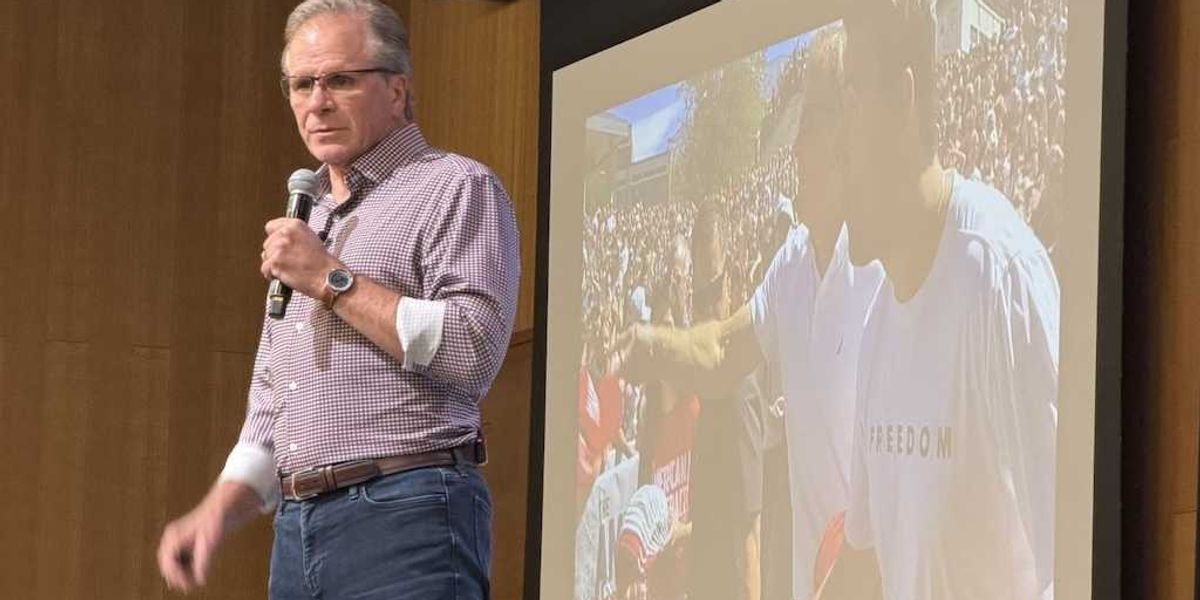
Frank Turek’s response to Charlie Kirk’s death pushed a hard question into the open: where was God in the middle of that loss? For many believers, that kind of moment is where tidy answers fall apart and raw faith has to do the heavy lifting. The conversation quickly moved beyond one tragedy and into the old, unsettling problem of suffering, evil, and what Christians really mean when they say God is present.
Turek’s framing landed because it did not dodge grief or hide behind polished language. Instead, it forced the deeper issue into view: if God is good, why do violent and senseless things happen at all? That question has haunted philosophers, skeptics, and ordinary people for centuries, and it does not get easier just because the setting is modern or the loss is public.
For Christians, the answer is not usually a neat formula but a claim about who God is and how the world works. Scripture never pretends evil is fake, and it does not treat suffering like a minor inconvenience. The Bible is full of laments, fear, betrayal, and injustice, which is part of why believers often point to Jesus Christ as the clearest response to pain rather than a quick escape from it.
That matters because many people assume faith should wipe away questions, when in reality it often sharpens them. Saint Paul wrote in a world where death, persecution, and chaos were not abstract ideas, and yet he kept pushing the message that hope could survive inside deep suffering. That kind of confidence does not come from ignoring evil, but from insisting evil does not get the final word.
Atheism usually presses the issue from the other side, arguing that if terrible things happen, then God either lacks power or lacks goodness. It is a fair challenge on the surface, and it is one of the oldest arguments in philosophy. But the Christian response is that human freedom, moral evil, and a fallen world all matter, and a universe with real love also carries the risk of real damage.
That is where the conversation around evil gets uncomfortable in a useful way. If people want a world with meaningful choices, then they are also asking for a world where cruelty is possible. The problem is not solved by slogans, and it is not softened by pretending every tragedy is part of some easy plan that can be explained in a sentence.
The harder Christian claim is that God can be near without being obvious. That can sound frustrating, especially in the hours after shock or loss, but it fits the shape of the New Testament, where suffering is not denied and rescue is not always immediate. The cross itself stands as the strangest symbol in the faith because it links pain, injustice, and redemption in the same place.
That is why conversations like this keep returning to the same pressure point. People do not just want an argument about theology, they want to know whether faith still makes sense when the world turns brutal. Frank Turek’s question hit that nerve because it reminds people that Christianity is not built for calm Sundays only, but for the moments when grief is loud and certainty feels thin.
Even then, the answer does not come wrapped in easy comfort. It comes with the stubborn insistence that evil is real, human beings matter, and God has not vanished just because pain is visible. That is a demanding message, but it is also the one that keeps showing up whenever believers try to speak honestly about loss, hope, and the strange endurance of faith.
