
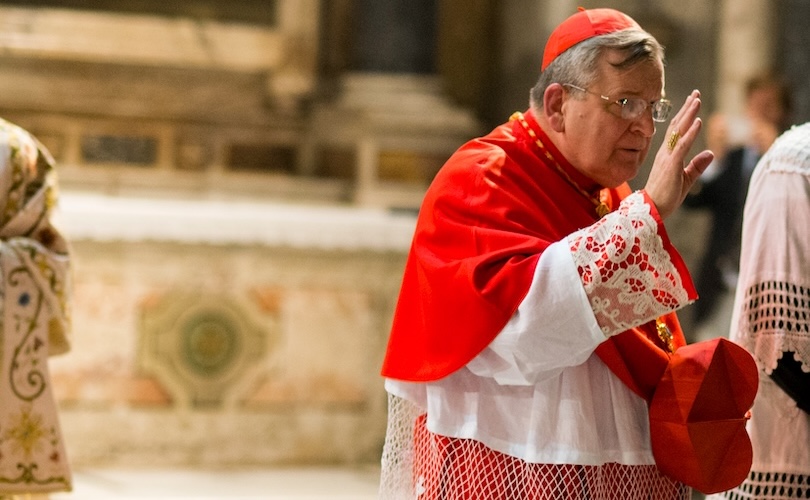
Cardinal Raymond Burke is making a very blunt case against the Vatican’s synodality push, saying the whole project needs to be stopped, examined closely, and pulled back into line with the Church’s real mission. In his telling, the problem is not just style or structure. It cuts straight to doctrine, authority, and whether the Church is staying faithful to what it has always taught.
Burke welcomed the fact that Pope Leo XIV brought the cardinals together again, saying the meeting gave them a chance to talk more freely and actually get to know one another. That part, he said, was a real benefit after years without that kind of gathering. Still, he argued that the consistory’s setup quickly became too managed and too constrained to get at the tough questions.
He said cardinals were told the meeting had to be shaped by synodality, which in practice meant small-group discussions built around preset questions. That arrangement, he argued, kept the conversation from digging deep and left important concerns floating on the surface. In his view, the final session, when the cardinals could speak more openly before the Pope, was the only part that really felt useful.
Burke’s bigger objection is even sharper: he says synodality has no clear definition and no real history in the Church. That alone makes him suspicious, because a major shift in Church life should not be built on a concept that is still blurry and undefined. He also warned that talk of a “paradigm shift” sounds more like worldly management language than Catholic teaching.
For Burke, the Church cannot simply mirror current trends and call it renewal. He said the Church may speak to the world, but it cannot reshape itself into the world’s image. His point was straightforward and forceful, the Church is not a movable invention that gets redone every decade.
His criticism turned especially intense when he spoke about Study Group 9’s report on doctrine and morals. Burke said the report’s handling of the “homosexual condition” challenges what the Church has always taught about sexual morality. He also blasted the way the report described the Courage apostolate, saying the claims made about it were simply not true.
That issue, for Burke, is not minor clerical squabbling. He argued that if a report is going to be distributed across the Church, it should be checked carefully first, especially when it makes serious allegations about people and ministries. In his view, sloppy reporting of that kind can distort the truth and mislead the faithful.
He then shifted to a broader warning about moral confusion in the Church. Burke said the truth is rooted in the nature of things and their proper ends, not in shifting desires, impulses, or personal projects. Once that anchor is lost, he argued, people start trying to reshape teaching around what they already want to hear.
Burke also said the fallout is already visible in the wider hierarchy. He warned that bishops and archbishops are using these discussions to suggest that Church teaching is changing on LGBT issues, even when it is not. That kind of message, he said, creates false confidence and pushes people further away from clear doctrine.
He called the plan to send the study groups’ suggestions out to dioceses “iniquitous,” saying it should not happen at all. In his view, the process needs to be stopped, fully studied, and reoriented so it stays faithful to Catholic teaching and the holiness of the Church’s life. He was not talking about a minor adjustment, but a serious course correction.
Burke also made time for another issue that has stirred deep frustration among traditional Catholics, the Traditional Latin Mass. He described Traditionis Custodes as a persecution of the older form of the Roman Rite and said the vetus ordo is an enduring good in the Church. He argued that faithful who are nourished by it should be allowed to worship freely, without pressure or punishment.
He said the Church has ignored too many urgent internal problems while focusing too much on vague “wounds of the world.” The SSPX crisis, tensions in Germany, and questions surrounding the Latin Mass all got pushed aside, while the real concerns of faithful Catholics were left hanging. Burke said a consistory should be a place for plain advice to the Pope, not a scripted exercise in consensus.
Even with all of that criticism, Burke did not sound defeated. He said he believes Christ will protect the Church, but Catholics still have a duty to speak plainly when something is off track. For him, that means refusing to go along with a model of synodality he sees as fundamentally flawed and trusting that the Church stays safe only when it stays close to its head, Our Lord himself.
