
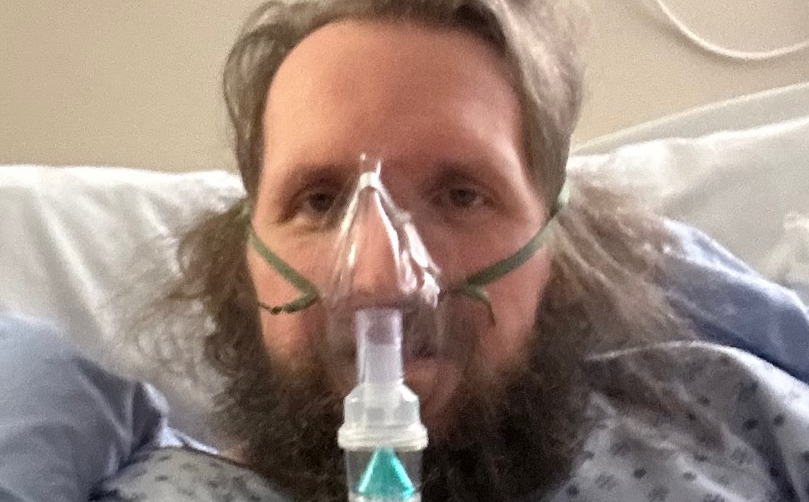
Roger Foley’s case has become a hard-edged warning about what happens when vulnerable patients are left to battle a system that should be protecting them. A disability advocate says the Canadian hospital where Foley has lived for years is denying the basic care he needs, while a private caregiver network is scrambling to keep him alive and push for a way home.
Lino DeFacendis, who founded Life Care Network, says Foley has been in a hospital in London, Ontario, for roughly a decade and remains trapped there despite wanting to leave. Foley lives with a degenerative brain disease, endures constant pain, and relies on outside help because the hospital setting has not met his needs.
DeFacendis did not soften his view of the situation. He said the hospital is, in effect, “trying to kill him” by withholding “his basic care,” a claim that reflects just how bitter this fight has become.
Foley’s condition is serious and complicated. He has Spinocerebellar Ataxia Type 14, a rare progressive neurological disorder, and he also struggles with severe photosensitivity, which makes fluorescent lighting especially brutal for him.
That is why the lighting issue matters so much. Foley has used amber-wavelength room lighting to see more comfortably, and he has said the hospital “abruptly and callously removed the specialized lighting accommodations that I had relied on for years.”
“These accommodations were medically necessary due to my severe neurological photosensitivity and visual disability,” Foley said. That kind of detail sounds small from the outside, but for someone trying to survive in a hospital bed every day, it can be the difference between enduring and breaking down.
DeFacendis says the private support workers he has been able to arrange have been essential. They help with nutrition, medications, and the daily pushback needed to make sure Foley is not simply ignored by hospital staff.
One caregiver, who comes in a few times a week, has become the linchpin of Foley’s day-to-day survival. DeFacendis called her a “guardian angel,” and said that without her, Foley would likely be dead.
The hospital pressure goes beyond ordinary neglect, according to Foley and DeFacendis. They say staff have repeatedly brought up Medical Assistance in Dying, even while the support Foley needs to live safely has been hard to secure.
Foley has said hospital staff have “repeatedly offered and pressured me to consider Canada’s infamous assisted suicide program Medical Assistance in Dying (MAiD) while simultaneously obstructing the very basic services and supports I need to live safely.” He also said, “Despite my condition, I have fought tirelessly for my rights, dignity, and the ability to return to the community.”
That fight is not just about medical care, either. It is also about whether a disabled man gets to make real choices about where and how he lives, or whether the system quietly corners him until surrender looks like the only exit.
DeFacendis says Foley has no close family to lean on, which makes the situation even more precarious. He also says Foley is afraid to leave because government-funded care is limited and private care would be hard to sustain without stronger financial support.
To help cover those costs, a GoFundMe campaign has been launched to pay for personal support workers and related care expenses. DeFacendis says the money is meant to give Foley a fighting chance to receive proper support and eventually return home.
In April, Foley received sacraments, including Extreme Unction, from a traditional Catholic priest. For supporters, that moment underscored how desperate the situation had become and how much spiritual care mattered alongside the physical fight.
Life Care Network describes itself as a referral service that helps people find personal support workers who care for seniors with dignity in their own homes. DeFacendis says the bigger mission is about preserving independence, quality of life, and the right to be cared for without being pushed toward death.
He has also shared a long-term homecare planning guide aimed at helping families prepare before crisis hits. The idea is simple enough, but the stakes are enormous: plan ahead, keep options open, and make sure people are not trapped when their health gets worse.
For Foley, every day still hinges on whether the people around him keep showing up and whether the system finally stops working against him. DeFacendis says prayers are welcome, and supporters continue to rally around a man who, against the odds, is still insisting on life, dignity, and the chance to leave the hospital behind.
