
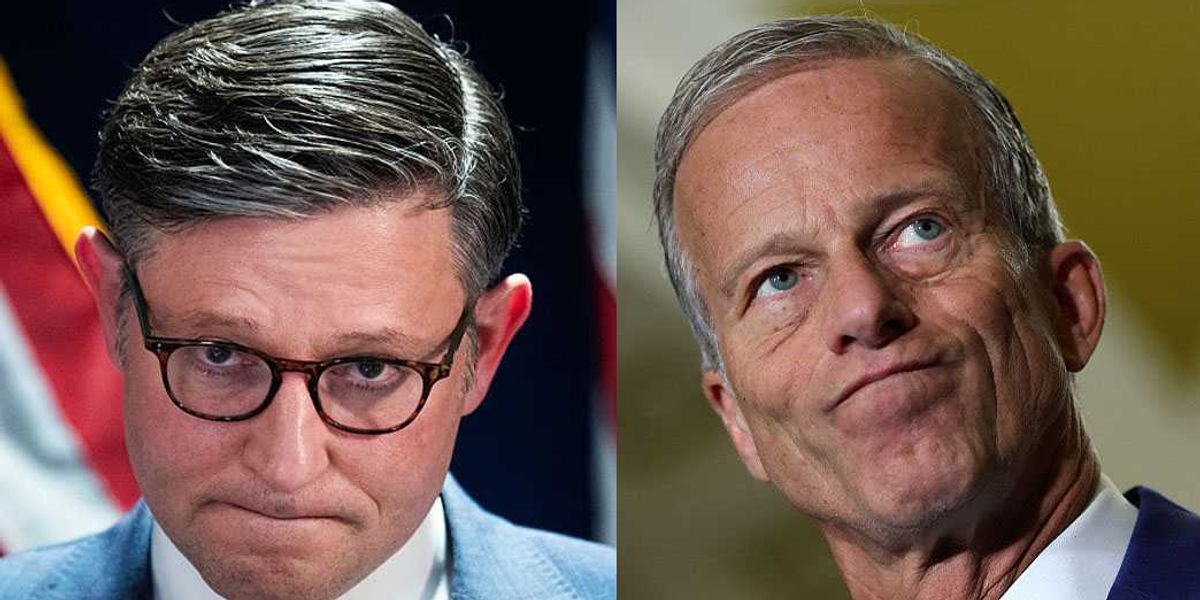
House Republicans are tying the SAVE Act to a must-pass funding bill, and that move is putting the spotlight on Senate leaders who now have to decide how far they want to push the fight. The strategy raises the stakes around voter verification, border-style enforcement of election rules, and the long-running clash over whether Washington is serious about election security.
Supporters of the SAVE Act argue that proof of citizenship should not be a controversial ask when it comes to voting. They see the bill as a straightforward way to tighten the system, cut down on fraud concerns, and make sure the rules are clear before ballots are cast.
That is exactly why Republicans in the House are comfortable linking it to a funding package. If the measure is attached to legislation the government needs anyway, it becomes much harder for opponents to quietly brush it aside.
But the real pressure point is the Senate, where John Thune and his team are the ones who have to navigate what comes next. The House can send a message, but the Senate has to decide whether to keep the SAVE Act alive, strip it out, or force a bigger confrontation over the whole funding fight.
For GOP leaders, this is more than a procedural stunt. It is a test of whether Republicans will use the leverage they have to press for voter ID standards and stronger election safeguards, or whether the moment slips away once the deal-making starts.
Mike Johnson has already shown he is willing to make election integrity a front-burner issue, and that matters because the House is where the message gets sharpened. By attaching the SAVE Act to funding, Republicans are betting that the public will side with a common-sense approach rather than the usual Capitol Hill warnings about political inconvenience.
Anna Paulina Luna and other conservatives have been vocal about the need to protect elections from abuse, and they are unlikely to treat this as just another legislative trade. Their view is simple: if lawmakers can demand strict ID for all kinds of everyday life, there is no reason the ballot box should be treated like a free-for-all.
The broader debate also reaches into the Pentagon and the NDAA conversation, where Congress is juggling several high-stakes priorities at once. That creates even more room for negotiation, since leadership has to balance funding the government, handling defense matters, and deciding how much election-related policy to bundle into the process.
Democrats are expected to resist, of course, because they routinely frame voter integrity measures as barriers rather than safeguards. Republicans are pushing the opposite idea, arguing that confidence in elections depends on rules that are firm, simple, and easy to defend in plain English.
The upside for GOP leaders is obvious. If they can hold the line, they can show voters they are willing to fight for basic protections instead of settling for the usual talk-and-delay routine that leaves big issues hanging.
The downside is just as real, because once the SAVE Act is inside a funding bill, every Senate move becomes a public test of resolve. That means Thune, Johnson, and their allies are now operating in a high-pressure lane where one decision can shape how seriously Republicans are seen on election security for a long time to come.

1 Comment
Damn DC Swamp Games