
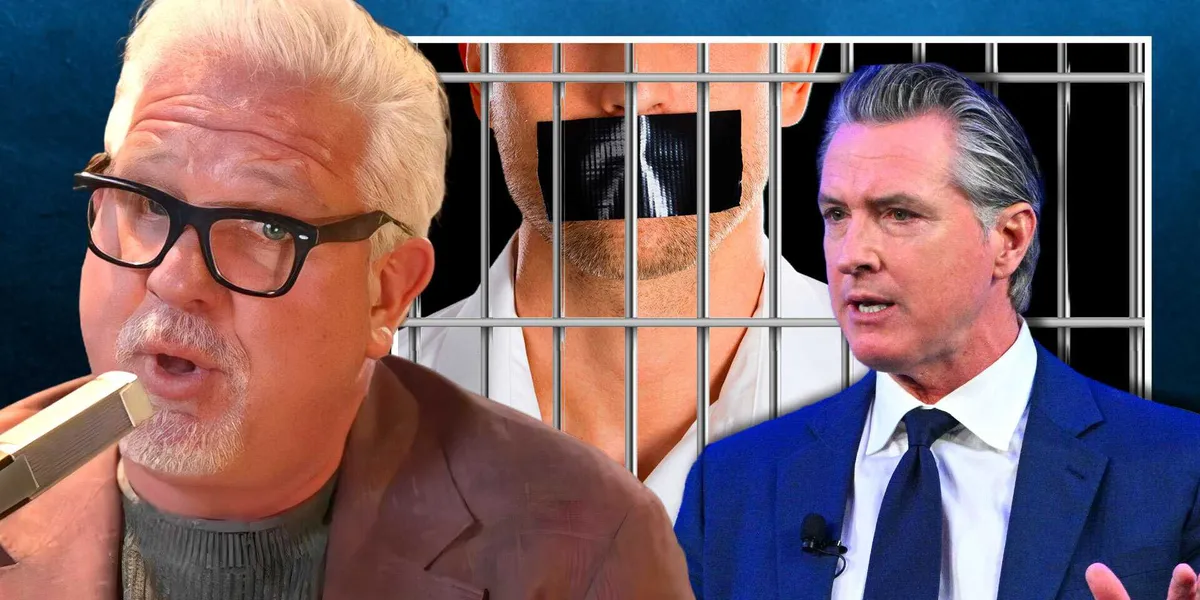
Glenn Beck warns that California leaders are treating election skepticism as a threat instead of answering the questions people raise, arguing new rules could silence observers and hand the state control over how ballots are handled and explained.
Beck says the mood in California is troubling and that political leaders are avoiding real fixes while dismissing reasonable concerns. “What’s happening in California is dangerous, and … if you can be reasonable and you can listen without the lens of your tribe, there is a way to an answer here. But nobody seems, especially on the left, nobody seems to want to actually fix the problem,” Glenn says. That impatience fuels distrust, and trust is the currency of any election system.
The reaction from Sacramento has been to tighten the rules around election oversight, and that shift worries those who value transparency. “And so what do they want to do? They want to shut you up,” he adds, explaining that Governor Gavin Newsom signed a bill that “said fines and jail time [for] three years if you are interfering with the election.” Critics say penalties can chill citizens and volunteers who show up to keep the counting honest.
There is a line between stopping theft and blocking scrutiny, and the language matters. “This particular penalty is aimed at people who physically walk off with boxes of ballots,” Glenn explains. “Listen to the language around it.” But when laws are broad or enforcement is selective, ordinary people can be pushed out of the room that matters most: the counting room.
Beck points to a striking example of how tone and direction come from the top. “The governor wrote a letter telling his officials to ‘count fast’ so the ‘election lies’ don’t take hold. Stop and think about that for a second. Wait a minute. The chief executive of the largest state in the union has appointed himself the man who decides which doubts are lies,” he says. When speed becomes the priority, verification can be shortchanged.
He also describes how procedural changes can quietly erode checks without ever invoking a grand conspiracy. “And in the same season, his allies pass a provision that tells election observers they may no longer challenge the signatures on the ballot they’re watching get counted. So, they didn’t criminalize your doubt. They did something quieter,” he continues. “They turned down the lights in the room where the counting happens. And you’re told it’s a conspiracy theory to ask, ‘Why did it get so dark?’” That metaphor captures how oversight can be throttled without dramatic headlines.
At the heart of Beck’s critique is a basic principle about power and evidence. “You cannot let the accused run the evidence room,” he says. Allowing the agency under scrutiny to control the handling and review of ballots creates a conflict that undercuts public confidence, and confidence is what keeps elections accepted and stable.
He frames the issue as more than partisan posturing, arguing it affects everyone who cares about liberty and fair play. “You’re accusing California of having fraud, and what do they do? They say, ‘No, we’re in charge.’ Right? You’re the one that everybody’s saying is causing the fraud, and they’re saying, ‘No, you can’t question because there’s no fraud,’” he continues. “That doesn’t help anything.” The clash isn’t solved by louder denials; it’s solved by open, verifiable processes.
Beck ends by reminding listeners that the argument isn’t just about politics but about preserving a free society. “This is not a conservative idea or a liberal idea. It’s just how you keep a free people free,” he adds. The takeaway is straightforward: protect the room where votes are counted, let observers do their job, and treat transparency as the default, not the exception.
