
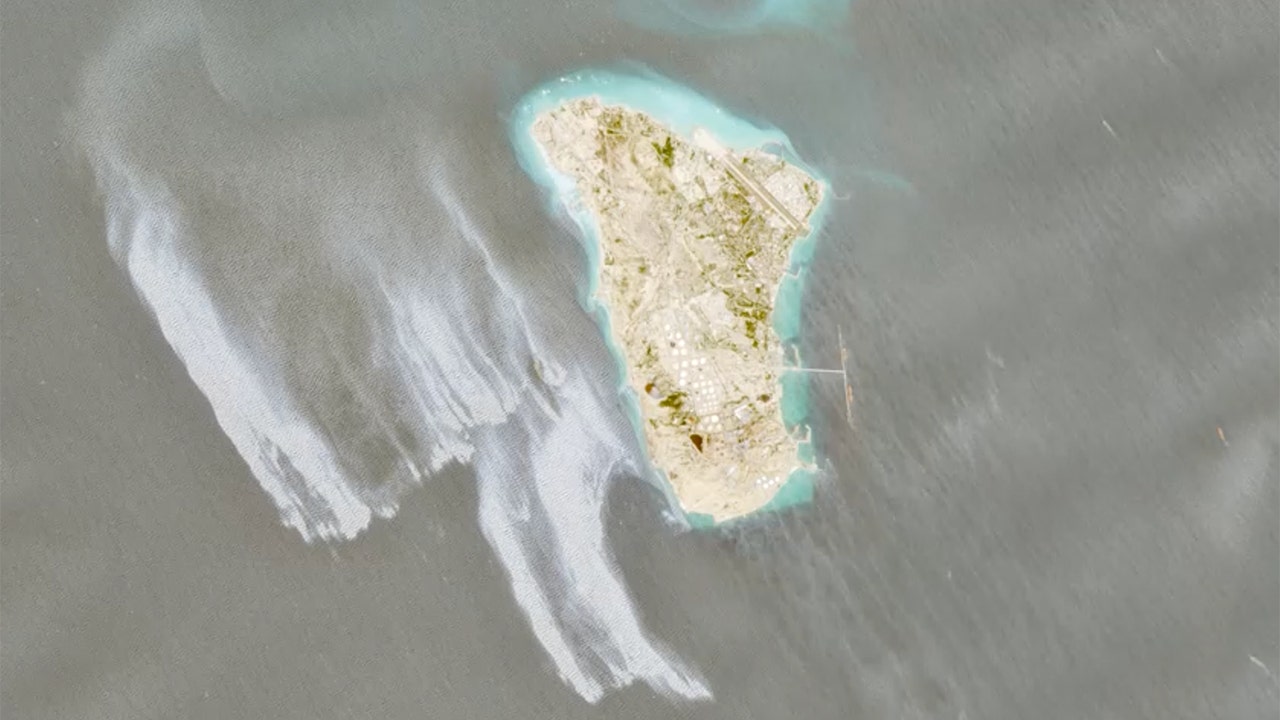
Kharg Island sits at the center of a serious conversation about American leverage in the Gulf: it handles most of Iran’s oil exports, sits under the Iranian Revolutionary Guard Corps, and has been both softened by strikes and watched closely by U.S. forces. This piece lays out why that matters, how the U.S. could seize and hold the island if ordered, and which forces and systems would carry the day. Expect plain talk about power, risk, and the real strategic payoff of controlling the flow of Iranian crude.
Kharg Island is not just another dot on the map; it is Iran’s export hub. It handles roughly 90 percent of Iran’s oil shipments and can load and store massive quantities of crude. Controlling those terminals would be a blunt, unmistakable lever against Tehran if Washington chose to use it.
President Trump has been explicit about options. “Maybe we take Kharg Island, maybe we don’t. We have a lot of options,” President Donald Trump told the Financial Times back on March 29. That kind of public bluntness is part of a toolbox: sometimes the threat itself can change a regime’s calculations without a single shot being fired.
The Pentagon has already shown it can hit targets on Kharg while trying to preserve oil infrastructure. U.S. forces carried out “a large-scale precision strike” and “destroyed naval mine storage facilities, missile storage bunkers, and multiple other military sites. U.S. forces successfully struck more than 90 Iranian military targets on Kharg Island, while preserving the oil infrastructure,” U.S. Central Command stated. Those strikes, plus continuous surveillance, make any ground action far less wild than it would have been months ago.
From a military standpoint, the current force posture in the region gives the United States real options. Amphibious units, airborne brigades, and carrier-capable airpower are positioned to fly troops in by helicopter and tiltrotor, seize objectives, and turn Kharg into a forward rearming and refueling point. That concept is straightforward: get in fast, set defenses, and make the island an asset rather than an enemy foothold.
Special Operations units would almost certainly lead the initial phase. The playbook would rely on precision, speed, and coordinated space and cyber effects to limit Iranian command and control. The comparison to past high-tempo raids is apt: the aim is to be surgical, overwhelming, and decisive while minimizing damage to the island’s civilian energy infrastructure.
Holding Kharg wouldn’t require a huge army. Control of the air and sea approaches by the Air Force and Navy, layered counter-drone systems, and a handful of well-placed defenders can make the island defensible. The real advantage comes from U.S. superiority in maritime and air surveillance, which forces any adversary to operate at a disadvantage.
Think of Kharg the way we think about strategic forward bases: hard to take back if you control the approaches and have layered defenses. U.S. commanders have had time to refine plans, coordinate logistics, and buttress defenses. That preparation matters; it’s the reason a tough, limited operation can avoid becoming a grinding occupation.
On the hardware side, a handful of systems would be most consequential. AH-64E Apache helicopters bring close-in firepower and sensors for maritime work. MV-22 Ospreys move Marines and gear fast. F-35B jump jets provide stealthy support and bunker-busting precision. Arleigh-Burke destroyers hold sea lanes and provide layered missile defense. And modern counter-drone suites, from interceptors to electronic warfare, blunt the asymmetric threats Iran favors.
No operation is risk-free, and planners would brief any commander in chief on casualty projections and escalation pathways. Still, under a blanket of U.S. air, space, and maritime control, the task is within reach. If leadership wants the leverage that comes from pinching Iran’s oil lifeline, Kharg is a clear, concrete option the American military can execute.
