
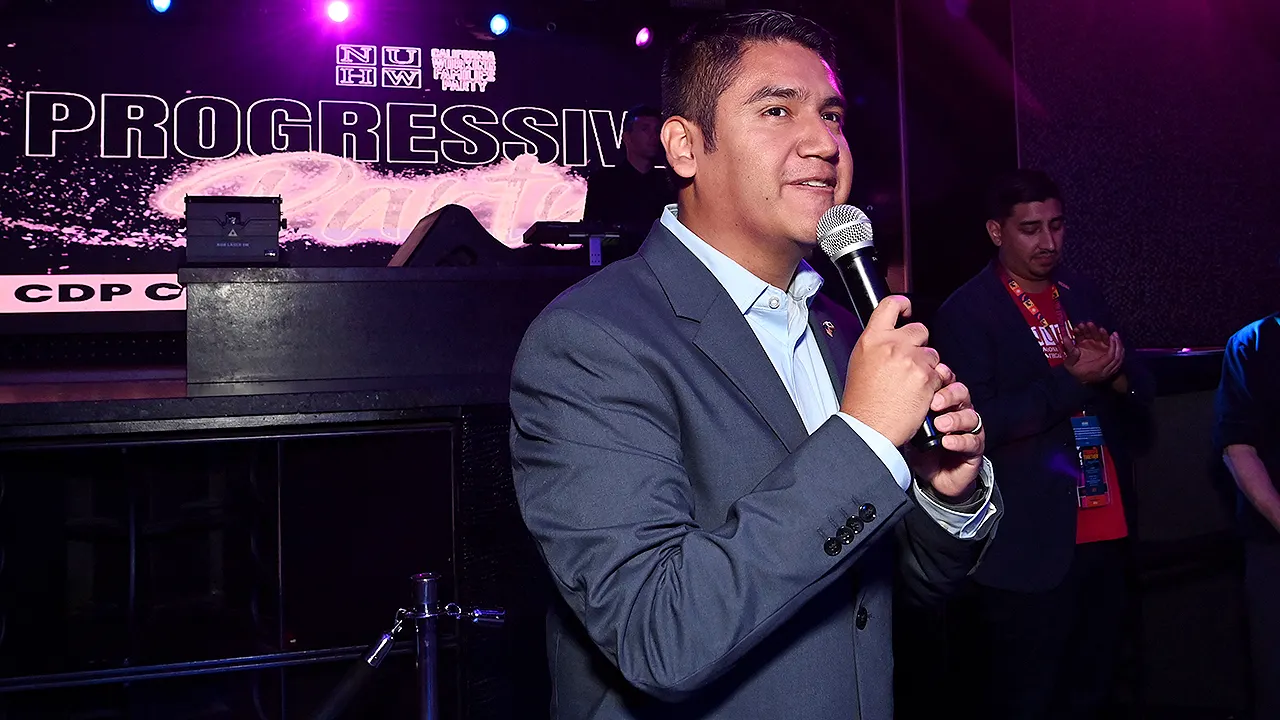
Bernie Sanders-backed Randy Villegas is under scrutiny as he runs for Congress in California’s 22nd District, where the race against Rep. David Valadao is already shaping up as one of the most important fights in the Central Valley. His own writings and academic work show a deep comfort with DEI language, activist politics, and the idea that classrooms should reach far beyond standard teaching.
Villegas, a political science professor at College of the Sequoias and a Visalia school board trustee, has presented himself as an educator with a mission. But his paper from 2022 makes the pitch much more political than that, arguing that diversity, equity and inclusion should sit at the center of community college teaching and calling it a “social justice-driven duty.”
The paper, published by the American Political Science Association, framed community colleges as open-access institutions that should respond to students’ lives, communities, and struggles. Villegas wrote that “At the heart of community college teaching is diversity, equity, and inclusion, and culturally responsive teaching,” and tied that view to a broader commitment to accessibility and social justice.
That approach did not stop at classroom theory. Villegas and his co-authors wrote that inclusion should extend into the neighborhoods where students live, with course design shaped by students’ “social and economic realities,” a line that makes the philosophy sound less like instruction and more like political mission work.
His dissertation pushed the same message even harder. In “Voices from the Valley of Vulnerability,” written at the University of California, Santa Cruz, Villegas described himself as a “former community organizer and scholar activist” and argued that activism can strengthen research instead of compromising it.
He also brushed aside the usual concerns about bias, suggesting that personal experience can sharpen scholarship rather than weaken it. Citing another academic who argued that researchers’ “biases can actually be assets,” Villegas made the case that being personally invested does not have to stand in the way of producing credible work.
The dissertation also laid out a record of hands-on activism. Villegas wrote about organizing May Day demonstrations, protesting outside an immigrant detention center, and working with community groups on far-left causes, all while describing schools as too often “anti-political” and praising activist organizations for turning young people into “agents of change.”
That idea moved from paper to practice through the Central Valley Freedom Summer program, which Villegas helped lead in 2018. The project connected students with community groups for voter outreach, civic engagement, and grassroots organizing, while focusing on issues such as LGBTQ rights, immigration, environmental justice, and racial inequality.
Some of the groups tied to that effort went even further. Jakara Movement, one of the organizations involved, later launched a campaign to remove a Mahatma Gandhi statue, citing what it called his “history of anti-Blackness and racism,” while other offshoots grew into youth-led activist networks with a strong identity-politics bent.
Villegas is now trying to translate that background into electoral strength in a district Republicans want to keep and Democrats see as ripe for an upset. The seat is considered a toss-up by nonpartisan analysts, which means every part of his record is going to get dragged into the spotlight, especially in a race where voters are already wary of nationalized talking points and ideological labels.
Republicans have seized on that tension, arguing that Villegas represents the activist wing of the Democratic Party rather than a pragmatic voice for the Valley. They see his academic language, campus politics, and organizing ties as proof that he is more interested in pushing a movement than solving the everyday problems facing families in the district.
Villegas and his campaign, meanwhile, have leaned into their own criticism of Valadao, accusing the incumbent of siding with policies that hurt working families. The clash now sits at the crossroads of local frustration, national politics, and a larger fight over what kind of leadership Central Valley voters want in Washington.
