
- Protests outside the White House during Xi’s state dinner
- Human rights concerns raised by Tibetan, Uyghur, and pro-democracy groups
- Chants and symbolism that cut through the official event
- High-level dinner guests and the broader diplomatic backdrop
- Pressure on China over political prisoners and repression
- The state visit’s tense atmosphere around trade and power politics
Inside the polished glow of a White House state dinner, the mood outside was anything but quiet. Protesters gathered in Lafayette Park and made sure their voices carried, turning a formal diplomatic night into a loud reminder that China’s leader arrived with serious baggage. The chants, the signs, and the symbolism all landed hard, and they did not fade into the background.
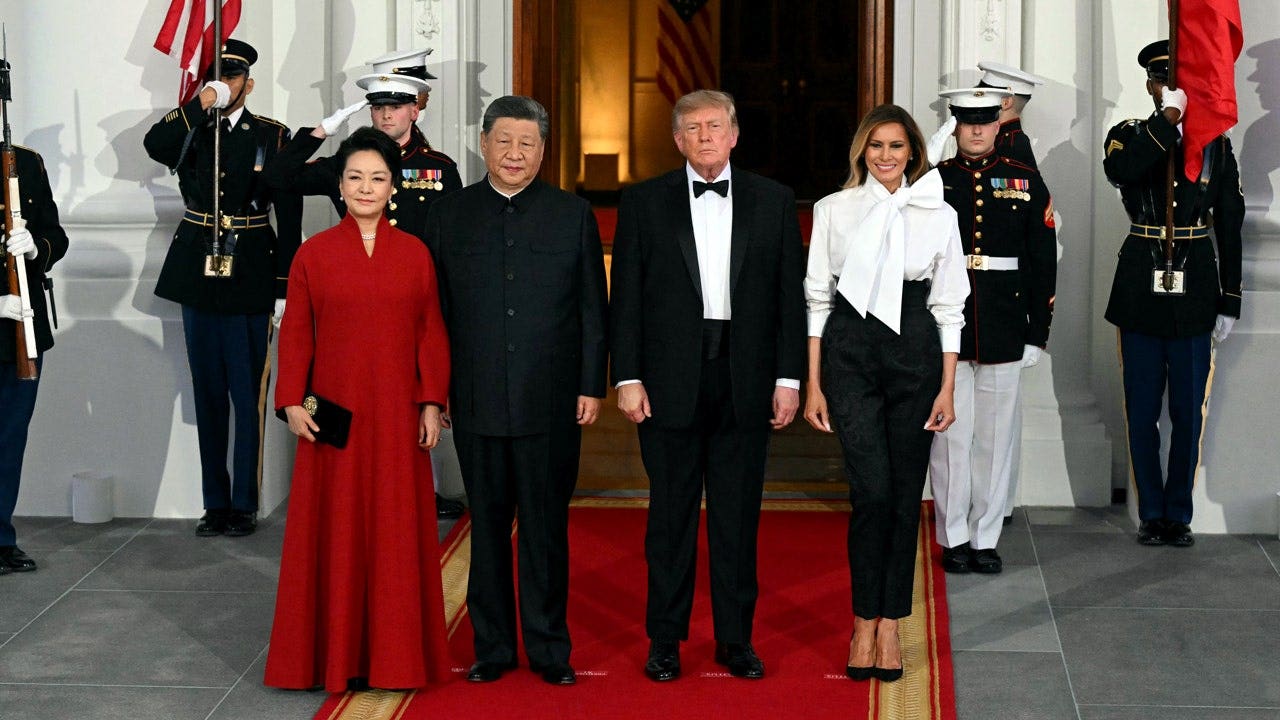
As President Donald Trump and first lady Melania Trump welcomed Chinese President Xi Jinping and his wife, Peng Liyuan, the demonstration kept pressing against the edges of the evening. “Free Hong Kong,” “Xi Jinping, you’re not welcome” and “Freedom for political prisoners” rang out across the lawn and over the music, at times cutting through the ceremony itself. The scene gave the night a jolt of tension that no amount of White House polish could soften.
The groups behind the protest were not there for a photo op. Tibetan, Uyghur, Hong Kong democracy, Chinese pro-democracy and Falun Gong activists all came together to spotlight what they describe as harsh repression by the Chinese government. Their message was blunt: a state dinner should not wash away allegations of abuse, censorship, detention and political intimidation.
The chants were audible before the Marine Corps band started up and remained noticeable even after the performance was underway. That kind of persistence mattered, because it kept the focus on the confrontation rather than the ceremony. In moments like that, a formal dinner becomes part diplomacy, part public pressure campaign, and part live protest stage.
Some demonstrators leaned into symbolism with a knowing edge. Trump has previously used a nickname tied to the Winnie-the-Pooh meme when talking about Xi, and protesters outside the White House played that joke back by dressing as the cartoon bear. It was the kind of visual that sticks, especially at an event meant to project calm and control.
The guest list inside the dinner room was stacked with power and influence. Alongside the two presidents and their spouses were major tech figures such as Jensen Huang, Mark Zuckerberg, Lisa Su, Tim Cook, Sam Altman, Elon Musk, Jeff Bezos, Satya Nadella, Sundar Pichai and TikTok chief Shou Zi Chew. That mix of business leaders and political heavyweights made the evening look less like a social dinner and more like a snapshot of the global power map.
The agenda between Washington and Beijing was never likely to stay light. Issues around artificial intelligence, intellectual property theft, trade practices and rare-earth minerals sit near the center of the relationship, and the talks are being watched closely. Even with the spotlight on protocol, the real argument is about leverage, control and what each side expects the other to give up.
Outside, the protest also carried a more personal edge around the issue of political prisoners. Many demonstrators called for releases, and House Speaker Mike Johnson has also pushed for the freedom of Dr. Gulshan Abbas. Abbas, a retired Uyghur doctor, disappeared from her home in China in 2018 and was later sentenced to 20 years in prison on terrorism-related charges her family says were made up.
That story hung over the gathering with real weight. It gave the protest a face, a name and a reminder that the fight over China’s treatment of dissidents is not some abstract policy debate. It is about families, disappearances, prison terms and a government that critics say uses fear as a tool of control.
The White House dinner itself was billed as a major diplomatic moment, but the sound from Lafayette Park made it impossible to pretend the issues had gone away. Christopher Macchio was set to perform, military musicians were part of the evening, and the guest list was full of power players, yet the protests kept forcing their way into the story. By the time the night wound down, the atmosphere around the building still carried the tension of a visit that was never going to be just another elegant dinner.
