
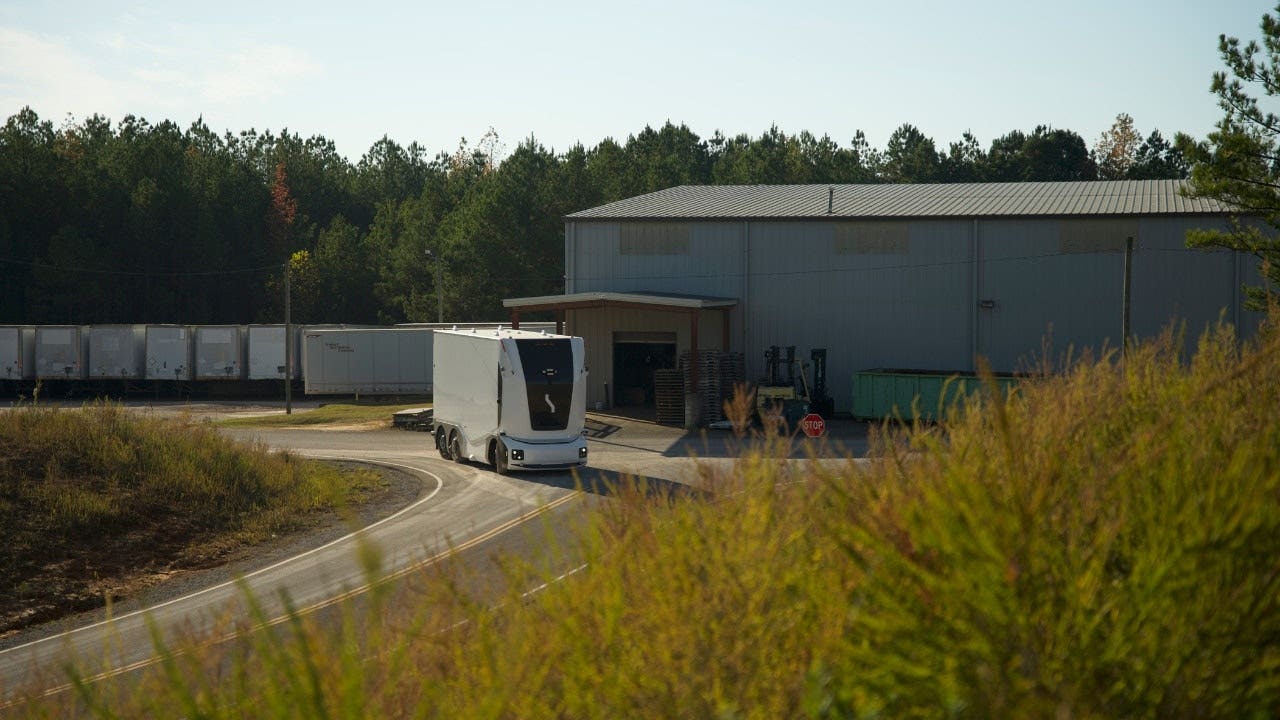
Ohio logistics firm EASE Logistics and autonomous truck maker Einride are testing two cab-less electric trucks this summer in Marysville, Ohio, running between warehouses and on local roads as part of DriveOhio’s Truck Automation Corridor Project with Indiana’s transportation department; the pilot uses SAE Level 4 technology with remote human oversight to collect real-world data on safety, operations, emissions and the impact on workers and freight flow.
Two electric, cab-less trucks will shuttle freight between EASE warehouse sites in Marysville, operating on company property and on nearby public roads during the summer of 2026. The vehicles are built without a traditional driver’s cab and rely on onboard software and sensors to travel under preapproved conditions.
The initiative is a proof-of-concept tied to DriveOhio’s Truck Automation Corridor Project, carried out with the Indiana Department of Transportation. The aim is to observe how automated trucks behave in everyday logistics, not just in closed test tracks, and to collect data on warehousing, distribution timing and transportation coordination.
These aren’t standard rigs with a driver ready to take the wheel. The machines run SAE Level 4 autonomous systems, meaning they can operate independently in defined situations without a person inside. A remote operator will monitor each truck off-site and has the ability to step in if intervention becomes necessary.
EASE Logistics is no stranger to automation trials; this marks the company’s third autonomous deployment with DriveOhio, placing it among a limited group of logistics providers exploring multiple live autonomous freight platforms. Short, predictable routes between warehouses make an ideal proving ground because they limit variables and generate focused operational data.
“EASE is proud to continue advancing the Truck Automation Corridor Project alongside DriveOhio and innovative partners like Einride.” “Deployments like this help move autonomous trucking from controlled pilots into daily freight operations, where safety, reliability, and efficiency can be evaluated at scale.”
“Deploying these autonomous trucks in daily logistics operations with EASE reflects years of rigorous development and real-world validation.” “Safety is not a feature we add to our technology; it is the foundation everything is built on.”
Public concern about large, driverless trucks is reasonable. These vehicles are heavy and will share space with commuters, pedestrians and conventional commercial traffic, so how they manage unexpected situations will matter a great deal. Officials and companies say remote monitoring and predefined emergency protocols are part of the safety strategy, but communities will want clear answers about routes, oversight and response plans.
For freight operators, the potential benefits are straightforward: lower emissions thanks to electric drivetrains, tighter schedule predictability, and improved coordination between warehouses and delivery networks. Early deployments focused on short hops reduce exposure to variable interstate conditions while still testing real-world integration with daily logistics cycles.
Still, testing on local public roads pushes the technology into messier, less controlled environments. The trucks must handle complex traffic behavior, changing weather, roadwork and the unpredictable actions of other drivers. Those situations will reveal whether the systems can deliver the promised gains in reliability and safety at scale.
The cab-less design itself signals a shift in how freight could be organized. Removing the traditional cab suggests a future built around software, remote operations teams and optimized vehicle footprints rather than human-centered truck layouts. That change will create new job demands for system monitorers, technicians and fleet managers even as it raises questions about driver roles over time.
Community trust and transparency will be crucial as autonomous freight moves beyond pilot zones. People will expect accessible information about where these trucks travel, how incidents are handled and what safeguards are in place. Data gathered during this deployment should help planners and the public judge whether these benefits outweigh the risks.
Ohio’s deployment offers a close-up look at the challenges and possibilities of driverless freight. If the tests work as intended, short inter-warehouse routes could become a logical early application, offering environmental and scheduling advantages without immediately leaping into long-haul interstate operations. The road ahead will demand careful oversight, robust safety protocols and ongoing engagement with workers and communities as the industry evolves.
