
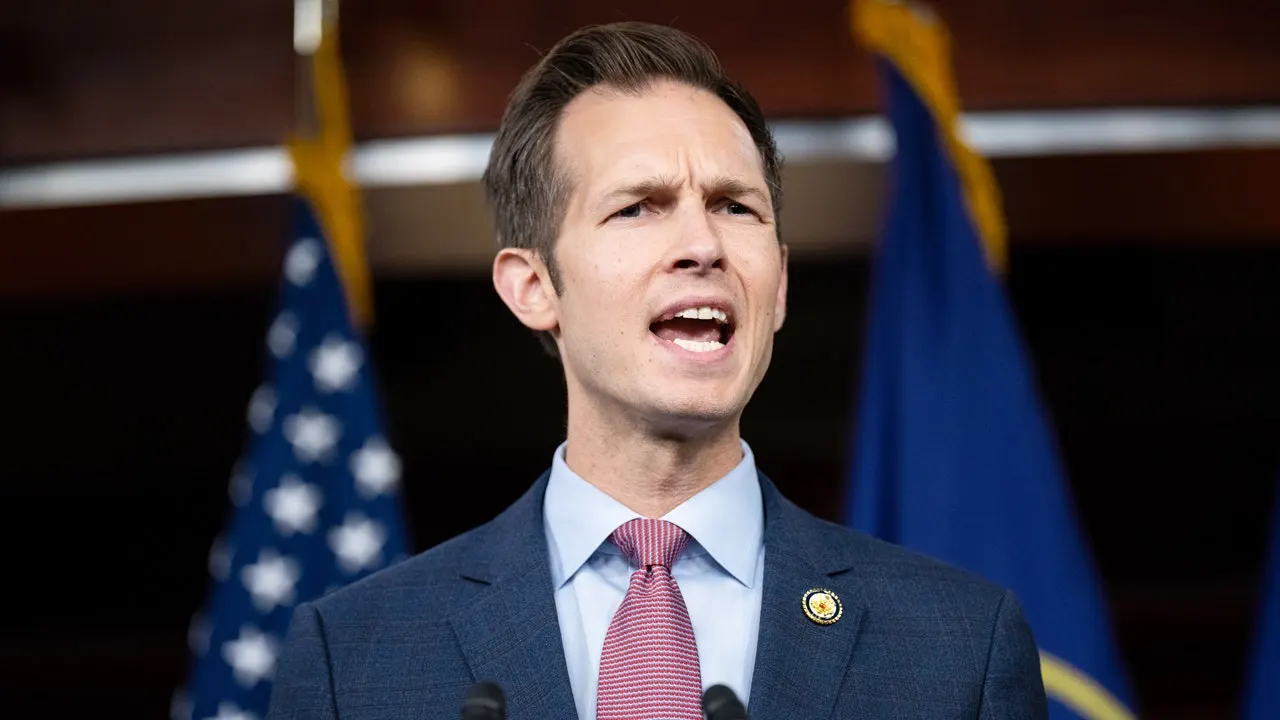
Rep. Jake Auchincloss has cleared a primary challenge in Massachusetts’ 4th Congressional District, holding off a run from Jason Poulos and keeping his seat in a race shaped by party tensions, Israel policy, and the growing pressure of the left flank. The contest put a spotlight on a familiar Democratic split, with one side leaning into moderation and the other pushing a sharper break on foreign policy and economic orthodoxy.
Auchincloss has represented the district since 2021, and this was his first Democratic primary test since winning office. Poulos came in as the insurgent, framing the race around a hard-left agenda and casting Auchincloss as too friendly to the political establishment.
Poulos is an AI policy researcher who campaigned on ending U.S. military aid to Israel and criticized Auchincloss for his past support of that assistance and his ties to AIPAC. He also brought a broader progressive platform into the race, backing Medicare-for-all, universal basic income, stronger unions, taxes on corporate automation, student debt cancellation, and lower military spending.
That message fit neatly into a corner of the party that wants Democrats to move faster and talk louder about economic upheaval and the war in Gaza. Poulos also pointed to his past volunteer work on Bernie Sanders’ campaign, a detail that helped him signal where he was coming from without much room for confusion.
Auchincloss, meanwhile, tried to stay on steadier ground. He campaigned on lowering housing and healthcare costs, boosting economic growth, and helping Democrats get ahead of the disruption that artificial intelligence could bring to jobs and wages.
The Israel issue hung over the whole race. Auchincloss has the backing of AIPAC, but he has also said some Israeli actions in 2025 “crossed lines” when it came to humanitarian conditions in Gaza, a reminder that even candidates in the center of the party are feeling heat from both directions.
That balancing act is becoming harder to pull off. House Democrats have grown more divided over military aid to Israel, and Auchincloss joined more than 100 members in July to vote against $3.3 billion in U.S. military financing for Israel while still saying he supports the broader U.S.-Israel relationship.
The fight also reflects a bigger shift in Democratic primaries, where candidates are increasingly measured by how clearly they break with the party’s old assumptions. For some voters, that means a sharper anti-war stance, while for others it means a candidate who can talk about costs, growth, and stability without sounding like a protest movement in a blazer.
Auchincloss also carried baggage into the race that his critics were eager to use. He previously was a registered Republican and worked on former Gov. Charlie Baker’s campaign before later returning to the Democratic Party, a background that gave opponents an easy line of attack in a primary shaped by ideological suspicion.
His family name and political connections have long made him a visible figure in Massachusetts politics, but this race showed that even a well-placed incumbent can get pushed by a challenger with a clean ideological lane. That kind of pressure has become a regular feature in Democratic politics, especially when foreign policy, economic change, and identity inside the party all collide at once.
