
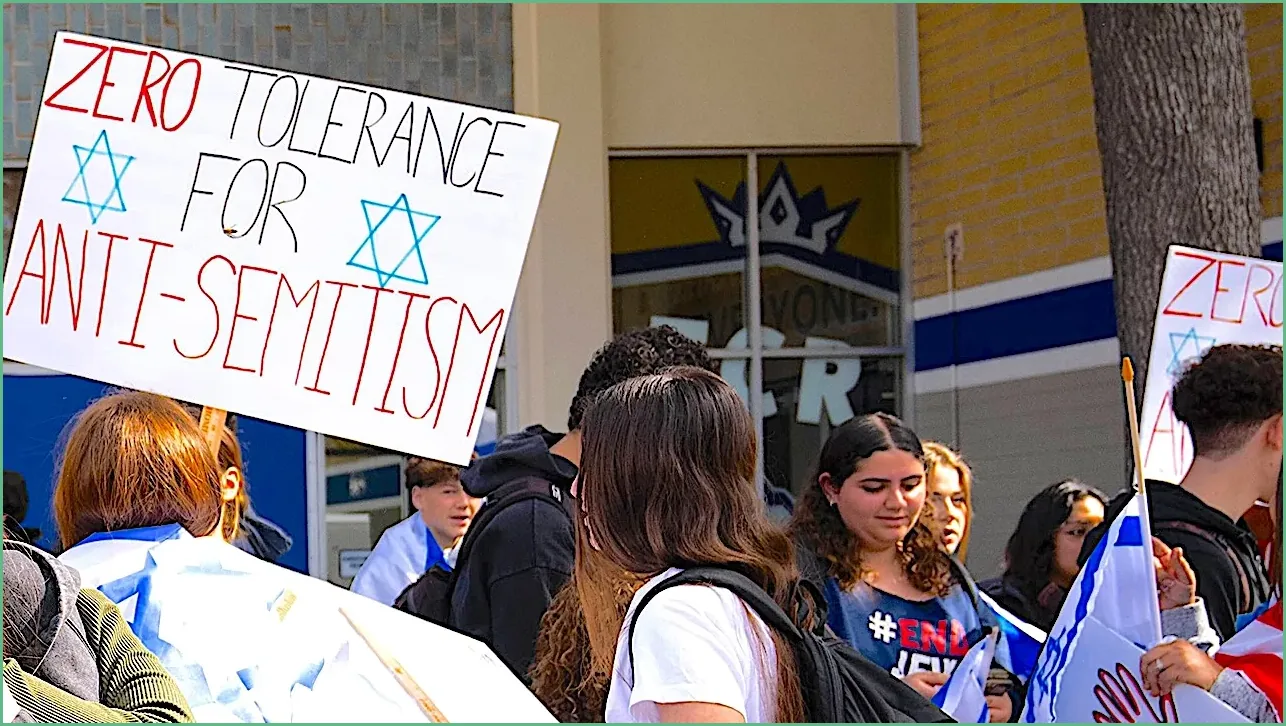
I spent hours listening to Jewish teens after Oct. 7 and watched a worrying pattern emerge: they deny facing antisemitism until specific examples snap them awake, revealing a deeper numbing to prejudice that risks becoming the new normal for a generation.
The first time I asked a room full of Jewish teens if they were facing antisemitism, not a single hand went up. It was just weeks after Oct. 7, when harassment and targeting were headline stories, and I had been asked to take the temperature of antisemitism across Atlanta. I expected fear, anger, and isolation to come pouring out.
“No,” they said. “We don’t really face antisemitism.”
I felt a brief relief until I asked a follow-up. “How many of you have ever heard someone make a Jewish joke at your expense?” Every hand went up. That moment flipped everything for me.
“How many of you have heard someone mention Jews and money, or say Jews control the media?” Every hand went up again. Then I asked, “How many of you have had someone say something negative about Israel or about Jews because of Israel?” Every single hand. The pattern was undeniable.
That’s when I realized something far more alarming than open hostility: our teens often do not name antisemitism when they experience it. Jokes, stereotypes, and casual slurs slide by as “just part of school” while the damage accumulates. Over time, repeated exposure blunts the alarm signal.
ANTISEMITISM: FACE IT. FIGHT IT. FINISH IT
When insults and jabs become routine, resentment gives way to resignation, and resignation breeds compromise. I’ve been told by students that they considered taking the word Jewish out of their club’s name to avoid trouble. Others suggested avoiding Jewish topics in meetings to keep the peace, not because they were ashamed, but because they were tired.
Those choices are survival tactics, not solutions. The offense isn’t a club name; the real harm is teaching young people to shrink their identity so others feel comfortable. That lesson chips away at confidence and identity in quiet, corrosive ways.
The normalization of hate lets stereotypes travel unchecked through classrooms, lunchrooms, and social feeds. Ancient tropes get recycled as humor, and anti-Israel chants often double as excuses for targeting Jews broadly. That steady drumbeat numbs a generation to the reality of prejudice.
Our work with students is straightforward and urgent: remind them who they are and give them tools to recognize and respond to bias. We show up in schools and cafeterias, not to lecture, but to restore pride and teach practical responses that preserve dignity. Education, solidarity, and visible support make a real difference.
SIGN UP FOR ANTISEMITISM EXPOSED NEWSLETTER
Parents, educators, and community leaders can’t assume kids will automatically identify these patterns. We must open candid conversations about history, stereotypes, and the messy overlap between criticism of policy and attacks on people. If adults don’t lead, silence or denial will fill the gap.
After Oct. 7, old hatreds resurfaced quickly, but so did resilience. Jewish communities rallied, and young people showed strength when supported properly. That resilience needs reinforcement through pride, education, and the courage to call out the small things before they become accepted norms.
The future of Jewish identity in America depends on whether teenagers feel empowered to be openly Jewish without editing themselves for safety. If they accept antisemitism as ordinary, then the fight has already shifted in favor of those who spread it. Recognizing the problem is the first step toward reversing a dangerous trend.
