
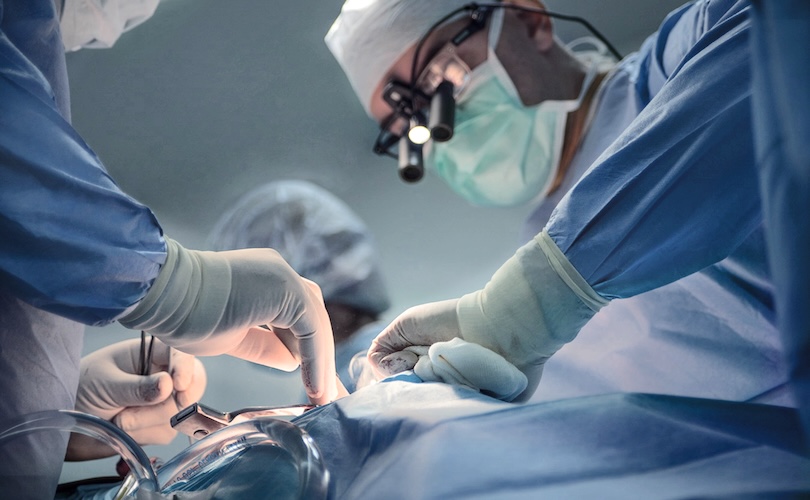
Three Canadian doctors are stirring up a fresh wave of outrage after publishing a paper that treats organ harvesting as part of the euthanasia process. Their argument centers on redefining a long-standing medical boundary, and it lands in the middle of Canada’s already intense debate over assisted death, consent, and what counts as real care.
The paper, “Contextualizing the Dead Donor Rule in an Era of Voluntary Euthanasia,” appeared in The New England Journal of Medicine in early July. Its authors, Dr. Ian Ball, Dr. Carter Winberg, and Dr. Robert Truog, argue that a patient’s “authorization, experience, and outcome” are no different whether death happens just before or during organ retrieval.
That framing is exactly what makes the proposal so explosive. The doctors say voluntary euthanasia creates a new ethical setting because patients are not yet dead, but their death is expected and directly tied to a medical act they chose for themselves. In their view, the focus should move away from pinpointing the moment of death and toward consent, safeguards, and public accountability.
They also argue that strict timing should matter less than it once did. In the paper, they suggest that the usual rule against killing by physicians is effectively sidestepped in euthanasia cases, which they present as a reason to rethink how organ donation is handled.
Right now, the practice they are describing is illegal in Canada. Organs can only be taken after a person has been declared clinically dead, and the idea of ending a life through organ retrieval is still far outside the legal line most people recognize as basic medical ethics.
Supporters of the current rules say that line exists for a reason. Once doctors move from healing to killing, even in the name of compassion or efficiency, trust in the whole system starts to crack, and vulnerable patients are the ones most likely to pay the price.
Conservative MP Leslyn Lewis jumped on the report quickly and made clear that Canadians should not just shrug this off. “Reports of proposals to retrieve organs from MAiD patients before death raise profound ethical questions that Canadians should not dismiss,” in a recent X post. “These discussions underscore the importance of maintaining clear safeguards and ensuring that organ donation never compromises the value we place on human life.”
Lewis also said Canadians “deserve thoughtful, transparent debate on these issues.” She added, “We must protect the vulnerable, uphold informed consent, and ensure that compassion and human dignity remain at the heart of our healthcare system.”
Her response reflects a broader worry that Canada’s euthanasia system keeps pushing into darker territory. What started as a supposedly narrow end-of-life option has already grown into something far more normalized, and critics say the culture around MAiD now makes extreme proposals sound less shocking than they should.
Bioethicist Kerry Bowman of the University of Toronto was also described as calling the idea “very problematic.” He said public reaction would likely be “very negative,” and noted that he has already spoken with religious leaders about the issue because of the deep moral concerns it raises.
Bowman said there is “a lot of deep religious concern that if the cause of death is actually organ donation, from a religious point of view, it would be considered very problematic.” He also said the idea worries non-religious people too, calling it “very worrisome,” and he dismissed it as “an unnecessary distraction at a difficult time.”
Canada legalized euthanasia in 2016, and the system has kept expanding ever since. In 2027, euthanasia for the mentally ill is set to become law unless the current government changes course, something critics say looks unlikely under Prime Minister Mark Carney.
https://x.com/LeslynLewis/status/2080350644699807910
That backdrop matters because the country is already dealing with the fallout. Canada’s Catholic bishops recently marked the 10th anniversary of euthanasia legalization by urging a stronger respect for life and warning against complacency, while also saying the practice can never be morally acceptable.
MAiD has become so routine that some hospitals have reportedly discussed it with patients who need long-term care. That kind of pressure changes the tone of the entire system, especially when families are trying to navigate pain, disability, and fear without being nudged toward death as a solution.
In another recent case, a Canadian man said he had to take his wife to the United States for treatment after health officials suggested euthanasia as her only option for cancer care. Stories like that have made a lot of people wonder whether the country is still talking about choice, or whether the system is quietly normalizing something far more chilling.
There is also growing concern about disabled Canadians who say they are being denied the support they need to live. One advocate for Roger Foley, who suffers from a degenerative brain disease, said the hospital where he has stayed for some time is trying to “kill him” by withholding care that could help him survive.
All of that is why the newest organ donation proposal hits such a nerve. It does not land in a vacuum, and it does not feel like an isolated academic exercise. It lands in a healthcare culture where the line between care and death is already looking dangerously blurry.

1 Comment
They do this in China daily & Chinese occupy Vic & Vancouver BC heavily