
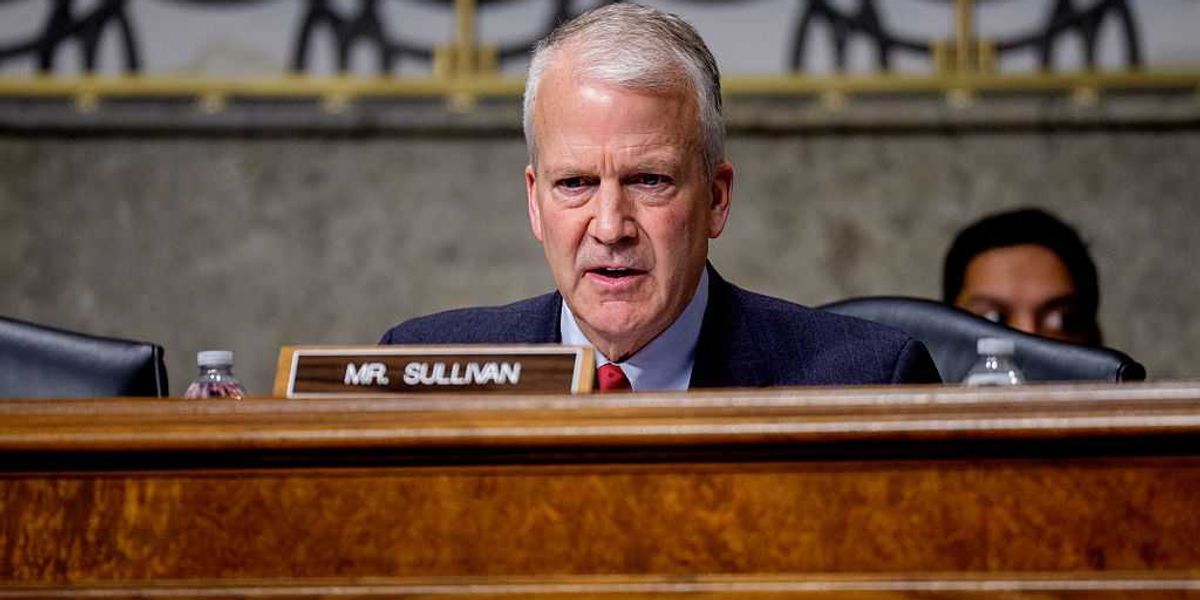
The Alaska Superior Court stepped in to put a Senate challenger back on the primary ballot, ruling the state election office illegally added a “good-faith” test that has no basis in the Constitution or state law. Judge Thomas Matthews ordered Daniel J. Sullivan Jr. restored to the August nonpartisan primary, saying ballot design—not exclusions—is the right fix for voter confusion. The state has appealed and the Alaska Supreme Court will hear arguments soon, keeping this fight live and politically charged.
‘The Division’s application of a “good-faith” test to Mr. Sullivan’s declaration of candidacy is not supported by the US Constitution, Alaska statutes, or the Division’s implementing regulations.’ That was the blunt finding from the court record, and it landed like a legal knockout for anyone who thought administrative sleight of hand could remove a candidate. The decision resets the rules: the Constitution and statutes set qualifications, not ad hoc tests invented after the fact.
Daniel J. Sullivan Jr. is a 69-year-old retired teacher who changed his registration to Republican earlier in the year and filed for the Senate race on May 29, just before the deadline. The timing and the shared surname with incumbent Sen. Dan S. Sullivan touched off immediate alarm inside the Alaska Republican Party and in national circles. The party and allied groups asked for investigations, arguing the filing looked like a tactic to confuse voters.
Alaska’s lieutenant governor requested a probe and Carol Beecher, director of the Division of Elections, concluded that J. Sullivan’s filing lacked a genuine candidacy and was meant to trick voters by putting two near-identical names on the ballot. Officials even raised questions about possible coordination with Democrats, and the incumbent described the move as effectively a Democratic effort to “cheat.” Those charges fueled a rapid administrative response that ultimately landed in court.
Judge Matthews rejected the Division’s reasoning and said the agency had overstepped its authority by applying a subjective standard to disqualify a candidate. He concluded that constitutional eligibility is a binary matter set by law, not by the election office’s sense of the candidate’s motives. The court made clear that political gamesmanship or suspect motives do not translate into a legal bar to appear on the ballot.
“The Division’s application of a ‘good-faith’ test to Mr. Sullivan’s declaration of candidacy is not supported by the U.S. Constitution, Alaska statutes, or the Division’s implementing regulations. As such, the Division’s decision to exclude Mr. Sullivan from the primary ballot is without a legal basis,” Matthews determined. The judge also pointed to less drastic options, arguing the ballot can be arranged to reduce voter confusion without denying access to the ballot box.
“The Division may also design the ballot to facilitate fairness, simplicity, and clarity. But those tools are different from the complete exclusion of a candidate.” That line underscores a basic republican principle: preserve voters’ choice and use neutral mechanics, not exclusion, to manage elections. In practice that means clearer name order, disclaimers, or formatting changes instead of tossing a name entirely.
The state has appealed to the Alaska Supreme Court and oral arguments are scheduled for Monday, so the ultimate outcome is still up in the air. If the high court does not intervene, J. Sullivan will be on Alaska’s nonpartisan primary ballot on August 18, which keeps the contest open and unpredictable. Either way, this case will set a clear precedent about how far election officials can go when they suspect strategic filings.
Republicans watching this want a fair process that protects ballot integrity without letting election administrators pick winners. The legal fight now shifts to Alaska’s highest court, and the lesson is already plain: voters should be the ones to sort out names at the ballot box, and procedural clarity belongs ahead of administrative discretion.
