
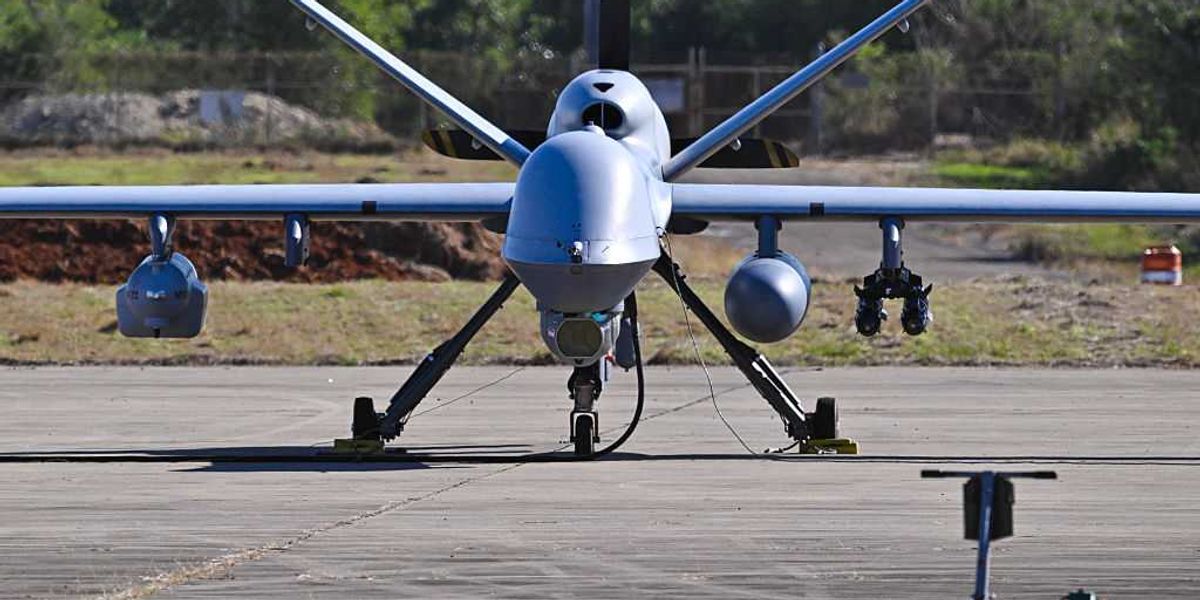
The piece argues that the United States already has a ready-made, practical way to govern autonomous weapons: the familiar weapons control statuses commanders use today. It says we should treat autonomy as another operational variable and let commanders set postures that match the discrimination challenge of the environment. It insists that doctrine, not panic or improvisation, should guide how we field these systems, while holding leaders accountable for their choices.
Too many debates start from the wrong question: should machines be allowed to kill? That frames autonomy as a novel moral monster when the real issue is how we fit new tools into old responsibilities. A straightforward, conservative instinct says use what works and trust the chain of command to apply restraint where needed.
Military practice already divides engagement authority into three clear postures: “Weapons hold” authorizes engagement only in self-defense or under specific order, “Weapons tight” authorizes engagement only against targets positively identified as hostile, and “Weapons free” authorizes engagement against any target not positively identified as friendly. Commanders choose the posture based on mission, threat, and environment, and units can run different postures at once. That system calibrates lethal authority without forcing every operator to ask permission before acting.
That exact logic fits autonomous systems. The worry that machines cannot tell a combatant from a civilian matters primarily where discrimination is hard. In clean battlespaces the problem is trivial; in crowded cities it is hard. We already change postures to match those differences, so autonomy does not require inventing an entirely new ethic of force.
Imagine a combat drone or sea-launched system operating in a declared maritime fight where civilian traffic is minimal and military signatures are obvious. In that space a weapons-tight or weapons-free posture can be defensible because targets are unambiguous and hesitation costs lives and ships. American forces need systems that can react faster than human reflexes to survive against peer missiles and saturation attacks.
Now imagine the same system in a dense urban setting where civilians and fighters are mixed on the same street. In that case commanders should set a weapons-hold posture that requires a human to authorize each strike. Context matters, and doctrine should force the conservative choice in messy environments where mistakes are likely and catastrophic.
The Pentagon has already begun translating this instinct into policy with Directive 3000.09, which requires that autonomous and semi-autonomous weapon systems allow commanders and operators to exercise appropriate levels of human judgment. It also insists system design confine engagements to intended time frames and geographic zones. That directive assumes human control varies by mission and system rather than applying a one-size-fits-all rule.
What’s missing is simple: connect that variation to the weapons-control vocabulary everyone in the force already understands. If commanders name the posture and accept responsibility, the public can hold them accountable in a way no opaque algorithm can be. A named decision with an owner beats a diffuse, blame-free policy every time.
Some fear putting this much faith in commanders, but that skepticism proves too much. We already trust commanders to set postures for human-operated weapons, and when they get it wrong the consequences and accountability are the same. An autonomous system governed by familiar rules inherits the same chains of command and the same legal and moral responsibilities.
Adversaries are building and fielding autonomous weapons regardless of our debate, so the real choice is whether the United States adopts explicit doctrine or lets practice harden into habit without oversight. The safer, smarter path is to codify that commanders set weapons-control statuses for autonomous systems and to limit permissive postures to environments where discrimination is genuinely simple. “The United States will field autonomous systems regardless of whether the public debate reaches a satisfying resolution.” That reality argues for clear rules, not for reinventing restraint from scratch.
