
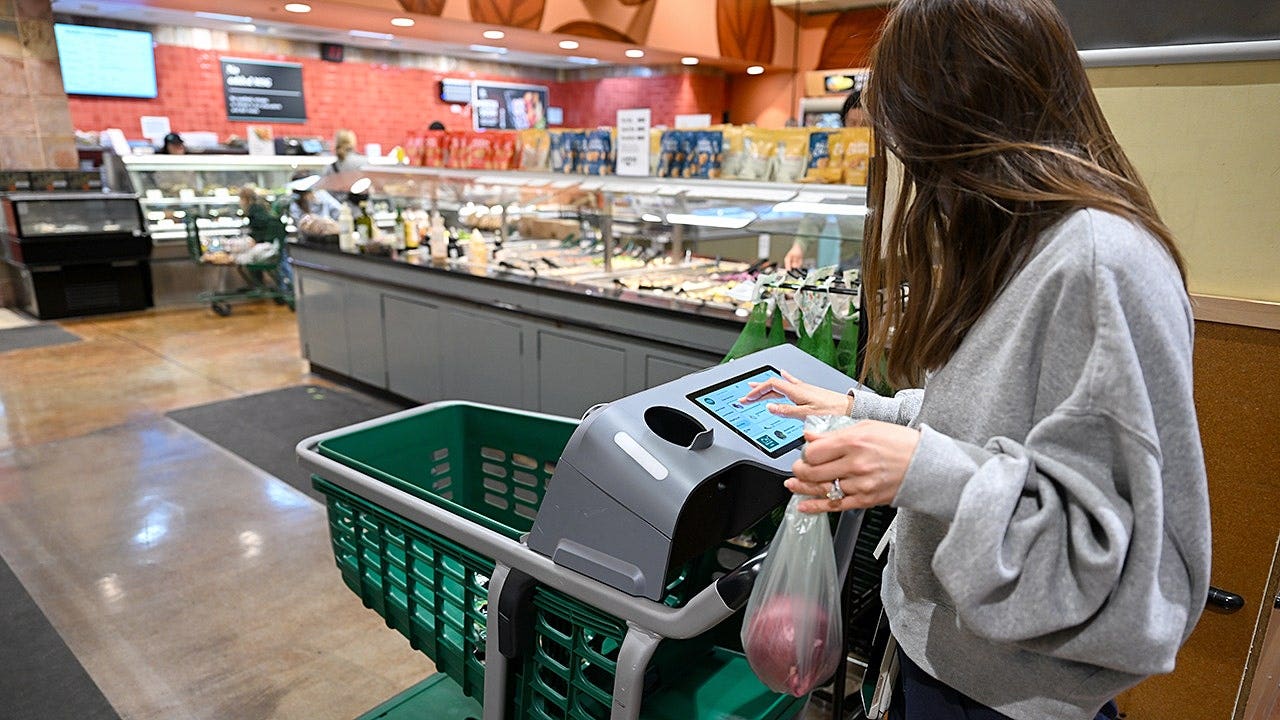
AI-powered grocery carts are moving from novelty to everyday store fixture, and they are changing more than the checkout line. New research suggests these carts can nudge shoppers toward bigger baskets, more time in the aisle, and more spending overall. At the same time, retailers see a sleek way to push deals, track shopping patterns, and make the whole trip feel faster and easier.
The latest findings come from Bayes Business School at City St George’s, University of London, where researchers studied smart carts at a major German supermarket chain in March 2025. They reviewed 12,418 shopping trips and found that 9,422 involved people actively using the smart-cart system. These carts came with tablet-style screens on the handle and tools for lists, navigation, recommendations, and checkout-free payment.
The numbers stood out right away. Smart-cart users spent 32% more on average, bought 25% more items, and stayed in the store 23% longer than shoppers who did not use the technology. The gap was even more noticeable in the afternoon and on weekends, while evening trips tended to stretch the longest.
For retailers, that is a dream scenario. A cart that keeps shoppers engaged can also keep the register ringing, which is exactly why the technology is spreading so quickly. Dr. Sabrina Gottschalk, the study’s lead author, said the results point to meaningful revenue potential for stores willing to lean into the format.
The appeal is obvious. The screen on a cart can show special offers, suggest products, and guide shoppers through the store while they are already in buying mode. That turns the cart into more than a container for groceries. It becomes a rolling ad space sitting inches from the shopper’s attention.
Still, the research does not prove that the carts themselves caused people to spend more. Since the study observed real shopping behavior rather than assigning carts randomly, the results show a connection, not a simple cause-and-effect story. A customer choosing a smart cart may already be planning a larger trip or may simply enjoy the tech enough to use it more often.
Researchers found another wrinkle when they looked at heavy screen users. Shoppers who tapped the cart display more than 20 times during a trip bought more items and spent more time in the store, but they did not end up spending more money overall. After a certain point, deeper interaction seemed to level off, and both spending and basket size began to drop.
That matters because it hints that some shoppers are using the screen for convenience, not just consumption. The cart can help people find items, keep track of a list, and avoid the usual checkout mess. But once the prompts start piling up, the experience can shift from helpful to distracting in a hurry.
The tech is not staying in Europe, either. Instacart says thousands of its Caper Carts are already deployed across more than 100 cities in the U.S., and retailers such as Kroger, Schnucks, and several Wakefern banners have adopted them. Amazon is also pushing its own Dash Cart, which shows prices, tracks totals, offers nearby deals, and helps shoppers skip the traditional checkout line.
That kind of convenience comes with a tradeoff. These carts are packed with cameras, scales, and location tools that can detect what goes into the basket and how the shopper moves through the aisles. The result is a more personalized trip, but also a more data-heavy one, which makes account settings and privacy choices worth a closer look.
Retailers are clearly betting that the upside beats the risk. A cart that remembers what is in the basket can surface recommendations at just the right moment, maybe reminding shoppers about something useful or pushing one more item they did not plan to buy. That is the new retail game, and it is happening right there in the aisle, one screen tap at a time.
For shoppers, the smartest move is staying alert without giving up the convenience. A running total can be useful, a faster checkout can be a relief, and a well-timed suggestion might even help. But when the cart starts acting like a pushy sales rep on wheels, the grocery bill can climb before anyone realizes what happened.
