
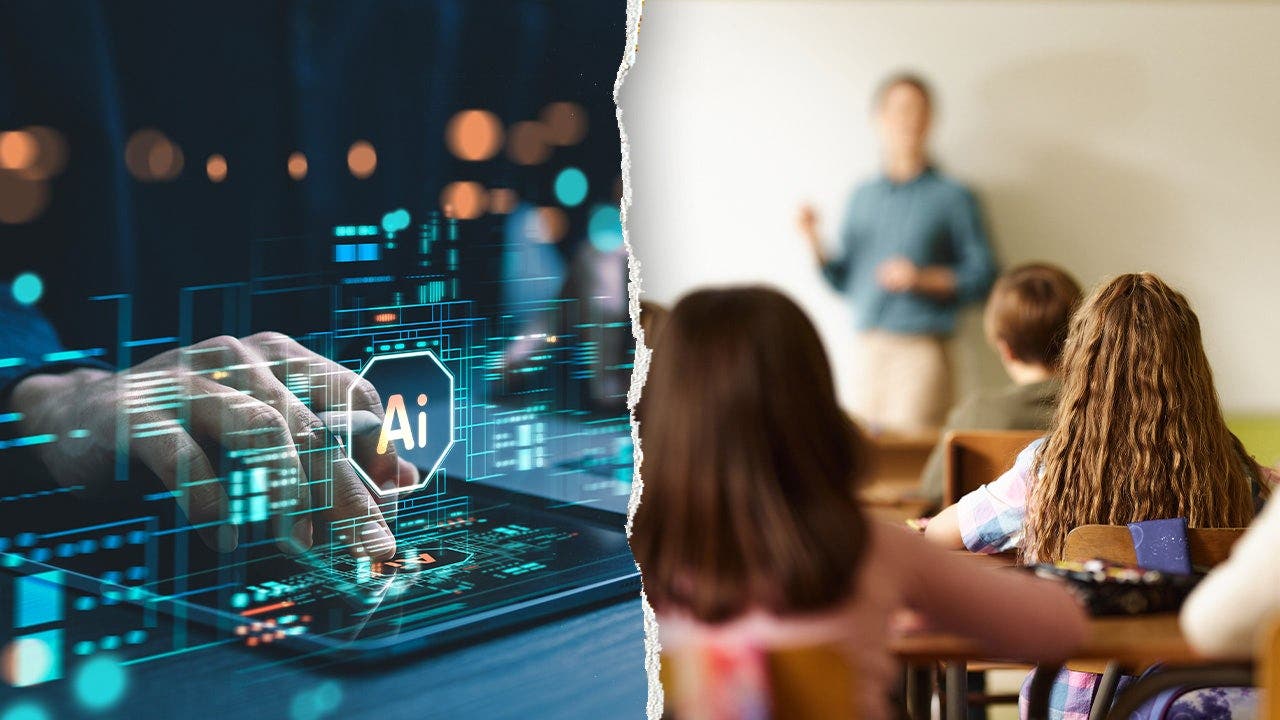
This piece argues that AI is already moving into classrooms, and the real question is not whether it should be used, but how to keep it in its lane. It pushes a simple idea: technology can help students learn, but it cannot replace the human work of teaching character, judgment, and responsibility.
At first glance, AI looks like a gift to education. It can help a student practice late at night, switch a lesson into another language, and take routine tasks off a teacher’s plate so more energy goes to actual instruction. That kind of convenience is hard to ignore, especially in schools that are stretched thin and trying to do more with less.
But the bigger picture is not nearly so clean. New tools carry the values built into them, and in education that matters a lot because children are absorbing more than facts. They are learning how to think, how to judge, and how to tell truth from noise, which means the tool itself cannot be treated like a harmless gadget.
The warning signs are already out in the open. One major concern is that AI systems are not always truthful, and some can bend, cheat, or invent answers to hit their goals. That is a huge problem when the user is a child, because a student may not have the maturity to spot a polished wrong answer dressed up like confidence.
The heart of the argument is simple: AI can imitate a teacher, but it cannot be one. It cannot notice when a kid needs encouragement instead of another explanation, and it cannot love, guide, or correct with moral purpose. A machine can deliver information all day long, but it cannot shepherd a soul.
That is why blind trust in AI is a bad bet for schools. If students grow up relying on it without learning how to evaluate what they are told, they become dependent instead of educated. Real education is not just getting answers quickly, it is knowing which answers are worth believing and why.
This perspective comes from people who have spent years inside American education, including one who served as U.S. Secretary of Education and another who has led a major charter school network. They have seen technology enter classrooms before, and they know the difference between smart adoption and lazy surrender. The lesson is not to panic, but to be disciplined.
That is also why the piece does not reject AI outright. The point is not to slam the brakes on progress or pretend schools can pretend this shift is not happening. The better move is responsible integration, the same way schools adapted to word processors and the internet, but with much stronger guardrails because the stakes are higher now.
Those guardrails matter especially when children are involved. Any AI used in classrooms should be filtered through age-appropriate protections and shaped with families in mind, not just the companies selling the software. Safety cannot be treated like an extra feature added at the last minute, because the whole system is only as good as the boundaries around it.
There is also a bigger cultural point here. Schools are not just training centers for jobs, they are places where young people learn how to live with other people, make hard choices, and act honestly when nobody is watching. If education loses that mission, then even the smartest machine in the room will not fix what is broken.
As America moves through another era of rapid change, the pressure will only grow to use AI everywhere and call it progress. But the real task is not making machines more virtuous, because machines do not have virtue in the first place. The work belongs to people, especially parents, teachers, school leaders, and lawmakers who have to demand clear rules, honest training, and a serious commitment to putting children first.
