
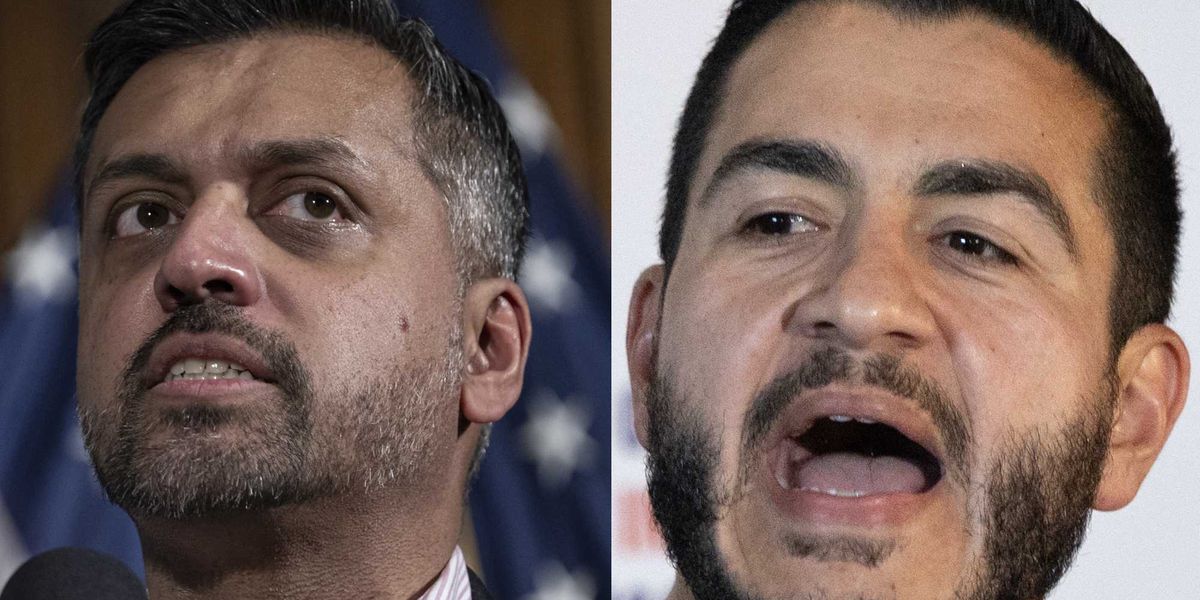
Election season in Michigan has a way of turning every sharp comment into a bigger fight, and this one is no exception. A heated warning from pundit Wajahat Ali landed in the middle of an already tense U.S. Senate race, putting Abdul El-Sayed, Mike Rogers, and the broader political mood in the spotlight.
Ali’s message centered on the idea that the anger surrounding the race would not simply vanish when the votes are counted. He tied that warning to both possible outcomes, saying the fallout could come if El-Sayed loses or if he wins, which gave the remark an especially combative edge.
The clash comes against the backdrop of a race that has already drawn attention for its ideological weight and national implications. Michigan has become one of the places where big political arguments play out in plain view, and this Senate contest has only sharpened the sense that the state is carrying more than one story at once.
El-Sayed, a progressive Democrat, has made himself a prominent figure in Michigan politics, while Rogers has remained a familiar Republican name to voters who have followed state and federal races for years. That kind of matchup tends to pull in outside voices, and this one has brought in plenty of loud opinions, some of them far beyond the usual campaign chatter.
What made the warning stand out was its tone. It was not framed like a standard prediction or a routine expression of concern, but like a threat wrapped in political commentary, the kind of thing that instantly pushes a race into a more volatile lane.
That matters because Michigan has long been a battleground where turnout, identity, and sharp partisan divides all collide. A Senate contest there is never just about one seat, since it often becomes a test of how far the national mood has shifted and which side can better energize its people on Election Day.
For Republicans, the bigger issue is simple: this kind of rhetoric exposes how quickly the left can drift from campaigning into intimidation language. Voters watching this race can see that the stakes are being framed not just as political, but as something closer to an emotional showdown where restraint keeps getting tossed aside.
At the same time, El-Sayed’s campaign sits inside a broader conversation about the role of ideology, religion, and community identity in modern politics. Those themes have not stayed on the edges of the race, they keep breaking into the middle of it, where they can stir up loyalty, suspicion, and plenty of noise.
Rogers, meanwhile, benefits from a race environment where voters who want calm and predictability may recoil from this kind of overheated messaging. When a contest starts sounding like a warning siren instead of a debate over policy, it gives the opposition an opening to argue that the other side is too unstable to trust with power.
That is especially true in a state like Michigan, where practical concerns still matter a great deal. Families worrying about wages, safety, and the direction of the country do not usually respond well to political theater that sounds like a fuse is about to be lit.
Even so, the race is not likely to cool down anytime soon. The more attention this Senate fight gets, the more every statement, every rally, and every off-the-cuff remark becomes part of a larger scramble for control, influence, and momentum in one of the country’s most closely watched political battlegrounds.
