
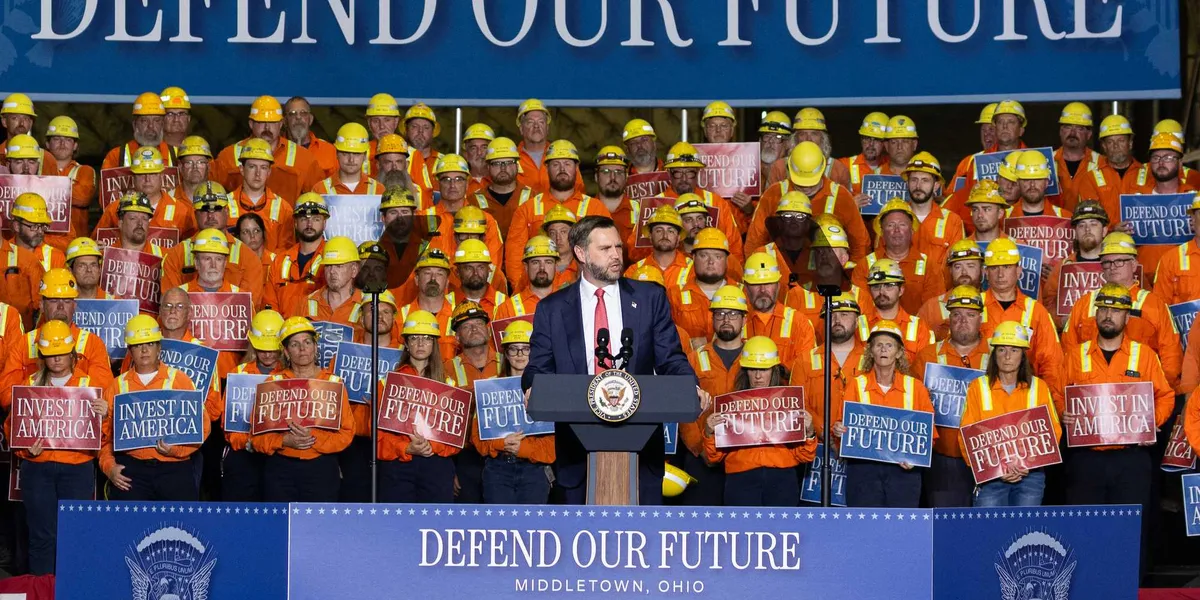
JD Vance used a blunt workplace story to put a sharp edge on a familiar fight over labor, loyalty, and what gets lost when American workers are pushed aside. The anecdote hit because it felt painfully ordinary, the kind of thing people hear in break rooms, not on polished campaign stages.
At the center of the story was an American employee who trained the person brought in to take his place. That alone would sting, but the twist made it worse, turning a routine layoff into a moment of betrayal that lands hard with workers who already feel boxed in by corporate decisions.
The story fits neatly into Vance’s broader message about a country that too often treats its own people like disposable parts. It speaks to a mood that has been building for years, especially among voters who believe the system rewards the connected while asking regular workers to swallow the losses.
That is why the anecdote spread fast. It was not dressed up in policy jargon or softened with a lot of hedging, and it did not need to be. The image of a man training his replacement is vivid on its own, and it taps into a deep frustration with how these transitions are handled.
For many Americans, the most upsetting part is not just the replacement itself but the expectation that workers should help make it easy. Being told to hand over experience, know-how, and institutional memory to someone arriving under very different terms can feel like a slap in the face. The story cuts right to that feeling without much effort.
Vance has built much of his political identity around these kinds of tensions, where elites talk about efficiency while ordinary people live with the fallout. That message resonates because it does not sound abstract. It sounds like a plant floor, a loading dock, a call center, or an office where the human cost gets brushed aside.
The larger argument behind the story is simple: a nation that keeps replacing its own workers will eventually hollow out trust, pride, and stability. People notice when the rules seem to move in one direction, especially when jobs, wages, and security are on the line. That kind of resentment does not fade quickly.
It also helps explain why the issue keeps showing up in debates about immigration, outsourcing, and labor policy. Supporters of tighter controls see these stories as proof that the working class is being forced to absorb the pain while powerful institutions keep chasing cheaper labor. Critics may argue the economy is more complicated, but that does not erase the emotional punch of the anecdote.
The story’s real power comes from how quickly it translates into a broader sense of fairness. Most people understand the basic instinct: if a company is going to move on, it should not demand that the person being displaced make the handoff painless. That expectation feels cold, and cold decisions tend to stick in the public memory.
Vance’s retelling also reflects a style of politics that leans into grievance without sounding artificial. There is no need to exaggerate when the underlying situation already sounds extreme enough. A worker training a foreign replacement and then doing the unthinkable is the kind of detail that lingers because it feels like a snapshot of something bigger than one job.
That bigger story is about dignity, and dignity remains a powerful word in American politics when people feel trapped by forces they cannot control. The more this kind of tale circulates, the more it reinforces a simple idea: workers are paying attention, and they are not nearly as willing as before to accept being treated as a line item.
