
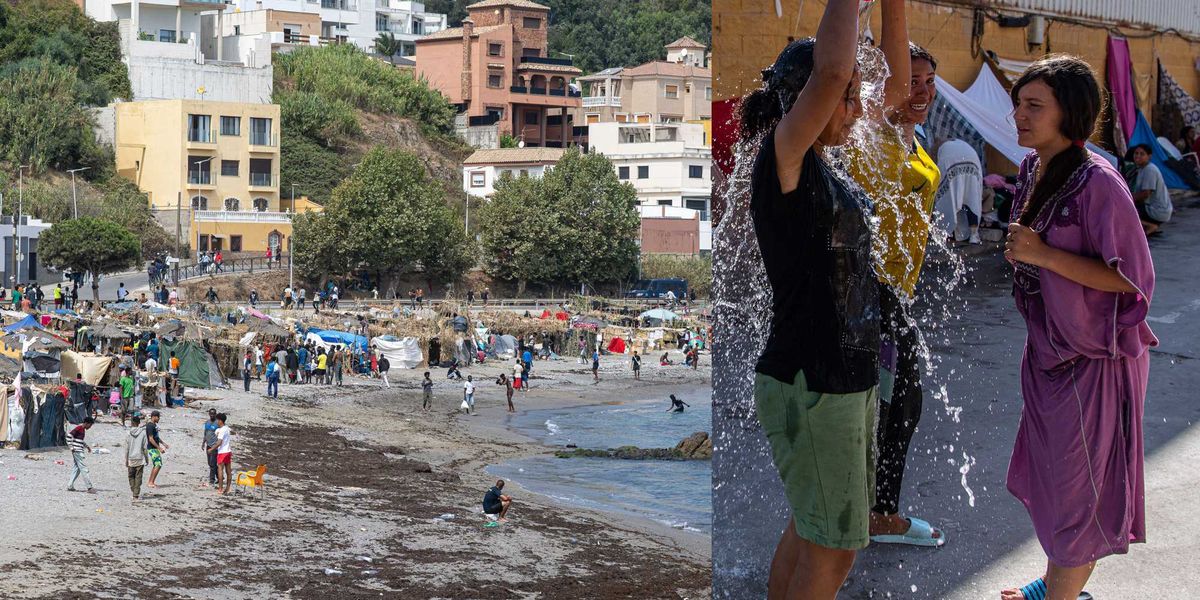
A fresh political fight has erupted over Ceuta after a Spanish anti-migrant party blasted reports of sexual assaults involving minors at local camps. The controversy has pushed immigration, public safety, and the treatment of vulnerable teenagers into the same heated spotlight, where tempers are already running high.
The outrage centers on claims that underage girls in the camps have been subjected to serious abuse, a charge that has triggered fierce accusations and a broader argument about who is responsible for keeping order. For critics of Spain’s current immigration approach, the situation is being held up as proof that border chaos comes with real human costs, especially for young people left exposed in unstable conditions.
Ceuta has long been a pressure point, sitting on the edge of Europe and under constant strain from migration flows linked to Morocco and the wider region. That geography makes every breakdown feel larger than life, because each security lapse or protection failure is seen not as an isolated incident but as part of a pattern that never quite gets fixed.
The anti-migrant message has landed hard because the public is already primed to think in terms of order, accountability, and whether officials are doing enough to protect citizens and minors alike. When sexual violence enters the picture, the debate stops being abstract fast, and questions about enforcement, screening, and camp oversight become impossible to dodge.
Supporters of tougher controls argue that ignoring these claims would be a mistake, not only because the allegations are disturbing but because the political class has spent years talking around the consequences of unmanaged migration. They see the Ceuta camps as a symbol of a system stretched beyond reason, where vulnerable people are packed into tense environments and left to navigate risks that should never have been allowed to build.
That argument has also sharpened resentment toward elites who talk compassion but seem slow to act when conditions turn ugly. For many voters, compassion without control feels like a slogan, and incidents like these give them a blunt reason to demand a different approach. The issue is no longer just about numbers crossing a border, but about what happens after they arrive.
At the same time, the allegations carry a grim reminder that minors in any crowded holding area need real protection, not just paperwork and promises. If authorities cannot guarantee safety, then the system itself starts to look broken in a way that no press release can smooth over. That is the part that hits hardest, because the victims are reportedly young and the stakes could not be higher.
The political fallout is likely to keep growing as the debate over immigration in Spain stays tense and unforgiving. Ceuta has become one more front in a wider fight over sovereignty, security, and whether the state still has the backbone to control its own territory while shielding the people already trapped inside its borders.
