
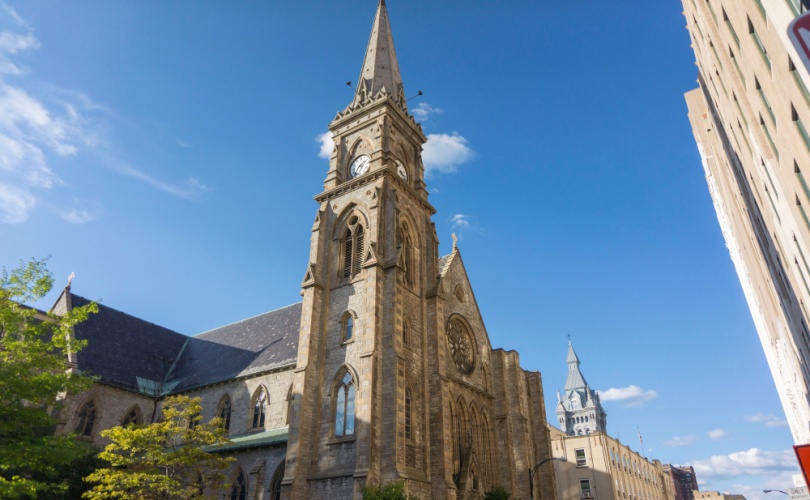
The Diocese of Buffalo has sold three downtown properties for $4.6 million, and the money is headed straight into the settlement effort tied to long-running clergy abuse claims. The sale includes former diocesan office space, parking lots, and a garage, all part of a broader push to raise funds for victims while the church keeps working through bankruptcy and restructuring.
The diocese said the former Catholic Center at 795 Main Street was larger than what staff needed in recent years, so selling it made practical sense. In its statement, the diocese said the proceeds will go to the settlement fund that was agreed to with the creditor committee to provide financial restitution to victim-survivors of clergy sexual abuse.
The properties involved include the building at 795 Main St. with the attached office building at 801 Main St. and an adjoining parking lot, plus a parking lot at 814 Main St. and a garage at 821 Main St. For Buffalo, this is not just a real estate deal, it is another step in a painful financial cleanup that has been hanging over the diocese for years.
That cleanup centers on a massive settlement announced last year for $150 million. The agreement covers more than 800 survivors of abuse by clergy, religious, lay employees, and volunteers, and it remains one of the biggest and most visible consequences of the scandal that has followed the diocese for a long time.
In May, the diocese said it had asked all of its parishes to file for Chapter 11 “rapid prepackaged” bankruptcy so the settlement could move forward. The plan was meant to let parishes reorganize their finances without having to liquidate everything, though the process depends on approval from all parishes and is designed to last only briefly for each one.
The pressure on church finances has not been limited to property sales. Last year, the diocese said it would cut about 22 percent of its staff to help meet the settlement obligations, a move that showed just how deep the financial strain had become.
The bigger story behind all of this goes back years. In 2018, reports surfaced that the Diocese of Buffalo had been shielding abusive priests for decades, including during the time of then-Bishop Richard J. Malone, and the fallout only got worse from there.
Malone resigned in 2019 after a Vatican investigation found serious problems, including the cover-up of sexual abuse involving seminarians and the decision to put a priest back into ministry after he had been caught consuming homosexual pornography. Former secretary Siobhan O’Connor later helped expose the situation in a televised interview, giving a public face to what many inside the church had already suspected was rotten leadership.
By 2020, the diocese was staring down more than 900 lawsuits tied to abuse cases and filed for Chapter 11 bankruptcy. That move eventually led to the $150 million settlement, and the pain kept spreading as the diocese later announced the closure or merger of nearly 80 churches and worship sites under its Road to Renewal plan.
Now Bishop Michael Fisher is managing the consequences, balancing legal obligations, financial pressure, and a shrinking church footprint across Buffalo. The sale of these properties shows the diocese is still trying to convert assets into cash, even as survivors wait for a process that has already taken far too long to reach this point.

1 Comment
As it’s been said countless times; “the Devil is working overtime!” Of course God’s judgment is coming and it will be final so all of the most hideous and nefarious are running rampant to destroy as much as they can and bring souls to hell where they will all be for eternity!