
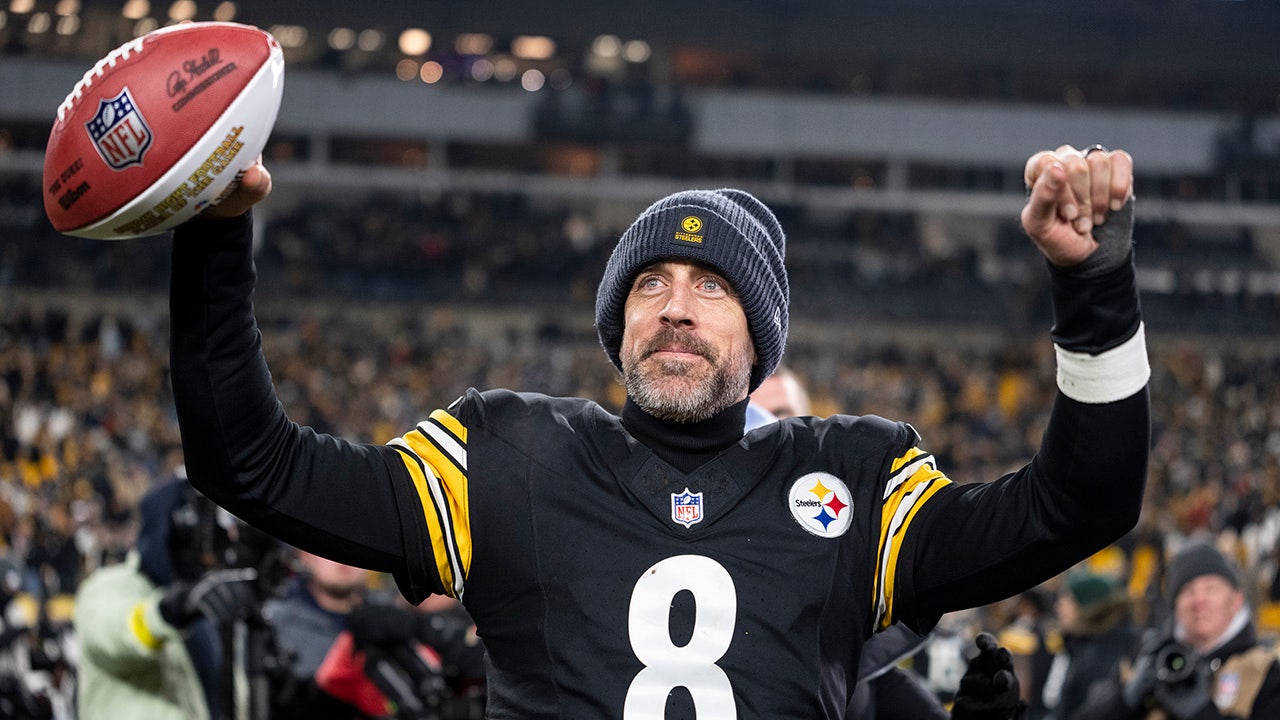
Jerome Bettis, the Hall of Fame running back, says he’s fired up that Aaron Rodgers will suit up for one last season with the Pittsburgh Steelers in 2026, and that simple announcement has already rippled through the NFL world with excitement and questions about what it means for the team’s short-term ambitions and long-term identity.
Bettis’s reaction lands naturally — he’s a Steelers legend and a fan of the franchise’s identity — and his approval gives the move instant credibility among Pittsburgh’s old guard. Rodgers arriving for a final tour fits the kind of theatrical, high-stakes chapter the NFL loves, and Bettis sounds genuinely enthusiastic about the storyline and what Rodgers could spark in the locker room. That excitement is contagious for fans who want drama and competence at quarterback.
On the field, Rodgers brings championship experience, razor-sharp pocket vision, and an ability to elevate the entire offense with smart decisions and quick adjustments. He has a resume that still matters in January and February, and Bettis’s optimism hints that he believes Rodgers can immediately impact the Steelers’ win-loss column. Even beyond wins and losses, Rodgers’s arrival would change practice habits, play-calling dynamics, and how younger players learn from a seasoned pro.
Off the field, this move is about attention and legacy as much as it is about playbooks. Rodgers is a magnet for coverage, ticket sales, and merchandise, and Bettis knows the value of a compelling narrative in Steelers Country. A final season in Pittsburgh would stir emotional connections with a loyal fan base that values grit and veteran leadership, and Bettis’s voice helps frame Rodgers’s return as a meaningful, not purely commercial, chapter.
There are practical questions embedded in all the excitement, and Bettis doesn’t shy away from them. How will the coaching staff balance developing youth with maximizing Rodgers’s remaining windows of elite play? What adjustments will be necessary to protect a veteran quarterback and to tailor a game plan that plays to his strengths? Bettis’s enthusiasm suggests he thinks those logistical issues are solvable and that the potential upside outweighs the complications.
Steelers fans are already imagining playoff pushes and signature moments, and Bettis’s public endorsement helps nudge expectations upward. He’s not promising a Super Bowl, but he’s signaling that Rodgers’s presence makes the roster more dangerous and more credible in big-game scenarios. That kind of vote of confidence from a Hall of Famer matters in a city where football tradition and accountability run deep.
This all lands as a reminder that NFL moves are about more than Xs and Os; they’re about culture, storytelling, and timing. Bettis’s excitement underscores how a single veteran signing can reshape perceptions of a franchise ahead of a new season. Whether Rodgers delivers a cinematic farewell or simply steadies a roster, Bettis’s reaction has already made the moment feel important and worth watching closely in 2026.
