
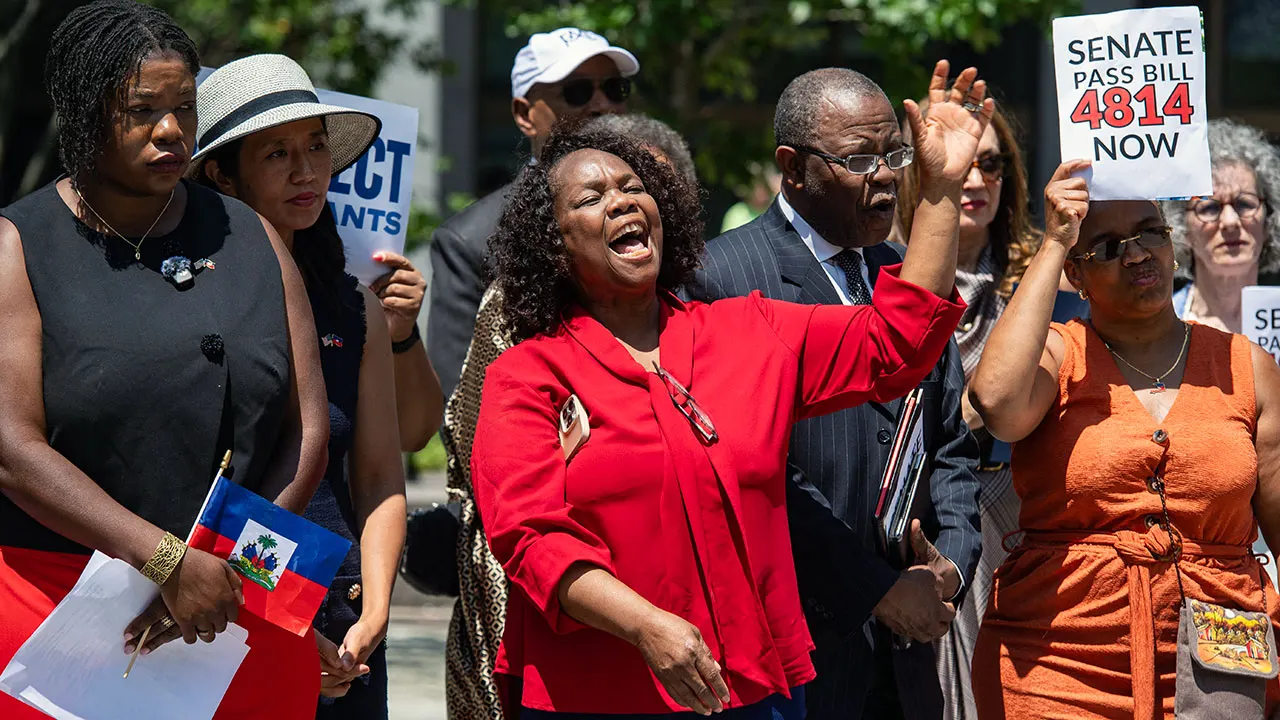
• Supreme Court ruling changes the legal footing of Haiti TPS
• Federal judge acknowledges the old block is no longer active
• Hundreds of thousands of Haitians face work authorization fallout
• Trump administration gains a major immigration win
• Remaining fight centers on claims of racial animus
Donald Trump picked up a big immigration win after a federal judge said the court order that had blocked his administration from ending temporary protected status for Haitians is no longer in force. The move comes after the Supreme Court’s ruling in Mullin v. Doe, which cleared the way for the government to move ahead with ending the program.
The decision puts a huge population in a tough spot, with roughly 330,000 to 350,000 Haitians in the United States now facing the loss of protected status and work authorization. TPS has been a lifeline for many of them, but the legal shield that held things in place has now been knocked aside.
The case has been building for years and became even more heated during the Biden administration, which expanded Haiti’s TPS designation. Trump made reversing that expansion a major campaign issue, and the fight over Haiti quickly turned into a broader argument about border policy, public safety, and how far temporary protections should stretch.
The issue also got dragged deep into the 2024 election season after Trump and JD Vance tied Haiti TPS to the surge of Haitian migrants in Springfield, Ohio. Residents there complained about crowded public services, traffic concerns, and friction in the community, which pushed the debate far beyond the usual immigration circles.
Attention then spiked again when Trump repeated claims from locals that migrants were taking ducks and geese from parks and eating household pets. That kind of moment turned a legal immigration battle into a national flashpoint, with emotions running high and the politics getting even sharper.
In her Wednesday order, U.S. District Judge Ana Reyes said her earlier stay on the Department of Homeland Security’s effort to end Haiti’s TPS designation “is no longer in effect” after the Supreme Court ruling and the later mandate from the D.C. Circuit. The underlying lawsuit is still alive, but the administration is no longer boxed in by that injunction.
The remaining legal question is whether the administration acted with unconstitutional racial animus when it ended the designation. That fight could still take time to play out, but the immediate barrier is gone, and the government now has room to proceed.
DHS General Counsel James Percival pushed back on the idea that Wednesday’s order itself ended the program, saying the protections effectively expired once the Supreme Court’s mandate came down on July 27. He also made it clear he saw the judge’s order as a recognition of reality, not the source of the change.
“Haiti TPS ended when the Supreme Court mandate issued on July 27,” Percival wrote on X. “I will give Judge Reyes kudos though for taking the L with grace and not doing something bonkers like many of her colleagues.”
Haiti first received TPS after the devastating 2010 earthquake, and what was supposed to be temporary lasted for 16 years across several administrations. The Biden team later widened and extended the protection for Haitians already living in the U.S., even as critics argued the program had drifted far past its original purpose.
After reviewing conditions in Haiti, former DHS Secretary Kristi Noem concluded the country no longer met the legal standard for TPS and moved to end the designation. That decision sparked the lawsuit that ultimately reached the Supreme Court and set up the latest round of legal wrangling.
Following the high court’s ruling, DHS said Haiti’s TPS designation would be terminated and that employment authorization documents tied to the program were no longer valid. Employers were told to reverify affected workers, a move that adds real pressure to families already dealing with an unstable situation.
The State Department still labels Haiti a Level 4 “Do Not Travel” country because of gang violence, kidnappings, and civil unrest. That warning hangs over every part of this debate, and it keeps the focus on the dangerous conditions that have defined Haiti for years while Washington continues sorting out what happens next.
