
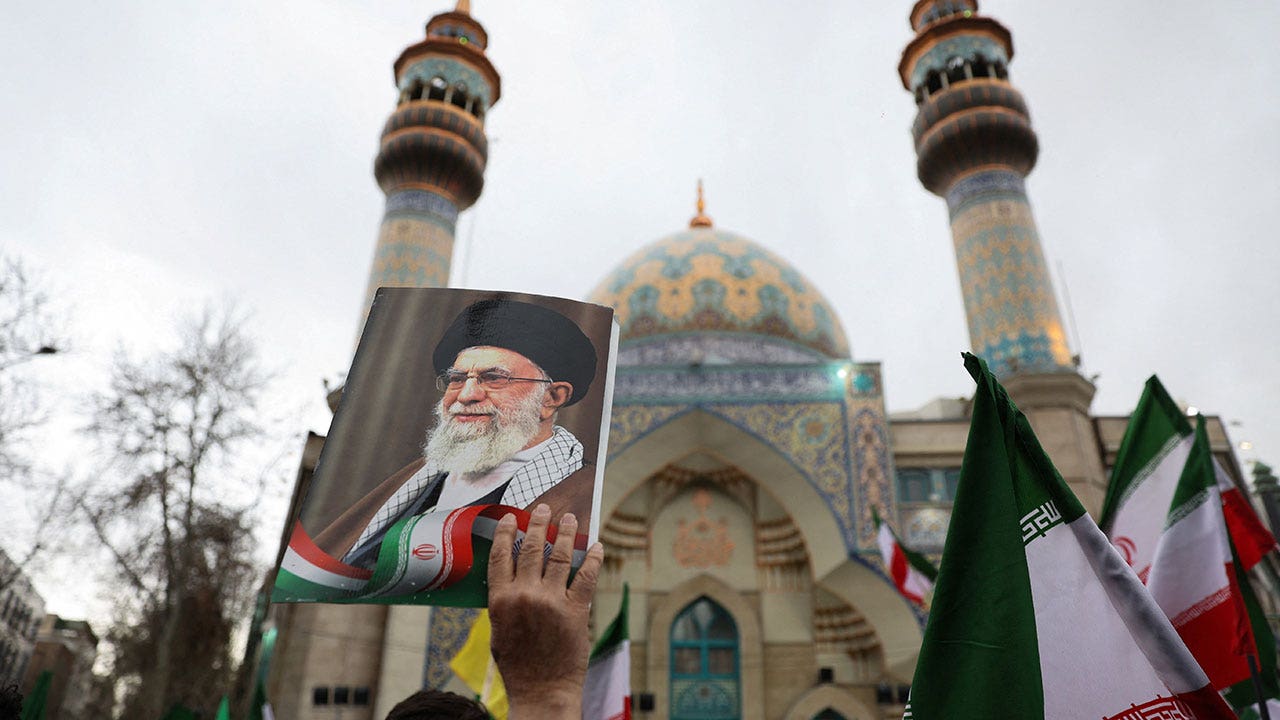
The joint U.S.-Israeli military operation against Iran is framed here as a necessary, moral step to neutralize a hostile regime, push toward meaningful change inside Iran, and protect American lives and interests while urging Iranians to seize a rare chance for freedom.
This military action is presented as both just and essential. It responds to years of Iranian aggression: mass executions, pursuit of nuclear weapons, and sponsorship of terror across the region. From a Republican perspective, allowing that behavior to continue with impunity was never acceptable. Force, used judiciously, is a tool to restore deterrence and defend our citizens.
President Donald Trump is credited with setting firm red lines and deciding the time had come to act. This move follows a broader campaign to degrade Iran’s nuclear and military capabilities, actions meant to keep the threat contained. Military strikes are described as one vital component of a broader strategy, not the entire solution. The regime’s survival, not tactical strikes alone, is the real danger that must be addressed.
Language like “HISTORIC US-ISRAEL STRIKES ON IRAN UNDERWAY AS TEHRAN FACES REGIME SURVIVAL TEST” captures the seriousness and scale of what’s underway. That seriousness is paired with a message to the Iranian people that this is a new moment of opportunity. President Trump’s words to Iranians are delivered intact: “The hour of your freedom” is at hand… For many years, you have asked for America’s help, but you never got it… Now you have a president who is giving you what you want.” Those lines are meant to encourage internal change rather than foreign occupation.
Americans have decades of evidence showing the Islamic Republic is not a reformable partner. Its record is clear: terror sponsorship, brutal repression at home, and repeated hostility to the United States and Israel. This pattern makes coexistence on reasonable terms impossible while the current regime remains in power. The behavior is portrayed as baked into the state’s identity, not a temporary policy quirk.
Critics who recoil at the phrase “regime change” are reminded there’s a difference between pragmatic temporary partnerships and tolerating an existential enemy. Citing a long tradition of conservative foreign-policy thought, the piece argues the United States must be able to distinguish necessary deals from appeasement. When a government repeatedly aims at our destruction, simple coexistence is not an option.
The history of Iranian anti-Americanism is listed bluntly: hostage takings, ongoing terror campaigns, public chanting of “Death to America;” and funding proxy forces across the Middle East. This is offered as proof the regime is a consistent and high-risk adversary. The logic follows that dismantling the regime’s capacity to harm others is a strategic necessity as well as a moral act.
The argument rejects full-scale occupation or imposing a puppet government. Instead, the recommended approach is targeted: strike at the pillars that prop up the regime—security apparatuses, financial networks, and foreign proxies—to make survival untenable. The goal is to create political space for Iran’s existing democratic opposition to step forward rather than to run the country from abroad.
There is confidence that an organized, domestic movement in Iran is ready to seize this chance. Repeated waves of protests over the years are cited as evidence that large numbers of Iranians want a secular, accountable republic rather than a theocracy. If the regime’s supports are weakened, that movement could provide the basis for a new, more peaceful government aligned with global norms.
The expected benefits of such a transition are framed as large and concrete. Terror networks would lose a major sponsor and regional adversaries would lose a key outpost. Economic opportunities could open up for American businesses and allies, and Iran’s educated population could become a valuable partner instead of a menace. This would strengthen U.S. security and global stability in tangible ways.
Taking the current step is described as the opening move in a broader campaign that must be followed through. The piece emphasizes holding to the strategic objective: remove the regime’s capacity to threaten the United States and its allies, while empowering Iranian voices for freedom. May God bless our servicemen and women as they carry out this noble endeavor, and may the Lord give the people of Iran the courage to embrace this chance for freedom.
