
The Blaze
The latest results from the National Assessment of Educational Progress, often called the “Nation’s Report Card,” have been released, and the findings aren’t great. The assessment, which looks at American students’ knowledge in subjects like math, reading, science, and writing, showed a decline in scores. Specifically, the average reading score for fourth and eighth graders last year was two points lower than in 2022 and five points lower than in 2019.
For fourth graders, reading scores dropped across most of the selected percentiles compared to 2022. Eighth graders also saw a decrease at several percentiles. Only 38% of eighth graders showed what the NAEP describes as “solid academic performance,” a worrying statistic that indicates a broader issue in education.
Many have pointed to the pandemic as a significant factor influencing these results. During the pandemic, there was a substantial interruption in education, largely driven by teachers’ unions advocating for school closures. The National Education Union was among those calling for schools to shut down, despite guidance from the CDC that suggested otherwise.
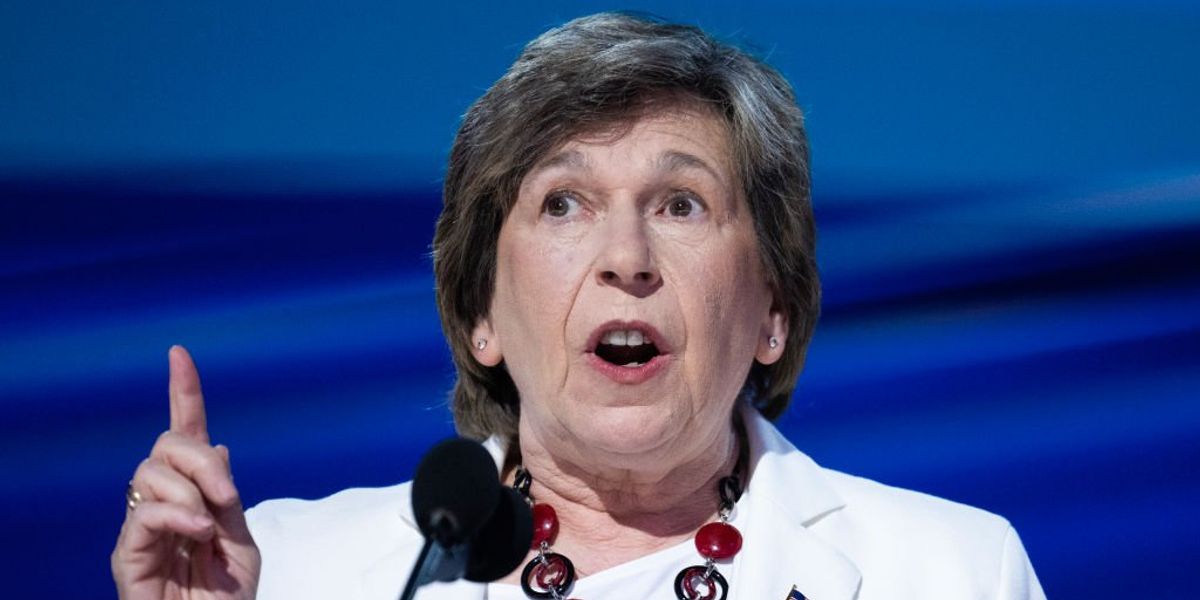
The president of the National Education Union, Becky Pringle, reportedly earned over half a million dollars during this period while advocating for school closures. Similarly, Randi Weingarten of the American Federation of Teachers labeled the Trump administration’s push to reopen schools as “reckless” and “cruel.” This resistance to reopening came even as schools received a substantial $190 billion in COVID-19 relief funds.
An alarming analogy was made by education researcher Dan Goldhaber, who said, “This is a flock of dead birds in the coal mine.” The University of Toronto and German researchers have both noted that school closures have lasting negative impacts on educational outcomes, especially for younger students and those from disadvantaged backgrounds.
The closures didn’t just affect academics; they also led to increases in mental health issues, obesity, and weakened immune systems among students. Peggy Carr, commissioner of the National Center for Education Statistics, stated, “The news is not good,” highlighting the failure to return to pre-pandemic performance levels.
Carr also pointed out that the decline in reading ability shouldn’t be blamed entirely on the pandemic. She mentioned issues like absenteeism and changes in how students engage with reading materials as contributing factors. “Student joy for reading is declining,” she observed, noting that students often read on devices rather than traditional books.
Martin West of the NAEP governing board emphasized the seriousness of the situation, stating, “We have a larger-than-in-recent-memory share of American students who are failing to demonstrate even partial mastery of important skills.” This trend doesn’t spell a promising future, both for the students themselves and for society at large.
Rep. Tim Walberg, chair of the House Education and Workforce Committee, shared his concerns too. He remarked, “When we fail our children, we fail our nation’s future,” pointing to the bureaucracy’s focus on “woke policies” over genuine educational growth. The sentiment echoes a broader frustration with the current state of the education system.
As the education sector grapples with these challenges, the focus is shifting toward finding solutions. The decline in reading scores and academic performance has sparked conversations about the effectiveness of current educational strategies. The consensus is that immediate action is needed to address these pressing issues.
The data paints a clear picture: there’s a gap widening in educational achievement, and it’s become worse since the pandemic. The challenge now is to bridge this gap and ensure that students receive the quality education they deserve. Policymakers and educators alike are being called to address these shortcomings and work towards meaningful improvements in the education system.
As these discussions unfold, the hope is to see a shift in priorities that will benefit students. The education system’s focus needs to realign with the fundamental goal of fostering student learning and academic growth. The future of America’s children and the nation’s success depends on it.
In light of these findings, there’s a push for accountability in the education sector. The role of teachers’ unions, policy decisions, and funding allocation are under scrutiny as part of a broader evaluation of what went wrong. The goal is to learn from these mistakes and implement changes that will lead to better outcomes for students nationwide.
With the stakes so high, there’s a collective call to action for all involved in education. There’s a need for innovative solutions and a commitment to putting students’ needs first. The path forward requires collaboration, dedication, and a willingness to challenge the status quo for the sake of future generations.
It’s essential to recognize the importance of education in shaping the nation’s future. The lessons learned from this assessment should guide efforts to improve and adapt the education system to better serve students. The hope is to see positive changes that will inspire confidence in the education system once again.
The urgency of the situation is evident, and the focus is now on making the necessary changes. As stakeholders work together, the aim is to create an educational environment where all students can thrive. The time to act is now, and the commitment to change must be unwavering for the sake of the nation’s future.

1 Comment
The reason besides the failure of our education system is the fact most if not all children are to ccought up with their cell phones and computer games that do not focus on reading skills and also the fact these children do not read books and cannot even spell simple words and since phonetic spelling is being practiced leads to misunderstanding of the words and their content. OUR schools are failing our children which will cause them to have a harder time navigation the complexities of our society! ! ! ! In others words they become ignorant and dumb and only exercise their thumbs instead of their minds.