
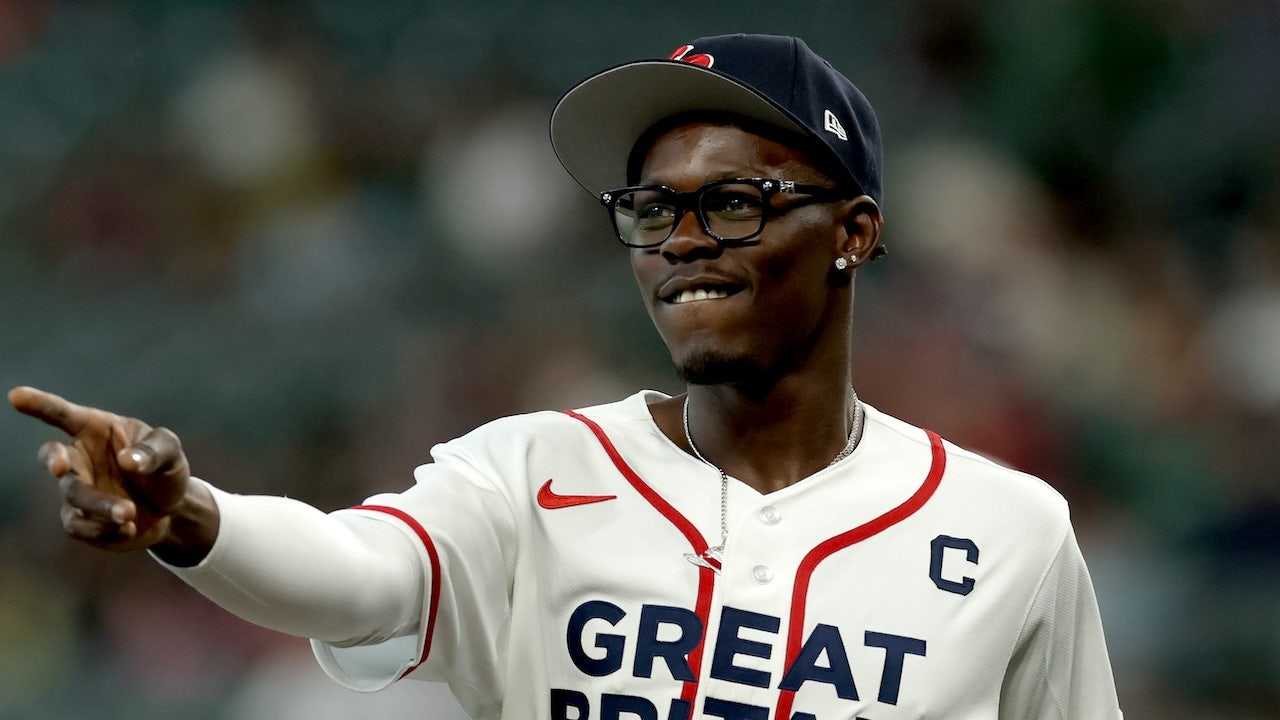
During a World Baseball Classic matchup between Mexico and Great Britain, New York Yankees star infielder Jazz Chisholm Jr. was booed during introductions, a moment that lit up the crowd and set a tense tone for the game. This piece walks through the atmosphere, what that reaction means in international play, and how moments like this sit at the crossroads of fandom, national pride, and professional performance.
The boos landed as Chisholm was introduced to a stadium full of mixed loyalties, and they were loud enough to be noticed beyond the usual pregame chatter. Fans showing disapproval during introductions is a blunt, public signal that can rattle players or be shrugged off depending on personalities. For a player like Chisholm, who has a high profile and plays in one of the biggest sports markets, those reactions carry extra weight.
Jazz Chisholm Jr. is widely known for his electric style and dynamic play, with a reputation that follows him from club season to international matchups. That visibility makes him a natural target for strong responses, whether positive or negative, when he steps onto a global stage. The World Baseball Classic amplifies everything, turning individual moments into national talking points fast.
International tournaments like the WBC are a different animal compared to regular season games, because national identity is front and center and crowds bring national fervor. A player who spends most of the year representing a major league club suddenly wears a different banner, and fans react accordingly. When national loyalty mixes with celebrity status, you get charged atmospheres where introductions can sound like a referendum.
From the player’s perspective, distraction is the last thing anyone wants before the first pitch, yet it is part of the modern athlete’s job to stay composed under noise. Pros train to filter out the background and focus on their role, but some moments still catch a player off guard. How Chisholm responded in the immediate minutes that followed told observers something about his poise and mindset.
Crowd behavior varies widely from one venue to the next, and the WBC has shown time and again how a stadium can swing the mood of a game. One group’s passionate support can look like hostility to another, depending on where you stand. This duality makes interpreting a single chorus of boos tricky without context about fan composition and local narratives.
There’s also the angle of rivalry and storytelling. Baseball fans love a narrative, and booing can be a crude but effective way to create one on the spot. It feeds back into the spectacle, gets the cameras focused, and gives pundits something to parse between innings. The spectacle can overshadow subtler aspects of the contest unless players steer attention back to their play.
Players representing their countries often carry complex loyalties because club and country ask different things of them. Wearing the national uniform is an honor and a pressure point, and reactions from the stands are part of that heightened responsibility. Fans sometimes forget that a flash of noise at introductions is small compared to the full arc of a tournament performance.
Sportsmanship expectations exist on both sides: for fans to respect competitors and for players to respond with class. Yet the line between passionate support and unsportsmanlike conduct is fuzzy, and what looks like booing to some is boisterous cheering to others. Officials and organizers usually prefer a supportive environment, but they also accept that international play tends to stir strong emotions.
Media coverage will likely highlight the introductory moment because it makes for compelling visuals and quick takes, but headlines rarely capture the full texture of the crowd or the nuance of a player’s reaction. Short clips circulate fast and shape perceptions before the box score can tell a different story. Those instant impressions often fuel conversations that carry beyond the ballpark.
On the field, performance often quiets noise faster than words do, and that scoreboard truth is what many athletes rely on. If Chisholm and his teammates execute, the booing becomes a footnote to a better story about resilience and competitive response. If the opposite happens, the moment will be replayed as part of a larger critique about focus or form.
The World Baseball Classic gives players a rare spotlight to represent both where they play and where they come from, and those dual identities can draw contrasting reactions. Fans at international games are playing out their loyalties in real time, and players like Chisholm are front and center in that exchange. The tension between performance and perception is one of sport’s enduring dynamics.
In the end, the introductions are just the opening movement of a much longer game, and the real questions come back to how the match unfolds on the field. For now the booing is part of the story, a vivid reminder of how personal and public sporting moments can be. The tournament continues and so does the conversation around how fans and players meet in the middle of the world stage.
