
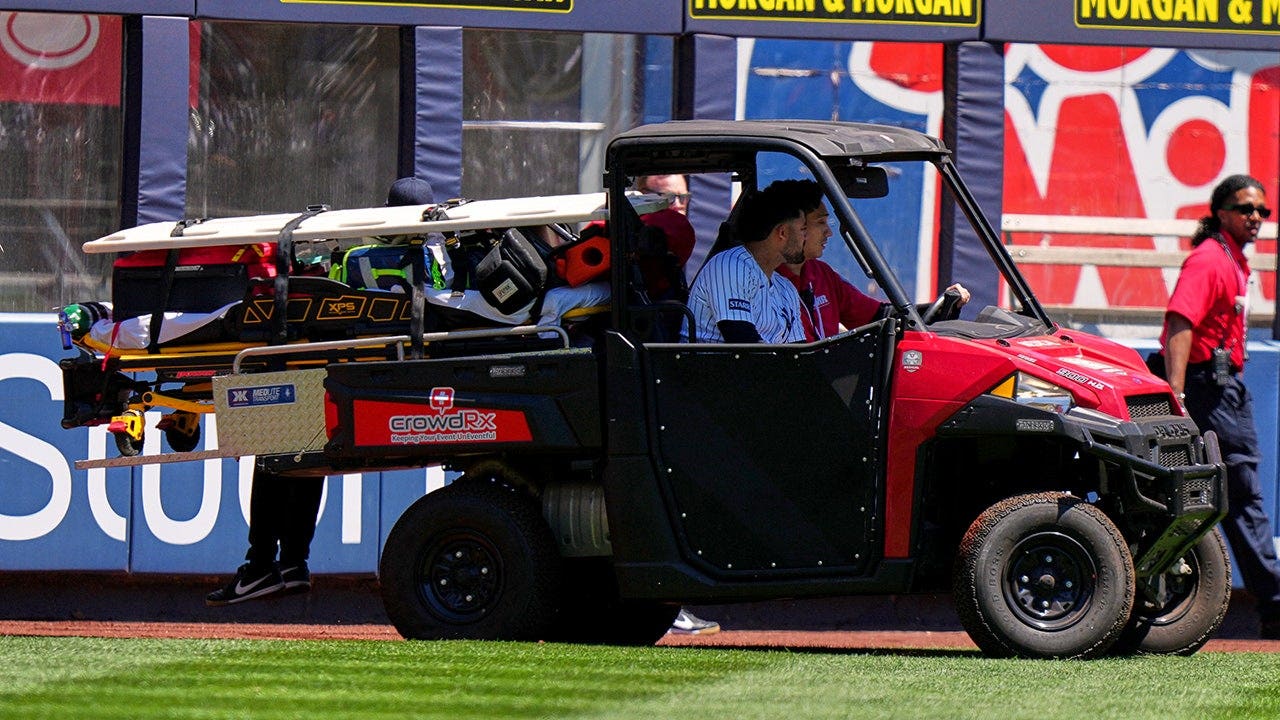
Jasson Dominguez crashed into the outfield fence making a stunning catch and ended up face down on the warning track before being carted off, and this article walks through the play, the immediate medical reaction, possible diagnoses, roster implications for the Yankees, and what fans should watch for next.
The play itself looked like something out of a highlight reel. Dominguez tracked a deep fly, timed his leap perfectly, and grabbed the ball cleanly, but momentum carried him into the padding at full speed. He stayed down long enough for trainers and teammates to swarm the area, and the emotion in the stadium shifted from awe to concern in seconds. Seeing a young player go down after such a heroic effort is jarring no matter where you sit.
Medical staff immobilized him briefly and then had him stretchered off, a protocol meant to avoid aggravating any potential neck, head, or spinal injury. The fact that he left the field on a cart suggests the team wanted to rule out any serious structural damage quickly. Teams typically perform concussion protocols, X rays and CT scans in these situations to check for fractures, internal injuries, and brain trauma. Those tests will drive any short-term treatment and the initial prognosis.
With an athlete slammed into a barrier at full speed, concussion is the immediate worry. Modern sports medicine treats concussions with a careful graduated return-to-play plan, which can take days or weeks depending on symptoms. Facial fractures or lacerations are also possible, because collisions with fences concentrate force in small areas. Shoulder, collarbone, and rib injuries can crop up too when the body absorbs the hit while bracing for impact.
For the Yankees, the timing matters. Dominguez is one of the club’s most talked-about prospects and a player many hope will help solidify the outfield for years. Losing him even briefly shifts playing time, forces lineup tweaks, and may create decisions about calling someone up or stretching out another outfielder. Teams with deep rosters can absorb short absences better, but any extended downtime for a high-upside player complicates plans during a competitive stretch.
There are plenty of precedents in baseball for this kind of collision. Some players return after a short recovery with no long-term effects, while others require surgery or extended rehab. Context matters: angle of impact, whether the head hit the railing, and the presence of preexisting conditions all change the likely outcome. Medical staff, team doctors, and independent specialists will combine tests with symptom checks to form a clear picture.
Fans will want transparent updates from the club about diagnostic results and an expected timeline. The Yankees tend to be cautious and measured in early statements, balancing the need for accuracy with the public’s demand for information. Social media will fill with speculation; the sensible approach is to rely on confirmed medical reports rather than hot takes. In the meantime, the team will prioritize both his immediate care and the long-term health of a promising young player.
Watching Dominguez walk off under his own power would be the best-case image, but patience is the necessary approach after a hard collision. The focus now is on diagnostics, symptom monitoring, and protecting the player from premature returns. The next official updates should clarify whether this ends up as a brief scare or something that reshapes the roster picture for the short term. Until then, the play will be remembered for both the athleticism and the sudden shift from celebration to concern.
