
Women in Combat: Quick Draw, Culture, and the Question of Readiness
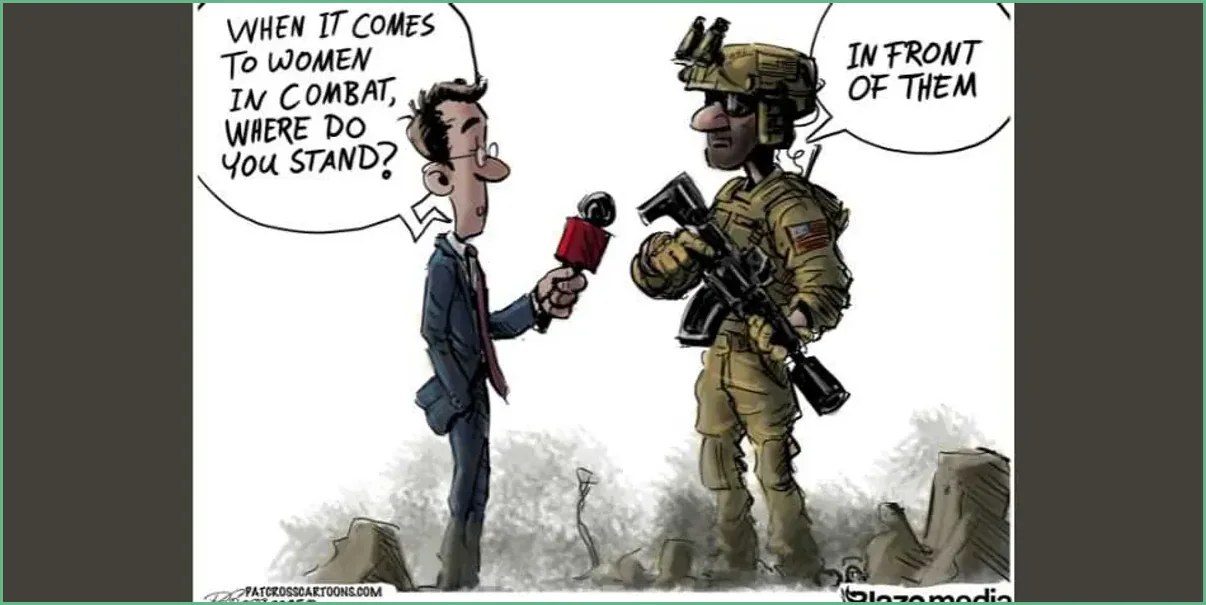
Pat Cross captured a moment that asks, in plain text, “‘Where do you stand?'” The photo credit sits quietly beside the thought, a small signpost in a larger conversation about capability, culture, and comedy. This piece walks the line between serious discussion and a wink at the absurd, and it does so without pretending the choice is easy.
This is not a policy brief and it is not a sermon; it is a close look at how modern militaries, workplaces, and pop culture deal with women who pick up the rifle. Expect clear-eyed observations about practical readiness, social expectations, and the odd ways humor shows up when people try on new roles. I want to stir thinking rather than settle the debate, because honest questions beat polished slogans.
Start with the basic fact: women are serving in combat roles now in many places where they were once excluded. That shift has been messy, human, necessary, and sometimes awkward, because institutions evolve slower than headlines. Facts matter more than feelings when lives and missions are on the line, but feelings shape how units function day to day.
Performance metrics matter in any job that asks people to trust their lives to each other. Physical standards, skill evaluations, and unit cohesion are measurable and should be transparent. If standards are the goal then they should be set, enforced, and equal for everyone who wants the job.
That said, capability is not just about upper body strength or sprint times; it is also about judgment, resilience, and the ability to adapt in chaos. Women have proven those traits in countless examples, from historic conflicts to recent operations. The test is whether the overall force is stronger and more effective when everyone capable is allowed to serve where needed.
A Cultural Quick Draw
Culture moves faster in jokes than in policy, and humor here is a useful thermometer. When comedians riff on women in combat or portray them in wild situations it reveals anxieties and admiration mixed together. Laughter can be a release valve or a blunt instrument; pay attention to what the jokes are trying to hide.
Pop culture also shapes expectations about heroism and sacrifice, and sometimes those narratives collide with the messy reality of training and deployment. Movies that show flawless soldiers rarely show the long hours of repetition that create competence. Real life rewards repetition, humility, and a willingness to be corrected in public.
Unit cohesion is not a feeling you can legislate; it is a practice built on trust earned in training and trial. When squads live, eat, freeze, and improvise together they form bonds deeper than slogans. Integrating new members succeeds when leaders focus on shared mission and shared competence, not identity politics.
Training programs can be smart about differences without becoming soft about standards, and that is the pragmatic needle to thread. Tailored approaches in preparation make units ready faster while keeping expectations clear. The goal is not equality of outcome but equality of opportunity to meet a known bar.
There is an element of fairness here that is non-negotiable: if the job is to accomplish mission X under harsh conditions, anyone who wants it should be able to show they can. That creates both incentive and accountability, which healthy organizations need. Preferential treatment hurts morale and corrodes trust faster than any difficult training regimen.
Concerns about privacy, modesty, and medical needs are real and reasonable, and dismissing them as trivial undermines good leadership. Sensible policies can protect dignity while keeping readiness intact. Leaders who acknowledge logistical realities and solve for them tend to get better results than those who pretend problems do not exist.
Critics often zero in on rare failures and exaggerate them to make broad points, while defenders sometimes elevate anecdote into proof. The honest middle path treats data seriously and anecdotes compassionately. Both vilifying and sanctifying individuals for symbol-making rarely helps the mission.
There is also a human storyline worth honoring: people who choose danger for a cause deserve respect regardless of gender. The personal sacrifices of families, the stress of deployments, and the daily grind of training are universal. Recognizing that humanity is the key to building an ethic that puts mission first and people second to none.
At the end of the day, the question “‘Where do you stand?'” is less about political grandstanding and more about practical choices. Do we set clear standards and let capable people meet them? Do we invest in training, equipment, and leaders who can blend toughness with common sense? Answering those questions honestly will shape the next generation of service and service culture.
Whatever your view on women in combat, the debate is getting more nuanced and more necessary than ever. Laugh when humor lands and criticize when policy is sloppy, but do both with eyes open to the demands of real missions. The future belongs to institutions that put effectiveness ahead of optics and to people who are ready to prove it.
