
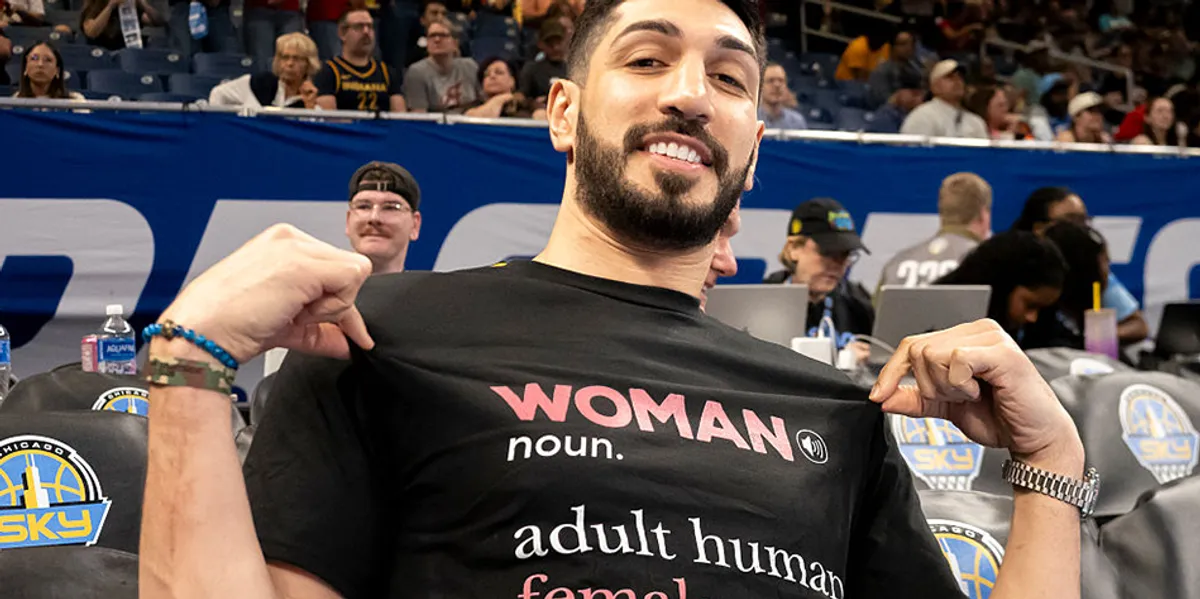
The dispute over male participation in women’s sports has landed in the middle of another public fight, and this time the WNBA is the one feeling the heat. A former congressman is warning the league that if it keeps pushing policies seen as shutting out male players from women’s competition, court could be the next stop. The issue is bigger than one league, because it taps into a national argument over fairness, eligibility, and what women’s sports are supposed to protect.
The criticism centers on the growing tension between inclusion and competitive balance. Supporters of women’s sports argue that leagues have a duty to preserve a level playing field, while activists on the other side push for broader participation rules that ignore biological differences. That clash has already turned sports into one of the loudest front lines in the larger culture war.
Public figures have not been shy about jumping in. Matt Gaetz and Royce White have both been tied to the same broader fight, using the issue to spotlight what they see as a breakdown in common sense across sports institutions. Their point is simple: once a league starts bending its own standards to satisfy political pressure, it risks losing the trust of players, fans, and parents who expect the women’s game to mean something specific.
That frustration has been building for a while. Women athletes across different sports have argued that they are being asked to compete under rules that no longer protect them from unfair advantages, and many fans have noticed the same thing. The WNBA, because of its visibility and symbolic weight, ends up carrying a lot of that tension even when the immediate dispute starts somewhere else.
What makes this especially volatile is that legal threats now hang over policy decisions that once would have stayed inside league offices. If a league chooses one side of the debate, it can face backlash from advocates and possible challenges from those who say the rules discriminate the other way. That leaves sports executives trying to navigate a minefield with every move watched by cameras, activists, and lawmakers.
Enes Kanter Freedom has also become part of the wider conversation around sports, identity, and standing up to powerful institutions. His presence in these debates reflects how many athletes and former athletes are no longer willing to sit quietly while leagues take positions that reshape competition. The message from critics is loud and blunt: women’s sports should not be turned into a testing ground for social experiments.
At the same time, the pressure on leagues keeps growing because these arguments are no longer confined to niche corners of the internet. They are spilling into mainstream coverage, courtrooms, statehouses, and locker rooms. Every new policy decision now has to survive not just public scrutiny, but the possibility that lawyers will be waiting to challenge it.
That is why the warning carries so much weight. It is not just a shot across the bow at the WNBA, it is a reminder that the fight over men in women’s sports has moved far beyond symbolic debate. The league is now standing in a space where competitive fairness, legal exposure, and public backlash all collide at once, and nobody involved gets to pretend the stakes are small.
