
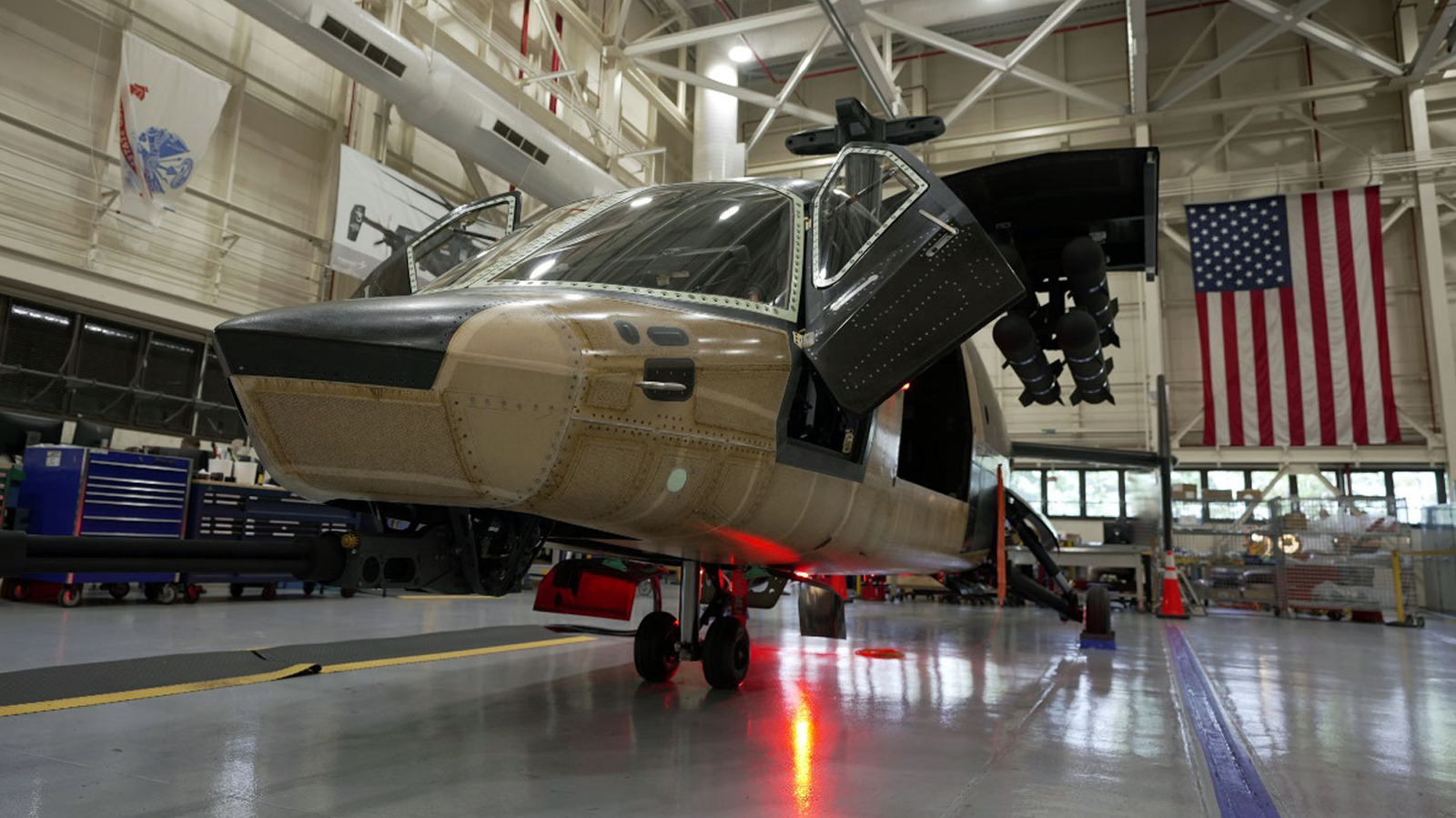
The Army’s helicopter fleet has been under pressure to catch up with modern warfare, and that made Sikorsky’s Raider X look like a serious contender. Built for reconnaissance and armed scouting, it was meant to bring speed, advanced tech, and fresh tactics into a role that had been filled by aging aircraft for decades.
At the center of the story is the Army’s push to replace the old Kiowa Warrior with something sharper and more survivable. The answer seemed to be the Future Attack Reconnaissance Aircraft program, or FARA, which aimed to deliver a new generation of scout helicopter instead of leaning forever on upgraded legacy machines.
FARA launched in 2018 with big expectations, and Sikorsky brought the Raider X into the fight as its entry. The design was built around the X2 rotor system and carried over ideas from the S-97 Raider, aiming for a mix of agility, speed, and advanced mission flexibility.
What made the Raider X stand out was not just the look, but the pitch behind it. Sikorsky said the aircraft could handle low-altitude reconnaissance, climb to around 9,000 feet, and move at more than 250 knots, while also supporting existing weapons and computer systems without forcing a total overhaul.
That kind of plug-and-play appeal mattered because the Army wanted a machine that could slot into current operations without creating a maintenance headache. By late 2022, the prototype was reportedly 92% complete, and the program seemed close to the point where flight testing would start turning theory into reality.
To understand why that mattered so much, it helps to look at the Kiowa Warrior it was supposed to replace. The OH-58D Kiowa Warrior came out of an older helicopter family dating back to the 1960s, then evolved into an armed scout platform in the 1980s and served in places like Iraq and Afghanistan before retiring in 2016.
The Kiowa had proved useful, but it was also a reminder of how long the Army had been stretching older designs. Even the Black Hawk and Apache, both heavily upgraded, come from airframes that first entered service decades ago, which is exactly why FARA was supposed to break that pattern.
Then the battlefield changed fast. The war in Ukraine highlighted how drones and other unmanned systems were taking on more of the reconnaissance work once handled by helicopters, and that forced the Army to rethink what it actually needed from a future scout aircraft.
Budget pressure did the rest. In February 2024, the Army shut down FARA, leaving Raider X without the program it had been built to support and putting an end to the idea of a brand-new manned scout helicopter for the service.
The decision did not mean the technology vanished, though. The GE T901 engine, which was tied to the effort, was redirected toward upgrades for existing Black Hawk and Apache helicopters, giving older aircraft more power instead of funding a whole new fleet.
That shift says a lot about where military aviation is headed right now. The Army is betting that a smarter mix of drones, improved engines, and upgraded proven helicopters makes more sense than chasing a brand-new platform that may already be out of step with the fight.
Even so, the Raider X still leaves behind a trail of useful lessons. It showed how far rotorcraft design has come, and how quickly a promising aircraft can get caught between technical ambition, battlefield reality, and the hard math of defense spending.
For Sikorsky, the story is not over, either. X2-based helicopters could still find a path with other NATO countries, and the Raider X may end up remembered less as a failure than as a glimpse of a future the Army decided it could no longer afford to chase.
