
The Blaze
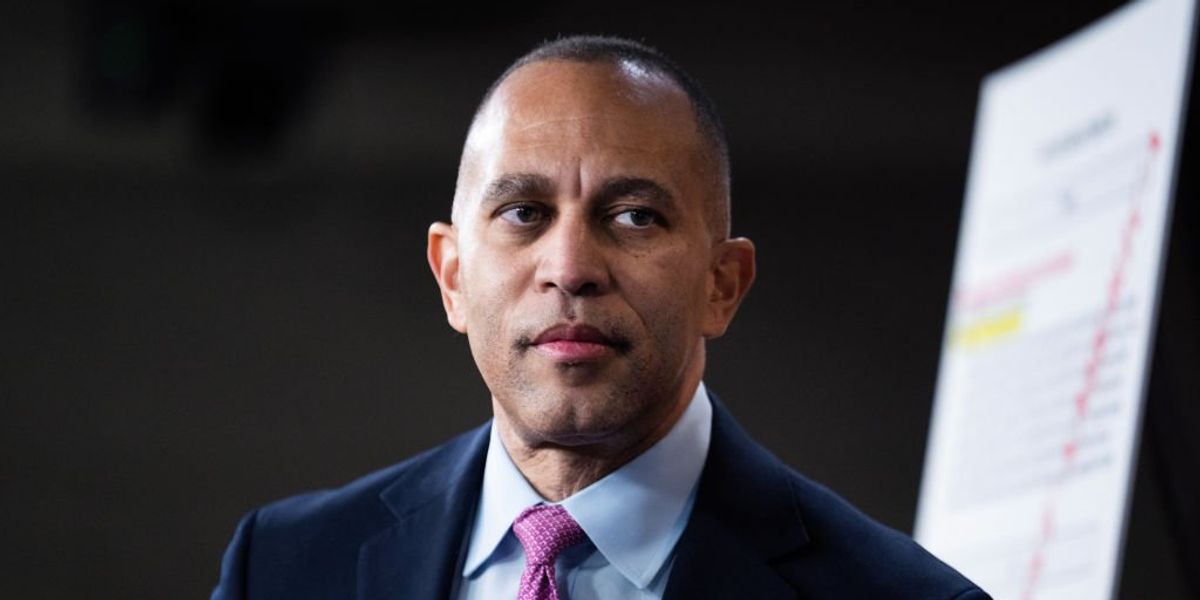
House Minority Leader Hakeem Jeffries, a Democrat from New York, stirred the pot last Friday by hinting at violence as a political strategy, a move echoing a historic trend among Democrats. During a press conference with fellow New York Democrat Rep. Yvette Clarke, Jeffries voiced his concerns about the high cost of living in their state, President Trump’s efforts to freeze federal funding, and the proposed tax cuts by what he calls the “extreme MAGA Republican agenda.” Despite his earlier stance against political violence, Jeffries declared, “We are going to fight it legislatively, we are going to fight it in the courts, and we’re going to fight it in the streets.”
The backlash to Jeffries’ comments was swift and sharp. Skeptics questioned whether Democrats and the mainstream media would condemn this apparent call to action. The White House released a statement pressing Jeffries to apologize for his “disgusting threat” and criticized the ongoing calls for violence that have been troubling the nation.
Republican Rep. Tom Emmer from Minnesota, serving as the GOP majority whip, urged Jeffries to retract his inflammatory rhetoric. Emmer emphasized that while President Trump and his party are striving to unite the country, Jeffries’ divisive language is counterproductive. The House Judiciary Committee’s Republicans echoed this sentiment on X, highlighting the need for Democrats to denounce such incitements.
Christie Stephenson, speaking for Jeffries, dismissed the accusations, suggesting Republicans were misinterpreting his words. She argued that Jeffries was advocating for nonviolent protest, not violence. In her statement to Fox News Digital, Stephenson pointed out the irony of Republicans, who she claims have a history of pardoning violent offenders, accusing Jeffries of supporting violence.
Instances of Democrats making controversial statements and later backtracking are not new. For example, back in 2017, Rep. Maxine Waters made headlines with her provocative comments about President Trump. The following year, she advised activists to confront Trump administration officials in public spaces, urging them to create a scene and express their disapproval.
Waters’ remarks during Derek Chauvin’s murder trial added fuel to the fire. She called for continued street protests and more confrontational actions if Chauvin was acquitted. This pattern of Democrats using charged language to rally supporters is a recurring theme.
In 2018, Sen. Cory Booker encouraged activists to confront members of Congress directly. Similarly, Rep. Nancy Pelosi questioned why there weren’t nationwide uprisings against the policy of separating families at the border, suggesting that such actions might be warranted.
Sen. Chuck Schumer’s 2020 comments outside the Supreme Court also drew attention. He warned Justices Gorsuch and Kavanaugh of repercussions if they proceeded with decisions he deemed unfavorable, using language that critics interpreted as threatening.
Despite his past condemnation of political violence, Jeffries’ recent comments have reignited the debate on accountability. He had previously insisted that those in power who incite violence should face legal repercussions. This stance seems to contrast with his current rhetoric.
The ongoing discourse raises questions about the responsibility of public figures in choosing their words wisely. The potential consequences of such statements are significant, especially in a politically divided climate. As the debate continues, the importance of accountability and clarity in political discourse remains at the forefront.
While Democrats like Jeffries argue for peaceful protest, their language often blurs the lines, leading to misinterpretations. This ambiguity fuels the narrative that Democrats may condone more aggressive forms of activism. The challenge lies in balancing passionate advocacy with responsible communication.
Republicans continue to call for an end to what they see as dangerous rhetoric from their Democratic counterparts. They argue that such language only deepens the nation’s divisions and hinders efforts to achieve unity. The political landscape is fraught with tension, and the words of leaders carry significant weight.
The scrutiny on Jeffries and others highlights the broader issue of political accountability. As public servants, the expectation is that they lead by example, promoting peaceful and constructive discourse. The repercussions of failing to do so can be severe, affecting not just their careers but the fabric of society.
In this charged environment, the call for cooler heads and more measured language becomes increasingly urgent. The potential for misunderstanding and escalation is high, and the need for responsible leadership is paramount. As the political season progresses, the focus remains on encouraging dialogue that bridges divides rather than widens them.
