
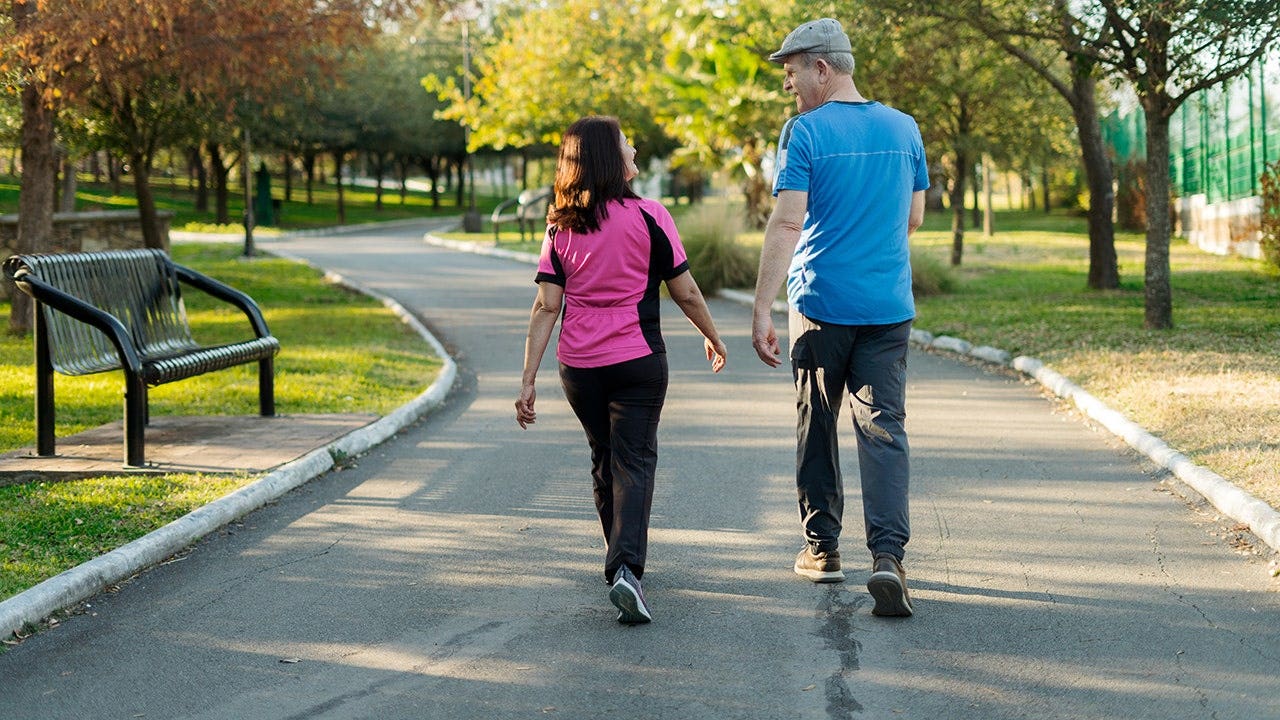
How quickly someone walks can reveal more than just a personality trait or a busy schedule. A new study points to walking speed as a surprisingly useful snapshot of aging, overall fitness, and the way the body is holding up over time.
The research followed more than 4,000 older adults in the U.K. for nearly 12 years and found that people who walked faster tended to face a lower risk of death. That link showed up both in a simple walking test and in daily-life tracking, which made the finding stand out even more.
Researchers looked at 4,067 adults whose average age was about 69 and compared their walking pace with later health outcomes. Each participant completed a short walk at their normal speed and also wore a wrist tracker for nine days to capture real-world movement.
Across the follow-up period, 739 participants died, and the pattern was hard to ignore. Faster walking was tied to better survival odds even after taking other health and lifestyle factors into account, suggesting that pace may reflect more than just fitness in the narrow sense.
Experts say that makes sense because walking depends on a lot of systems working together at once. Strong legs, steady balance, healthy lungs, a solid heart, and a sharp nervous system all play a role when someone moves at a brisk pace.
That is why some physical therapists call walking speed the “sixth vital sign.” It can act like a quiet signal in the background, hinting that something is changing even before a blood test or doctor’s visit picks it up.
When walking starts to slow down, it may be a sign that the body is losing efficiency in one or more areas. That does not automatically mean something serious is wrong, but it can be a useful nudge to pay closer attention.
For older adults hoping to improve their pace, the answer is not just to pile on more steps. Building strength and balance matters just as much, because speed usually comes from how well the whole system works, not just from logging extra miles.
Simple movements can help, especially exercises that challenge the legs in everyday ways. Standing up from a chair without using the hands or doing heel raises while holding onto a counter can support the muscles that drive better walking.
Short bursts of brisk walking can also fit into a routine without feeling overwhelming. After warming up, alternating one minute of faster walking with two minutes of easier movement is one way to start, then gradually increase the brisk intervals over time.
Still, the study does not prove that walking faster on its own leads to a longer life. It shows an association, which means pace may be a marker of health rather than the entire reason behind the difference.
The researchers also noted that their sample was generally healthier than the broader population, and there is no single perfect way to measure everyday walking speed with a wrist tracker. Even so, the idea is getting attention because it is simple, practical, and easy to understand without fancy equipment.
That is part of the appeal. A person’s usual walk can reveal a lot about stamina, resilience, and how well the body is aging, and sometimes the clearest clues are the ones that show up on an ordinary trip across the park.

1 Comment
Especially when crossing a street………