
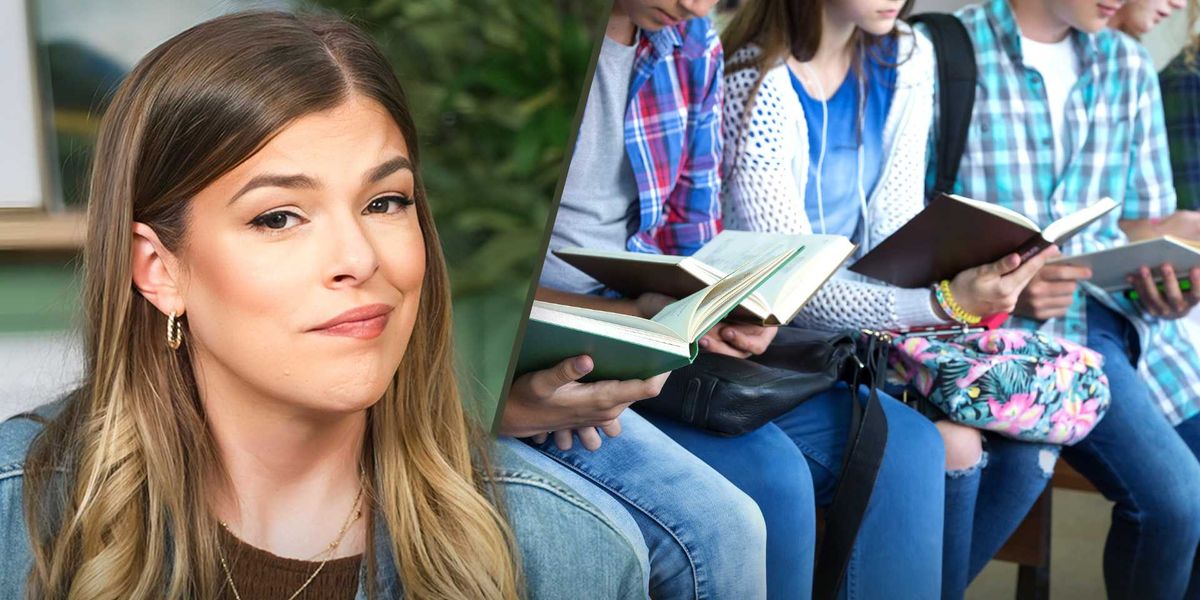
A viral classroom clip has lit up social media and forced a blunt conversation about the state of reading skills in American schools, parents’ habits, and cultural values tied to language. The clip, commentary from a conservative commentator, and a HarperCollins statistic about early-childhood reading combine to sketch a worrying picture: fewer kids are being read to, and that gap shows up as a decline in basic literacy. The conversation moves from classroom practice to family life and even into how faith communities have historically treated words. The piece argues that words matter more than ever, and that fixing this starts with habits at home as much as in school.
A short TikTok that’s gone viral shows high school students stumbling over a sentence that many would call simple: “She wore a silhouette of clothes that were extraordinary but somewhat gauche.” The clip landed like a cold splash of reality, making people ask whether schools are teaching kids to decode and understand the language they encounter every day. The moment is small but telling, a snapshot that hints at deeper trouble with comprehension and vocabulary.
On BlazeTV, Allie Beth Stuckey points at two causes she sees as central: the way literacy is taught in classrooms and a drop in parents reading to their children. She invokes a HarperCollins finding to underline the scale of the shift and to push the conversation beyond viral clip shock value. The concern is less theatrical and more structural, about a steady erosion of formative language habits in early childhood.
Stuckey highlights the sharp decline in daily read-aloud routines at home. “I saw this statistic that says only 41% of children aged 0 to 4 are read to daily as of 2025. That is a nine-point drop only since 2019. Only 55%, a little over half of children aged 0 to 5, are read to at least five days a week,” she continues. Those numbers get to the heart of why simple sentences can trip up students who never practiced listening to complex phrasing at home.
She doesn’t paint parents as villains but as exhausted people making choices under pressure. “There are a lot of parents who are overstimulated. They’re tired. They’re distracted. It’s really not about these kids having their own lack of discipline. It starts with a lack of discipline and bad priorities for parents honestly,” she adds. The argument is straightforward: if early practice in language is absent, kids miss scaffolding that reading aloud provides.
That absence, Stuckey warns, won’t just cause awkward classroom moments; it can shadow students for years. Stuckey believes that the difficulty parents face finding the time or energy to read to their kids is manifesting in “difficulty for them for the rest of their lives.” Putting words and comprehension at the center of upbringing, she says, changes trajectories in education and beyond.
She stresses that language comprehension is the backbone of civic and personal life. “the comprehension of words is necessary for understanding the world.” Without that foundation, the practical work of learning, voting, and community participation gets harder. The point ties literacy to independent thinking rather than seeing reading as a narrow academic skill.
On that note, she is blunt about consequences across roles: “It is very difficult to be a diligent student, an informed voter, a productive citizen, a helpful neighbor if you do not understand words,” Stuckey says. That sentence ties reading to responsible citizenship, suggesting the stakes go well past test scores and into how people engage with ideas and institutions. The link is moral as much as practical in her telling.
Stuckey also frames the issue within a faith-based understanding of language and history. “Unlike Buddhism, Christianity does not place a premium on silence or the emptying of the mind. Christianity is a word-based faith. You go all the way back to the beginning. God spoke the universe into existence,” Stuckey explains. Her point is that for believers, words are not optional tools but the medium through which meaning and direction are conveyed.
She ties that theological claim to a historical role for Christians in shaping public discourse. “He dictated all of creation, including the creation of man and woman who were made in his image. He spoke to Noah. He spoke to and through Moses,” she continues. That thread supports her broader point about the long-standing cultural weight of words among faith communities.
This is why, Stuckey explains, Christians have historically been “the best communicators in the world.” She says those strengths gave earlier generations cultural influence that has since shifted as institutions changed. Her claim is a call to action: to regain the habit of careful language and the civic energy that follows.
Stuckey’s final critique lands on schools and standards. “Christians dominated academia in this country before giving it over to the liberals and the secularists over time. And now, I think we have the opportunity to take the lead again. We have to. I mean, look at where we are,” she says. She adds a warning about lowering expectations: “We have schools that are not teaching kids to read. We have people going to college and becoming lawyers and doctors with barely a high school-reading level. We’re scared of objective standards here in the U.S., standards of excellence because of whom they might exclude,” she continues, adding, “And all of us are going to suffer for that.”
