
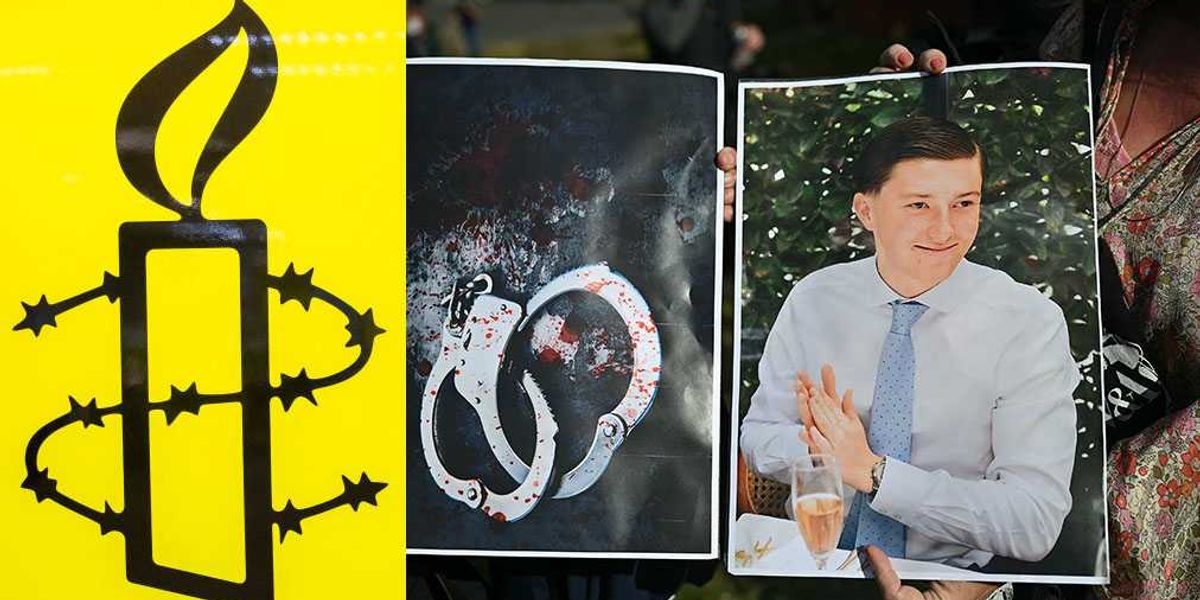
The murder of 18-year-old Henry Nowak by Vickrum Digwa, the shock of the bodycam footage, public fury at police response, and Amnesty International’s controversial statement have combined into a raw national debate about two-tier policing, accountability, and whether human rights groups still stand for victims or for a political line.
In December, Vickrum Digwa fatally stabbed Henry Nowak, an 18-year-old in the U.K., and was recently convicted and handed a minimum prison term of 21 years. The case shocked people because the initial police response treated the dying teen as an aggressor and left his pleas ignored. That mishandling is now at the center of public outrage and calls for answers.
Bodycam footage made the scene painfully clear to the public and intensified demands for accountability from the Hampshire and Isle of Wight Constabulary. Viewers saw officers arrest and handcuff a dying Nowak after he was falsely accused, and many Britons say the reaction showed a pattern of reflexive thinking. That perception has driven protests and heated political debate about how policing decisions are made in moments of crisis.
Hundreds of people took to the streets across southern England to demonstrate against what they view as unequal treatment by the police. Politicians from across the spectrum have weighed in, and the footage has become a focal point for broader complaints about institutional bias. The combination of a brutal crime and a problematic response has made this more than just a local scandal.
Amnesty International stepped into the fray with a public statement that many found tone deaf and defensive rather than consoling. The organization criticized political reactions from the right even as families and communities sought answers from officers. That move prompted sharp criticism from people who expected human rights groups to focus on victims first.
“At a time when hate crimes are rising, and violence and fear are becoming a daily reality for people of colour and migrants, calls for ‘cold, hard rage’ are completely reckless,” Amnesty International.
For those watching from a conservative perspective, Amnesty’s statement looked like an attempt to police political speech rather than confront the immediate policing failures. The NGO describes itself as committed to challenging injustice and uncomfortable truths, but critics say this moment called for clarity about police conduct and empathy for the victim. Instead, the response read as protective of a political narrative.
The “cold, hard rage” line traces back to Reform U.K. leader Nigel Farage and a public call for blunt accountability, and the controversy only grew from there. The quote shows how politicians can turn a tragedy into a rallying cry, and it shows how NGOs and elected officials clash over tone and focus.
Amnesty acknowledged that Nowak’s murder “is an awful tragedy,” while arguing that “irresponsible narratives of two-tier policing seek to sow division and fly in the face of decades of evidence of institutional failure within policing and disparities faced by racialised communities. This includes many cases of deaths in police custody for which meaningful steps towards accountability are long overdue.” Their framing insists the broader history of policing failures matters more than the specifics of this case to some observers.
Some commentators accused Amnesty of filing its statement under “racial justice” as a way to deflect attention from the immediate facts of the case. That choice of framing makes the organization vulnerable to charges that it prioritizes ideology over victims and due process. To many conservatives, that confirms a wider drift in which institutions pick causes rather than defend consistent principles.
Charlie Weimers, a Swedish member of the European Parliament, in response to the NGO’s statement, “Amnesty has been morally bankrupt for a long time. A pure left-wing organization.”
https://x.com/Nigel_Farage/status/2061718431280304367?s=20
“Amnesty International lost its moral compass many years ago,” former Canadian Defense Minister and Alberta Premier Jason Kenney. “Sad that an organization that used to be hugely effective in advocating for prisoners of conscience was coopted to become a boringly predictable voice for the left’s omnicause.”
Critics note Amnesty’s recent expansion into hot-button cultural issues like abortion rights, climate campaigning, and LGBT advocacy as evidence that the group has become political in ways that undermine its original human rights mission. From a Republican viewpoint, that shift erodes trust when the public expects impartiality on cases of violence and justice. The result is predictable anger when a perceived neutral body appears to take a side.
Turning Point USA contributor Jack Posobiec , “It’s not complicated. They just hate white people.”
Amnesty was not the only institution accused of clouding the debate; Nigel Farage in parliament urged leaders to “end this divisive practice of two-tier policing and make sure that all British citizens are treated the same.” His remarks pushed the conversation toward law and order and equality before the law. The prime minister pushed back, denying two-tier policing and accusing opponents of exploiting the tragedy for political gain.
Despite denials, the National Police Chiefs’ Council announced a review of its anti-racism guidance, a document that critics say encourages differential treatment. The guidance states a commitment to racial equity and explains that equality of outcome may require different responses depending on circumstances. That language is now a flashpoint in the debate over whether policing should ever treat people differently on the basis of race.
Our commitment to racial equity means producing equality of policing outcomes for people from different ethnic groups by responding to individuals and communities according to their specific needs, circumstances, and experiences, with understanding that these will be racialised and with the aim of reducing harm. It does not mean treating everyone “the same” or being “colour blind” (racial equality).
The debate now occupies multiple arenas: courtrooms, town squares, social feeds, and NGO press offices. For many conservatives, the core demand is simple and direct — clear answers, officer accountability where warranted, and policies that treat every victim with equal human dignity. That straightforward message is driving the push for reform and for clarity about who institutions are supposed to serve.
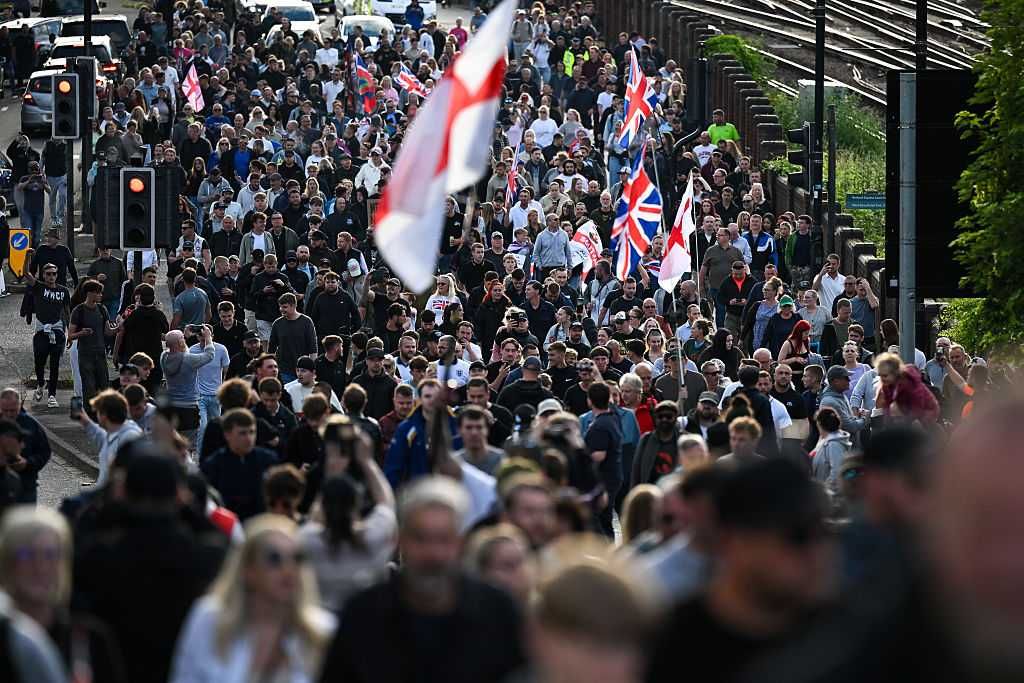
Protesters in southern England took to the streets after the release of the footage.
