
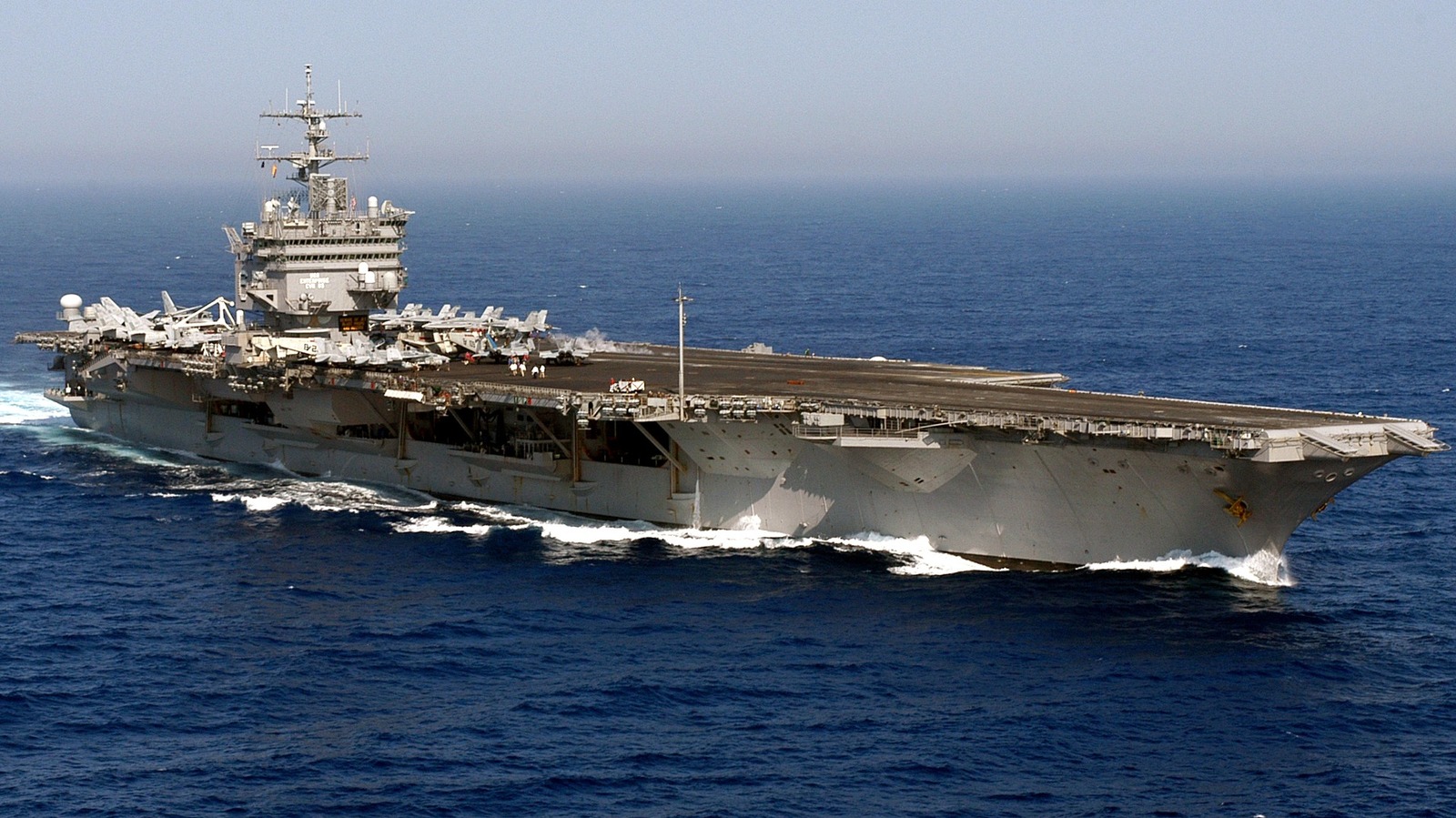
The USS Enterprise, the Navy’s first nuclear-powered aircraft carrier and one of its most famous warships, is finally headed for the scrapyard after a massive new contract pushed the long-delayed dismantling project into motion. The ship’s legacy is enormous, from Vietnam to Iraq, but the challenge of safely breaking it apart is just as monumental, especially with nuclear-era hazards still part of the picture.
USS Enterprise (CVN-65) wasn’t just another carrier with a famous name. Commissioned in 1961, it became the first of its kind to run on nuclear power and carved out a deep place in naval history as it served across decades of conflict and operations around the world. The ship’s record stretched from the Vietnam War to Desert Storm, Operation Iraqi Freedom, Operation Enduring Freedom, and a long list of other missions that kept it in the spotlight for generations.
When the carrier was deactivated in December 2012 and later decommissioned in February 2017, it was moved to Newport News shipyard, where it has sat waiting for its final chapter. That pause was never about forgetting the ship. It was about the reality that a vessel this large, this complex, and this radioactive could not be tossed into a typical disposal process and expected to disappear cleanly.
That final job now belongs to NorthStar Maritime Dismantlement Services LLC, which received the $418.5 million contract on July 15, 2026. The work is expected to stretch all the way to September 2030, giving a sense of just how much effort goes into dismantling a single warship when nuclear systems, hazardous materials, and enormous quantities of metal all have to be handled with precision.
Scrapping a nuclear-powered aircraft carrier is a different beast entirely from tearing apart a standard ship. The fuel has already been removed, but the reactors remain, and radioactive residue still has to be dealt with carefully. That means the job is not just about cutting steel. It is about protecting workers, controlling contamination, and making sure every stage of the process is done without creating a bigger problem than the one being solved.
Even before NorthStar took over, the Navy had already spent years figuring out how to approach the Enterprise. Defueling alone can take as long as 30 months, and the whole timeline shows why the contract came so late after decommissioning. This was never a quick cleanup, and the delay reflects the hard truth that the ship’s size and nuclear history make every decision slower, stricter, and more expensive.
NorthStar’s work will be methodical and messy in the way only shipbreaking can be. The carrier has to be cut into sections so crews can remove piping, wiring, plating, and everything else packed into its massive hull. Each piece then has to be sorted for disposal or recycling, which turns the process into a giant industrial puzzle with no room for sloppy shortcuts.
The idea of turning Enterprise into a museum ship was never very realistic, and the reactors are a big part of why. Some vessels can be preserved as floating landmarks, but this carrier is in a different category, with a scale and nuclear legacy that make preservation tough to justify. Even so, parts of the ship will survive in another form, including about 35,000 pounds of steel slated for reuse in USS Enterprise (CVN-80), a neat little bridge between old history and the Navy’s next chapter.
That kind of recycling gives the ship a strange second life, one that is quieter but still meaningful. The old Enterprise will not be sailing again, but pieces of it will continue forward in a new hull, carrying the name into the future while the original ship is finally taken apart piece by piece. It is a fitting ending for a vessel that spent its career making history and now demands just as much attention in retirement as it ever did at sea.
