
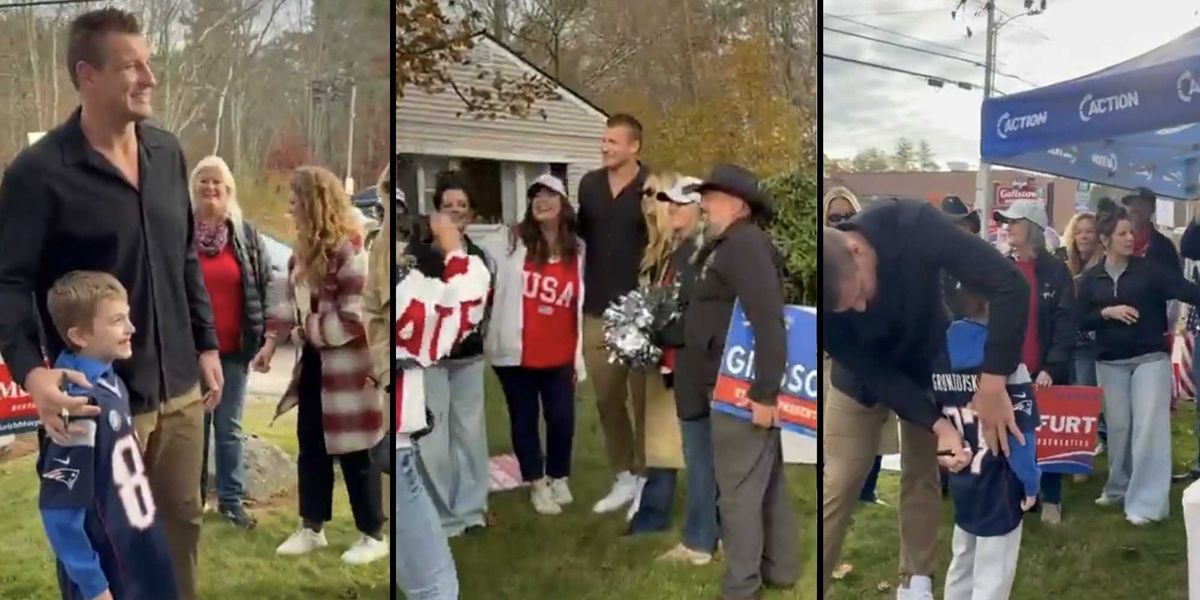
Election-season energy is spilling beyond campaign signs and speeches, with well-known athletes and sports personalities stepping into the conversation around Turning Point USA events. Rob Gronkowski’s presence in the mix gave the scene an extra jolt, turning a political moment into something louder, flashier, and a lot harder to ignore. What might have looked like a standard get-out-the-vote push instead started to feel like a rally built for attention, momentum, and crowd energy.
The draw of celebrity support is pretty simple: people notice names they already know. When a Super Bowl champion shows up near a political event, it changes the temperature fast, especially among younger voters who may be paying more attention to culture than to campaign talking points.
That kind of crossover is exactly why political groups chase familiar faces. A sports star can bring reach that regular activists cannot, and the effect is not subtle when the goal is to fire up supporters and pull in people who may otherwise stay on the sidelines. In a tight election environment, even a burst of enthusiasm can matter.
The scene around Turning Point USA events has become a magnet for that type of energy. The organization has built a brand around big personalities, sharp messaging, and visible confrontation with the political establishment, so celebrity participation fits neatly into the formula. It is not just about showing up, but about creating a moment that feels bigger than a speech in a crowded room.
Rob Gronkowski stands out because his public image has always mixed humor, toughness, and mass appeal. That makes him useful in a setting where organizers want excitement without sounding dry or scripted, and where the vibe matters almost as much as the message.
New Hampshire adds another layer to the picture. It is a state where political ground games and public visibility still carry real weight, and any event that pulls in star power can cut through the usual election noise. When the race is close, a packed room with recognizable names can help turn attention into actual action.
The broader trend is hard to miss. Sports culture and politics keep colliding, and the line between entertainment and influence gets thinner every cycle. Fans who came for football or celebrity appeal may leave with a sharper political instinct, or at least with a stronger sense that the election is not some distant thing reserved for insiders.
That does not mean celebrity moments decide elections on their own. They do, however, shape the atmosphere, and atmosphere can drive turnout when enthusiasm is low and attention spans are even lower. In an age of endless scrolling, anything that breaks through the static has a shot at moving people.
For supporters, the appeal is obvious because it makes politics feel less stale and more alive. For critics, it can look like style overpowering substance, but that complaint misses the point of modern campaigning, where image and message are often inseparable.
Events like these also reveal how much campaigns rely on emotion. Pride, excitement, loyalty, and a sense of belonging can be powerful motivators, especially when woven into a setting that already feels like a shared experience. When the crowd is engaged, the message has a better chance of sticking.
The sight of athletes and celebrities energizing voters near TPUSA gatherings reflects a larger truth about election season in America. Politics is no longer confined to party offices and debate stages, because it now lives in arenas, on social feeds, and in the spaces where culture and identity overlap in real time.
