
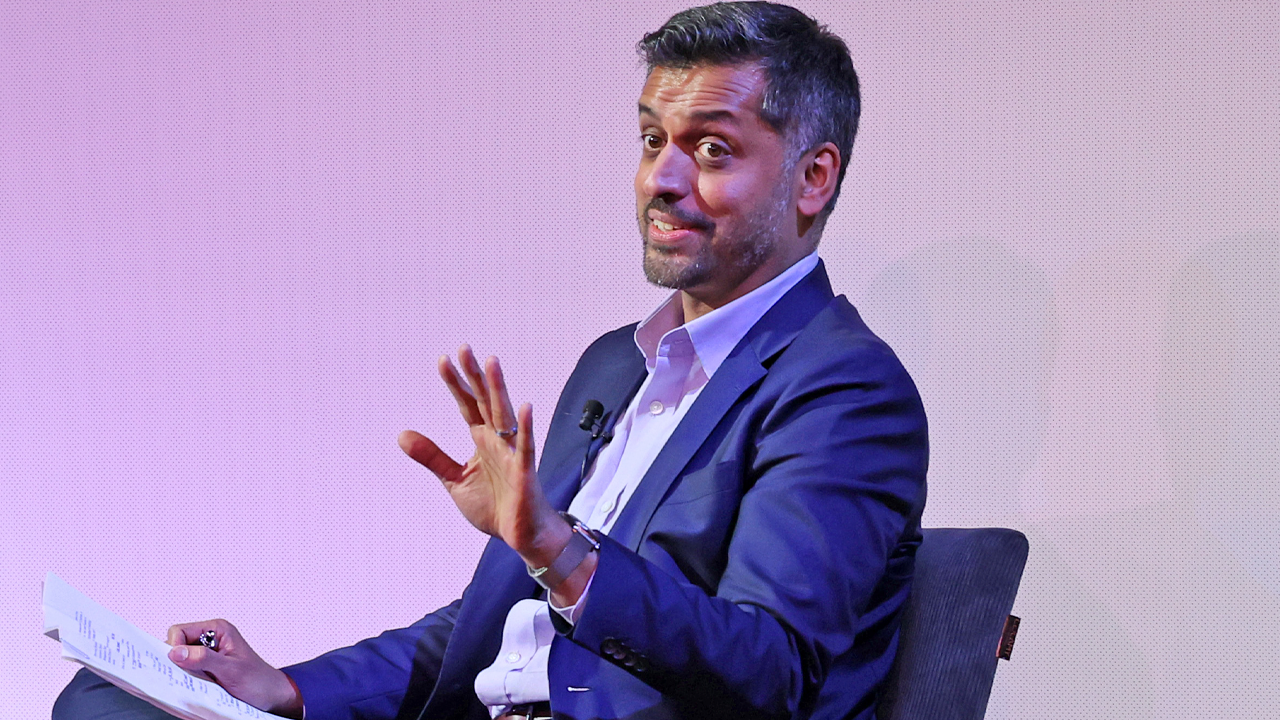
Muslim reformers are pushing back hard after Wajahat Ali warned that “the fire will rise” if Democrat Abdul El-Sayed loses his Michigan Senate race. The backlash centers on a claim that this kind of talk echoes the intimidation style used by hardline political movements, especially the kind that frame elections as a do-or-die struggle for power. The dispute has opened a bigger fight inside American Muslim politics over identity, activism, Israel, and the line between passion and pressure.
Ali’s post on X set off the firestorm. He wrote, “If, God forbid, Abdul loses, this will be a watershed moment in Democratic politics. The fire will rise. It’s over. People will be radicalized against corporate, pro-Israel Dems. There will be a reckoning. If, when, he wins, it will be a watershed moment. And that reckoning will still come.”
After the backlash hit, Ali doubled down instead of softening his words. He accused critics of Islamophobia and anti-Arab bigotry, brushing off the outrage as proof that people were showing their “true” feelings. Fox News Digital said he did not respond to a request for comment.
Reform-minded Muslim voices say the language is not just messy politics. Dalia Ziada, an Egyptian Muslim reformer and critic of political Islamism, said it sounds like the election threats used by Islamist actors in the Middle East, where voters are warned that rejecting a candidate will lead to violence or social chaos. In her view, the message is simple and ugly: choose us, or brace for trouble.
Soraya Deen, a Muslim reform activist and attorney, took the same line. She said the warning about a coming “reckoning” should not be waved away as a social-media outburst, because words like “the fire will rise” and “radicalized” carry real political weight. Deen argued that losing an election is not a license for extremism, and not an excuse to dress up grievance as principle.
Dr. Zuhdi Jasser went even further, calling the rhetoric part of what he describes as a “Jihad First” mindset. He said the problem is not only Ali’s post, but the broader political culture around El-Sayed, where loyalty, ideology, and resentment can start to blur together. Jasser framed it as a worldview that puts political Islam above ordinary civic norms and treats every fight as a civilizational one.
That criticism lands in the middle of a complicated network around El-Sayed. Supporters include advocacy groups, progressive organizers, labor allies, and Palestinian activist circles, along with Muslim political groups and online influencers who amplify his message. The coalition is broad enough to look messy, but critics say the common thread is a hard-edged posture on Israel, Democrats, and the future of the party.
Some of the names tied to that orbit have raised eyebrows for months. The list includes organizations and figures with overlapping causes, from anti-Israel activism to left-wing pressure campaigns to efforts aimed at mobilizing Muslim and progressive voters. That mix has led some critics to describe the alliance as a “red-green” partnership, with leftist politics and Muslim advocacy merging into one force.
Ziada said the pattern feels familiar because it resembles the way authoritarian leaders talk when they are cornered. She argued that attacking Israel over and over can become a political escape hatch, especially when a campaign needs a new enemy to keep supporters fired up. In that telling, the rhetoric is less about policy and more about manufacture, a way to keep the crowd angry and the machine moving.
Jasser said Muslim voters and Democratic leaders should pay attention to who is speaking for the community and what they are really selling. He suggested that ordinary Muslims who care about patriotism, pluralism, and civil peace should be wary of any message that sounds like “Jihad First” wrapped in campaign language. That warning has a sharper edge now because the online fight is no longer abstract, it is tied directly to a live Senate race and a coalition that keeps testing how far it can push.
Ali, for his part, is no newcomer to the national spotlight. He has spent years in media, activism, and political commentary, often landing in the middle of fights over Israel, race, Democratic strategy, and Muslim politics. The latest clash only adds to the long trail of controversy around him, and the reaction from reformers suggests the old arguments are getting louder, not quieter.
