
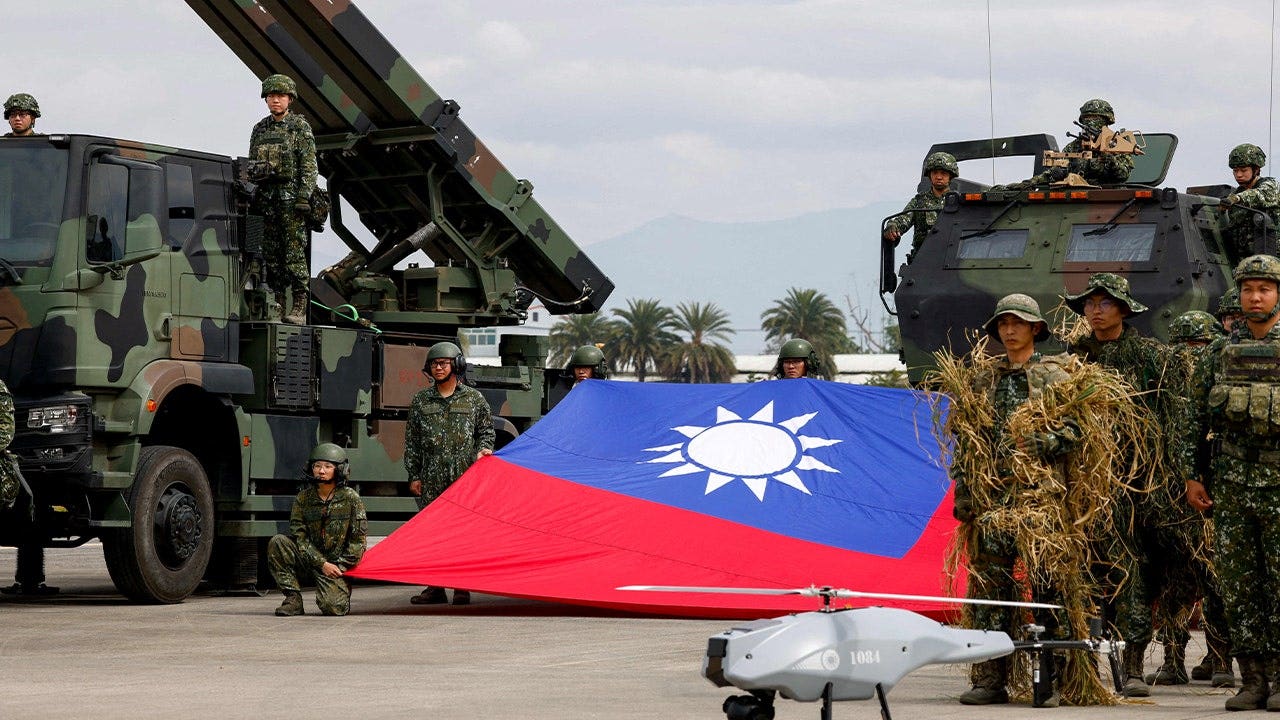
This piece argues why Taiwan matters beyond chips, how its location shapes Asia’s balance of power, the diplomatic shock waves a loss would cause, and what a Republican approach should be to preserve American strength and regional freedom.
When President Donald Trump went to China, talk about Taiwan exploded. Commentators focused on TSMC and the semiconductors that run our phones, AI and guided weapons, which is important. But that narrow view misses bigger strategic stakes that Republicans must push to the front of the national conversation.
Yes, Taiwan sits at the center of the global tech supply chain, and losing access to its advanced fabs would wound American industry and military advantage. TSMC’s leading-edge production is a national security asset, not just an economic one. Allowing Beijing to grab that advantage would be like handing our rivals the keys to our technological future.
Still, the island’s worth isn’t measured only in wafers and foundries. Geography is destiny in the Pacific, and Taiwan anchors what strategists call the First Island Chain. Control of the island gives the Chinese navy a launchpad to push from the near seas into the wider Pacific, threatening allies and American bases alike.
Think about it like a cork in a bottle: Taiwan helps keep China’s fleet hemmed in, and without it, U.S. power projection gets a lot harder. Japan, South Korea and the Philippines would suddenly face a more aggressive China pressing them with proximity and coercion. That shift would tilt the whole regional map toward Beijing unless America acts decisively.
Diplomacy would unravel fast if Taiwan fell. Partners who already hedge would see weakness as an invitation to accommodate Beijing, and our network of alliances that preserved peace since World War II could fray. A cascade of alignments toward authoritarianism would not be abstract; it would change trade, security and the freedom of millions across Asia.
Taiwan’s political reality is also a moral and ideological test. The Chinese Communist Party argues that only one-party rule can manage Chinese society, while Taiwan demonstrates a different path. A vibrant, prosperous democracy just 90 miles from the mainland contradicts the CCP narrative and poses a direct ideological threat to their legitimacy.
If Beijing succeeds in forcing “reunification,” that victory would be more than territorial. It would be propaganda gold for the CCP, proof in their telling that dissent must be crushed and that autocracy wins. For Republicans who believe in liberty and American leadership, letting that happen undermines the story we must tell the world about freedom and self-determination.
So what should America do? First, treat Taiwan as the strategic asset it already is. That means speeding arms transfers, expanding joint training, and making sure the island can defend itself long enough for allies to respond. Deterrence only works if the costs of aggression are seen as unacceptable and immediate.
Second, rebuild domestic capacity where it matters: semiconductors, shipbuilding, and other defense-related industries. Relying on distant suppliers for our most critical technologies is a vulnerability that adversaries can exploit. A Republican approach insists on industrial strength at home to back up our foreign policy and military posture abroad.
Third, use clear-eyed diplomacy that reassures allies and signals resolve to Beijing without inviting needless escalation. Support from Washington must be credible and consistent so partners don’t question our commitments. Peace through strength is not a slogan; it’s a strategy that preserved liberty in the last century and must be the backbone of our policy now.
Taiwan represents more than a single island or a set of factories; it’s a frontline in the contest between free societies and authoritarian power. Standing with Taiwan is about protecting American interests, preserving regional stability, and defending a living example of democratic success close to an ambitious and dangerous rival.
