
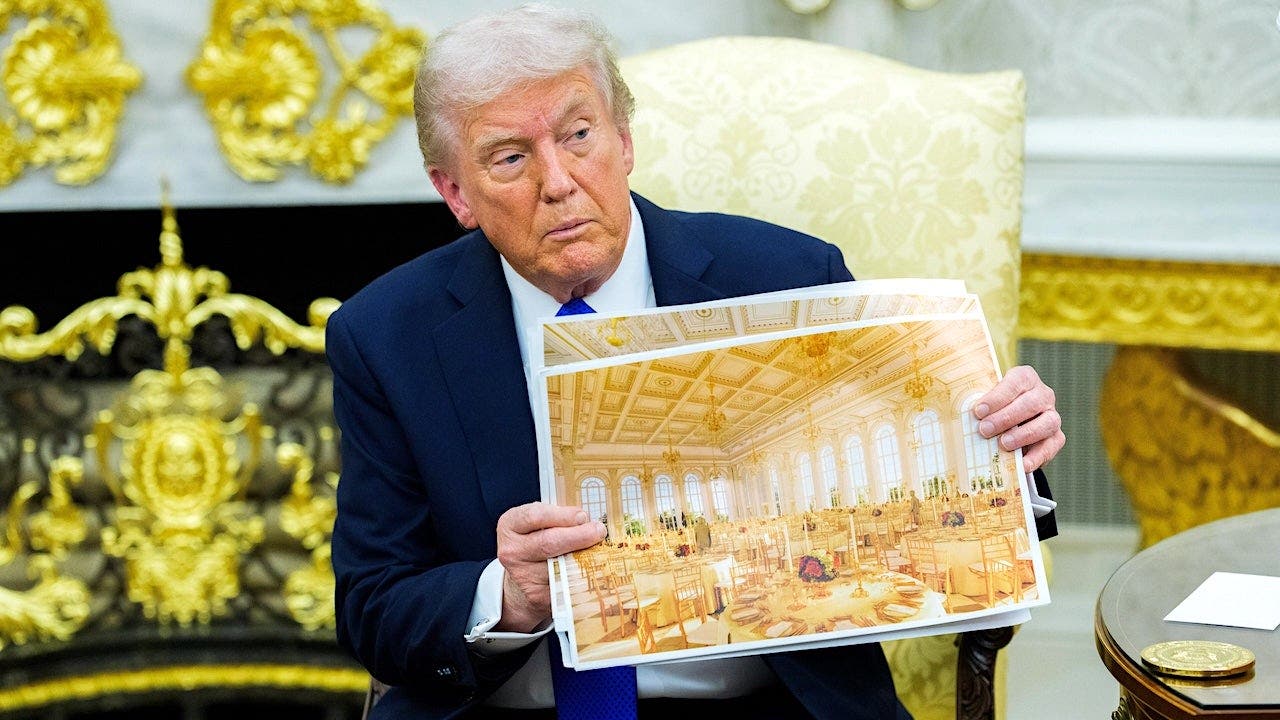
Legal pressure is building around President Donald Trump’s planned White House ballroom, but the sharper battle may be over whether the challengers can even keep their case alive. Two legal experts say the Supreme Court could toss the dispute on standing alone, which would let the justices sidestep the bigger constitutional question hanging over the project.
Trump said Friday that he plans to take the fight to the Supreme Court after the D.C. Circuit backed a lower court order stopping above-ground construction. The 2-1 ruling said the project cannot move ahead without congressional approval, giving the administration a direct legal setback and a fresh opening for appeal.
A key part of the dispute centers on Judge Neomi Rao’s dissent, which Trump has highlighted as support for his next move. Rao argued that the National Trust for Historic Preservation did not show the kind of injury needed to bring the lawsuit in the first place. That standing issue, according to several legal observers, could end up mattering more than the ballroom itself.
The National Trust based its argument in part on Alison Hoagland, a member who lives near the White House and says she visits President’s Park regularly. Hoagland says the proposed ballroom would loom too large, change the feel of the area, and hurt the experience of seeing the White House in its current setting. That kind of aesthetic harm is the sort of claim courts sometimes take seriously, but not always enough to get a case off the ground.
Rao pushed back hard, saying the group had not shown the type of concrete injury required for federal court. She wrote that the lower court put “the aesthetic displeasure of a single passerby” ahead of the government’s security interests and the risks tied to leaving a half-finished construction site at the President’s home and office.
Former Justice Department attorney Abhishek Kambli said that is where the challengers may run into trouble at the Supreme Court. He noted that even though Congress created the National Trust, the group still has to show its lawsuit connects to its own interests in a real way. Since President’s Park is not one of the organization’s properties, he said that link may be too weak to satisfy the justices.
Kambli also pointed out that aesthetic injury claims are not easy to win unless the person bringing them actually uses the space in question. A casual passerby, or someone who just dislikes what they might see from afar, is a much harder sell. In his view, that makes the challenge especially vulnerable before a court known for taking standing requirements seriously.
That same kind of hurdle showed up earlier this summer in a separate White House case involving the planned America 250 UFC event. U.S. District Judge Amit Mehta rejected the attempt to block it, saying the plaintiffs failed to show the kind of aesthetic harm needed to establish standing. The ballroom case now looks like it could follow a similar path, at least if the justices focus on procedure instead of the larger policy fight.
Hans von Spakovsky, a senior legal fellow at Advancing American Freedom, said he expects Trump to have the stronger hand on appeal. He argued that Supreme Court precedent requires a real, concrete injury before anyone can sue, and he dismissed the idea that someone passing by the White House can claim a legally meaningful injury based on what they see. If the court agrees, the case could disappear without any ruling on whether the ballroom should have gone forward in the first place.
The deeper statutory argument is still there, though, and it is not a small one. The National Trust says federal law requires Congress to approve new construction on federal property in Washington, D.C., while the administration says existing law already gives the president authority to alter and improve federal property, including the White House itself.
Kambli said the administration’s reading makes sense when those words are taken in their ordinary property-law meaning. An addition to a house is still the same house, he said, just improved or altered, and he compared that to rearranging a home without turning it into something entirely new.
That is the kind of legal framing that could shape what happens next, especially if the Supreme Court wants the easiest exit route. For now, the ballroom project sits in the middle of a clash between tradition, presidential power, and a standing fight that may decide the case before the bigger arguments ever get their day in court.

1 Comment
Damn petty lawfare here achieves Nothing
Building bunker below Ballroom alone but ballroom is NO