
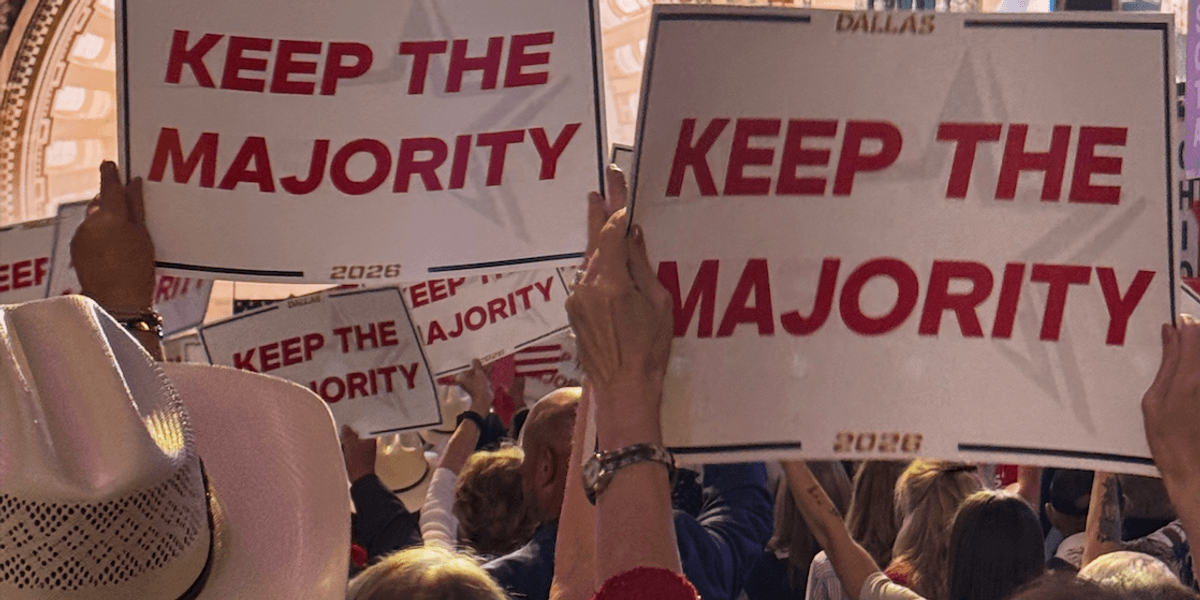
Republicans opened their midterm convention with a jolt of energy that seemed to set the tone for the whole event. The crowd showed up loud, confident, and ready to lean into a message built around momentum, loyalty, and a clear sense of purpose.
The second day kept that pace rolling, with familiar conservative names drawing attention and supporters responding like the stakes were already sky-high. President Trump, Ted Cruz, Robert F. Kennedy Jr., and Karoline Leavitt were all part of the conversation as the convention turned into a showcase of movement, message, and personality.
What stood out most was the mood in the room. This was not a sleepy political gathering or a carefully polished staging exercise, but a convention that felt alive, with attendees acting like they were part of something bigger than a single election cycle. The energy was sharp, the enthusiasm was visible, and the sense of confidence never really let up.
That kind of atmosphere matters because conventions are about more than speeches. They are about showing voters and insiders alike that a party believes it can win, and that belief can feed on itself fast when the crowd is fully engaged. Republicans clearly wanted the event to feel like a rallying point, not just a meeting.
President Trump remained a central figure in the political gravity of the convention, even when not every moment revolved directly around him. His influence continues to shape the tone of Republican politics, and his presence in the broader conversation helped keep the event tightly connected to the party’s current direction.
Ted Cruz also brought a recognizable conservative voice to the mix, giving the gathering another layer of establishment muscle and fight. His role reinforced the idea that the party’s base and its more traditional political operators are still trying to work in the same lane, especially with a major election on the horizon.
Robert F. Kennedy Jr. added a different kind of buzz, since his name carries its own history and controversy. That alone makes him a magnetic figure in any political setting, and his presence helped underline how unconventional this convention’s lineup has become.
Karoline Leavitt’s appearance added another punch of relevance, especially for those watching the next generation of Republican messaging take shape. She represents a newer, sharper political style that fits neatly into a convention built around energy, speed, and a sense that the old rules are not the main attraction anymore.
The convention’s second day also reflected something bigger than the individual personalities on display. Republican politics right now thrives on spectacle, direct language, and a steady refusal to act apologetic, and the event leaned into all of that without hesitation. It was a clear reminder that the party knows how to turn a room into a signal to the outside world.
Supporters seemed to feed off every appearance, every mention, and every fresh burst of applause. That kind of response can matter a lot in an election season, because it gives the base something it can carry out of the hall and into the broader fight. When a political gathering feels this charged, it stops being just an event and starts looking like a preview of the campaign ahead.
There was also a sense that Republicans were using the convention to project unity, even with such different personalities involved. The combination of Trump’s dominance, Cruz’s familiarity, Kennedy’s wild-card appeal, and Leavitt’s rising profile created a mix that kept the energy unpredictable but still focused. That balance can be tricky, but on this day it seemed to work in the party’s favor.
By the time the second day settled in, the convention had already built a reputation for being more than just another political stop. It looked like a room full of people who wanted to be there, who believed the moment mattered, and who were eager to keep the pressure on. The lights, the crowd, and the names on stage all pointed in the same direction, and the momentum did not seem to be slowing down.
