
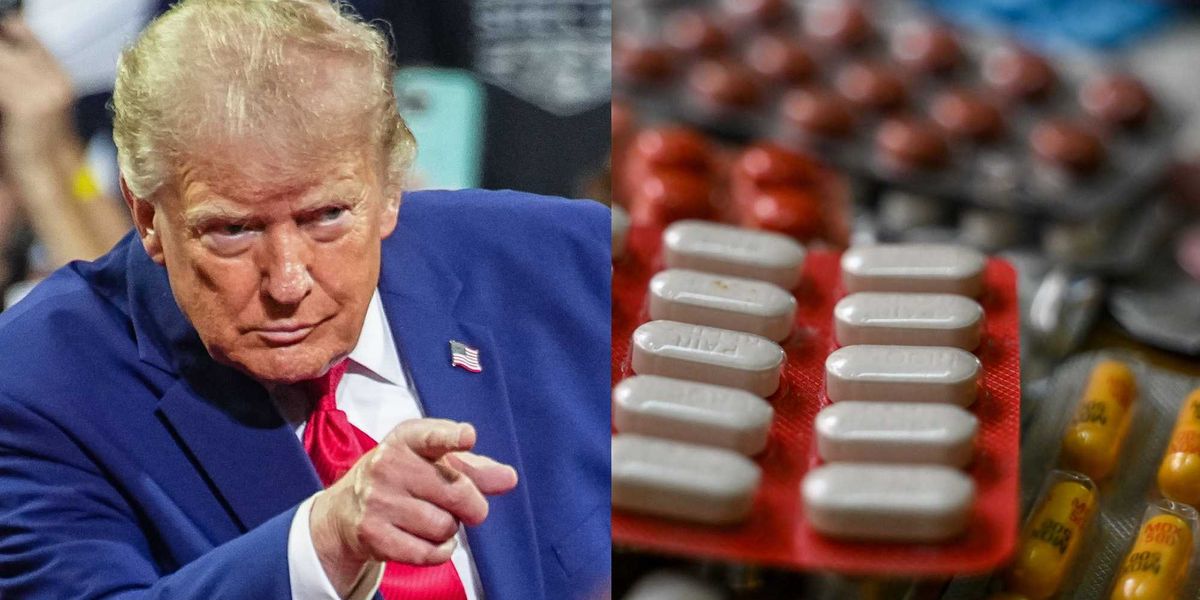
Here’s the big picture: the Trump administration is putting foreign drug manufacturers squarely in the crosshairs, and the move could shake up the way Americans get medicine. The push is aimed at reducing dependence on overseas production, pressuring companies that profit from the U.S. market, and forcing a harder look at how vulnerable the supply chain has become.
Trump’s latest move lands at a moment when drug pricing, supply security, and trade policy are all colliding. Foreign manufacturers have long played a major role in the U.S. pharmaceutical market, especially when it comes to generic drugs, and that has made the system cheap in some places but fragile in others. The new approach is meant to change that balance, and it does so with the kind of blunt force that has become a trademark of Trump-era policy.
For years, critics have warned that America leaned too heavily on other countries for essential medications and ingredients. That dependence became impossible to ignore during pandemic disruptions, when shortages exposed just how thin the margin really was. If a foreign factory slows down, gets shut down, or faces political turmoil, the ripple effect can hit American pharmacies fast.
The White House is now signaling that foreign drug makers should expect more pressure, and that pressure can come in several forms. Tariffs are one obvious lever, but so is a broader regulatory stance that makes it more expensive and less attractive to outsource production. The message is simple: if you want to sell into the American market, don’t assume you get to keep all the benefits without sharing the burden.
Supporters of the move see it as long overdue. They argue that the United States should not be dependent on countries that may not share America’s interests, especially when it comes to medicines people need to stay alive or function normally. From that perspective, the issue is not just economics. It is national security, plain and simple.
The drug industry, of course, is not likely to sit still. Big pharmaceutical companies and generic drug suppliers often operate on tight margins, and any new cost on imported products can quickly become a fight over who pays. Manufacturers may try to pass those costs along, fight the policy in court, or scramble to shift production back to the United States or friendlier markets.
That’s where the politics get interesting. Trump has always liked using tariffs and tough trade language because he understands how to frame an issue in terms voters can feel immediately. If a policy is about protecting American workers, reducing dependence, and standing up to foreign interests, it plays well with people who think Washington has spent too many years protecting global corporations instead of U.S. citizens.
Still, the real-world impact will depend on how broadly the policy is applied and how aggressively it is enforced. If the administration goes after foreign manufacturers too quickly without a backup plan, prices could jump or shortages could get worse before they get better. If it is handled carefully, though, the policy could push more production back onto U.S. soil and force a long-overdue reset.
There is also a bigger cultural issue underneath all of this. Americans have grown used to the idea that cheap imports solve everything, but that mindset has a downside when it comes to something as serious as medicine. A country this large should not have to cross its fingers every time it opens a bottle of pills and hopes the supply chain stays intact.
Trump’s announcement taps into that frustration in a way few politicians are willing to do. He is not treating drug manufacturing as some abstract global market problem. He is treating it like a direct challenge to American independence, and that is exactly why the move is drawing attention far beyond Washington.
The debate now is not whether foreign drug manufacturers matter. They do, and everyone knows it. The real question is whether the United States is finally ready to demand more from the companies that profit here, while making sure the next medicine shortage does not catch the country flat-footed again.
