
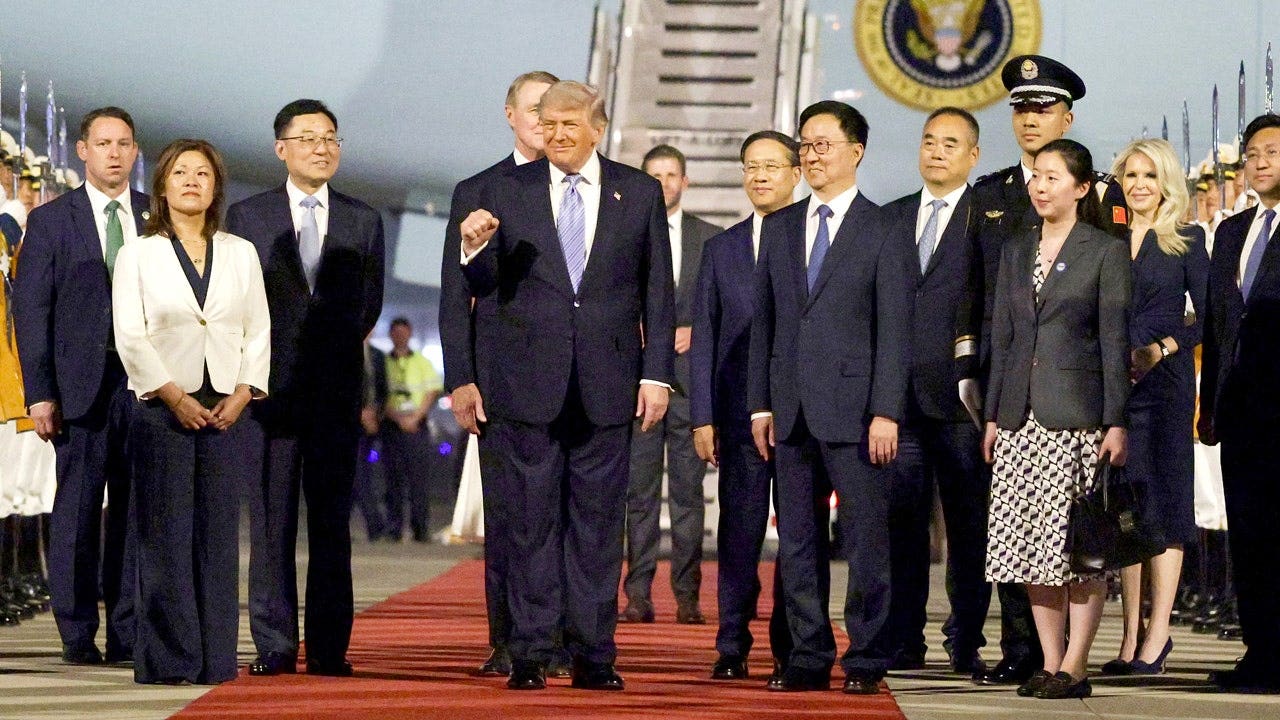
Donald Trump’s China trip is more than diplomacy; it’s choreography. He brings CEOs, a clear message about American business power, and a style that turns policy into imagery. Polls are rocky, but symbolism can reshape narratives over time. This piece looks at the optics, the trade framework called the “Board of Trade”, the political math, and why the moment matters for Republican politics.
Trump understands that voters react to pictures before they parse policy. He doesn’t just announce a position; he builds a tableau — a wall, a tax cut, or a plane full of CEOs boarding Air Force One. That instinct turns abstract trade talks into a simple story: America shows up ready to compete. In Beijing, that visual argument is as important as the negotiating text.
Walking into the world’s second-largest economy flanked by top executives sends a signal: American companies are invested, and American leadership is backing them. This isn’t a casual meet-and-greet. It’s a deliberate demonstration that private-sector muscle will be part of any deal. The optics tell allies, rivals, and voters exactly where the administration’s priorities lie — protecting jobs and securing new markets.
The emerging trade plan centers on a managed approach labeled the “Board of Trade” for nonsensitive goods. That framework could identify roughly $30 billion in goods where tariffs might come down on both sides. Numbers aside, the message is the headline: targeted cooperation that keeps national security off the table while pushing for fairer access for U.S. businesses. That balance is politically attractive to conservatives who want competition without vulnerability.
TRUMP HEADS TO BEIJING FOR HIGH-STAKES XI TALKS AS TAIWAN TENSIONS, TRADE DISPUTES TEST US STRENGTH
History matters here. The last sitting U.S. president to visit China was years ago, and Trump already owns a record of high-profile visits that married spectacle and commercial deals. Memories of past trips, with CEOs signing big agreements, linger in the public mind. That memory is part of the strategy: remind people that presidential presence can unlock private-sector opportunities.
Reality check: polls show pain at the moment. Economic approval figures have dipped, and people report feeling the squeeze in daily life. Those are real, measurable reactions that no image can erase overnight. A candid Republican approach admits the strain while pointing to concrete steps designed to reverse the trend.
TRUMP POLL NUMBERS ON ECONOMY FALL DURING TRADE FIGHT, SURVEYS FIND
Still, public opinion tends to follow outcomes rather than lead them. Sentiment trails action; voters feel pressure quickly but notice improvement more slowly. That dynamic gives political advantage to a leader who can produce visible wins over time. If trade talks yield real openings for exporters, manufacturers, and service providers, the narrative can shift from complaint to credit.
DAVID MARCUS: WHY TRUMP’S MAJOR TRIUMPHS WILL OUTLAST HIS POLLING DIP
Trump’s knack for filling a room with influencers is not incidental. In 2017, a set of headline-grabbing deals accompanied a presidential visit, and those moments are etched in collective memory. Recreating that energy now, with CEOs sitting alongside the president in Beijing, is a calculated move to accelerate the transition from skepticism back to confidence. It’s persuasion by image and by results.
The White House put the promise plainly: “Americans can expect the president to deliver more good deals for the United States while in China.” That is a clear talking point designed for voters, markets, and corporate leaders alike. It frames the trip as transaction-focused rather than purely ceremonial, and that framing plays well with voters who want jobs and growth.
The political question is whether people notice and then recalibrate their views. Public opinion moves in jumps tied to events, not a straight line. A successful week in Beijing — new purchase commitments, eased trade in targeted sectors, or a credible pathway to remove unnecessary tariffs — could produce one of those jumps. The gamble is on deliverables, not illusions.
Trump’s approach is blunt and theatrical by design, but the endgame is supposed to be practical: more market access for American firms and clearer rules that protect sensitive technologies. Whether skeptics or supporters, people respond to tangible benefits. When headlines translate into paychecks and new contracts, the showmanship stops being theater and starts being policy that voters can feel.
Message sent. Message received.
