
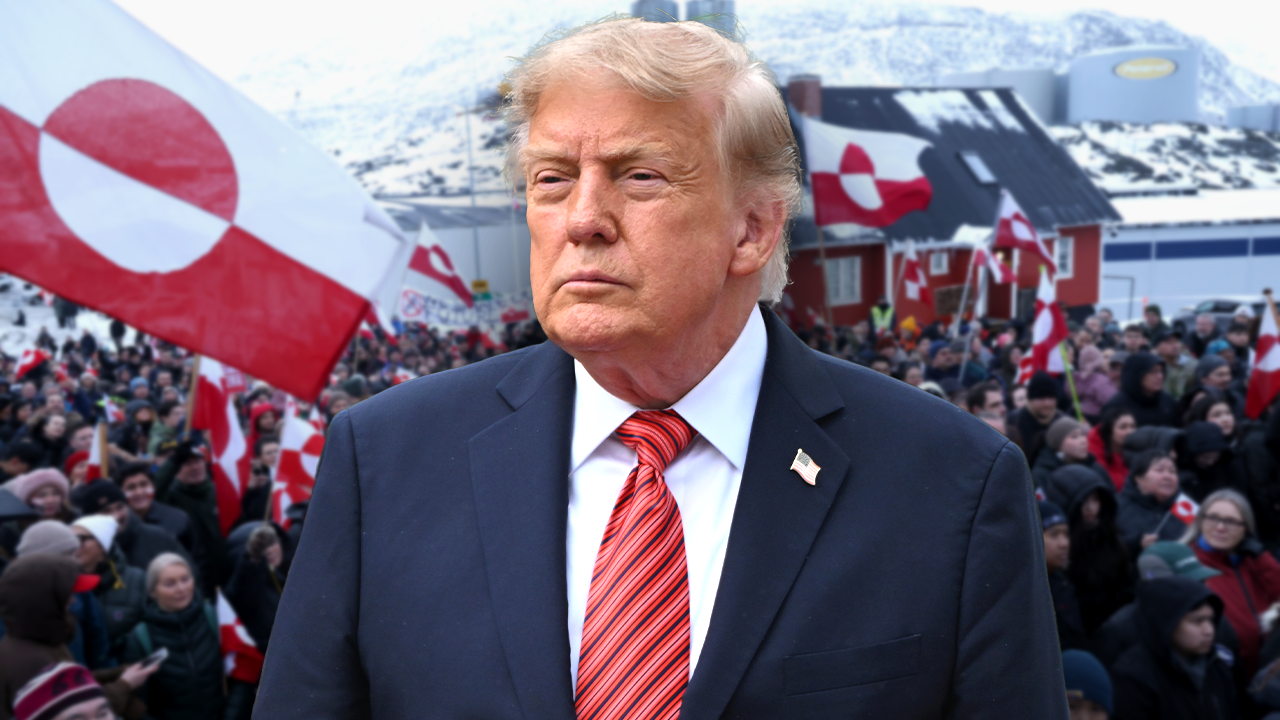
The new Greenland agreement puts a bright spotlight on Arctic power, and it does so with a blunt message: the U.S. intends to keep hostile powers out of a region that matters more than most people realize. It ties together military access, strategic geography, and the growing race with China and Russia for influence in the far north.
Trump framed the deal in unmistakable terms, saying, “The United States will FOREVER have the complete ability to do what is necessary in Greenland in order to secure and defend the security of Greenland, and the United States of America. Additionally, from now on, no U.S. adversary can EVER have a base in Greenland, have a military presence in Greenland, or make sensitive investments in Greenland, without our express written approval,” he posted on Friday.
That kind of language cuts to the heart of the issue. Greenland is not just a frozen map feature, but a key piece of the Western Hemisphere’s defensive wall, sitting in a spot that can shape missile warning, space tracking, and Arctic access for years to come.
China spent years trying to work the region with cash, contracts, and influence. Once Xi Jinping started pushing harder after 2012, Greenland became one of the places where Beijing looked for a foothold, especially in infrastructure and airport development, while Denmark kept a tighter hand on the most sensitive projects.
The fear was never abstract. If a rival gains traction in Greenland, it gains leverage near the North Atlantic and near the systems the U.S. uses to watch for threats moving through the Arctic. That makes the island less about symbolism and more about who gets to control the conditions around America’s early warning network.
Pituffik Space Base sits deep in that story. Located far above the Arctic Circle, it helps run radar functions tied to missile detection, satellite awareness, and the broader watch over activity in orbit, which is exactly why officials worry about anything that could compromise its mission.
Russia adds another layer of pressure. A hostile submarine launch in Arctic waters would have to be detected quickly, and the same region is also a growing arena for satellite maneuvering, orbital surveillance, and military competition that is getting sharper by the year.
That is why the deal landed as a serious strategic move rather than a headline-grabbing gesture. It helps lock down the kind of access and approval rules that can keep China from sliding into Greenland through the back door, especially through investments that look harmless until they are not.
The larger backdrop is the long run of globalization, which gave China room to spread out across continents and build influence in places that used to be secure by default. The Belt and Road push, along with Arctic-facing ambitions, made clear that Beijing was not just chasing trade, but trying to reshape the map in its favor.
Trump’s approach is to reverse that drift and force the issue. Instead of letting adversaries chip away at American geography one deal at a time, the agreement sets a firmer line around a place that has long been recognized as vital but too often treated like a distant outpost.
That shift also explains the earlier blowback from European leaders who bristled when Greenland first came up in a more direct way. The outrage was loud, but the underlying reality never changed: allies may grumble, yet they still understand that the U.S. security umbrella remains the backbone of order in the region.
Scott Bessent captured that mood when he said, “The European leaders will come around. And they will understand that they need to be under the U.S. security umbrella,” he told NBC News on Jan. 18.
Even NATO figures had reason to keep things from spiraling. Mark Rutte stepped in to cool tensions, which made sense, because once the debate turns to Arctic access, missile defense, and the risk of Chinese or Russian footholds, the politics stop being a side show and start looking like a hard test of resolve.
Trump has long argued that Greenland was always more than a distant patch of ice. “For over 100 years, Presidents have known the strategic importance of Greenland, but NONE of them were able to do anything about it,” he ballyhooed.
