
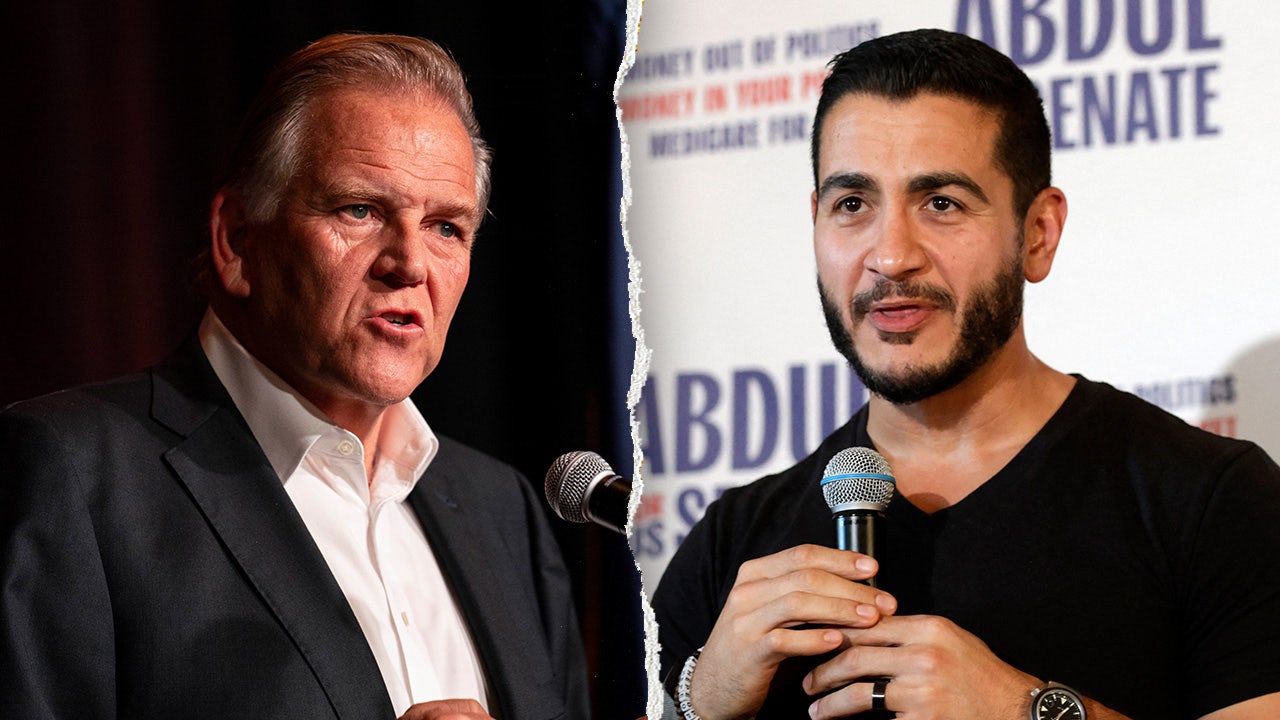
Michigan’s Senate race turned into a full-on brawl as Mike Rogers and Abdul El-Sayed traded sharp attacks on war, ideology, guns, and government power. The second and final debate gave both candidates a chance to land punches before Election Day, and they wasted no time making it personal.
One of the loudest clashes centered on foreign policy, with El-Sayed accusing Rogers of lining up with Donald Trump on Iran. He framed the issue as a reckless path toward more conflict, while Rogers shot back by saying El-Sayed would not clearly condemn Iran’s most dangerous actors.
Rogers pushed back hard on that line of attack, saying El-Sayed was dodging basic questions about the threat posed by Iran. He argued that the Democratic nominee had gone soft on the Islamic Revolutionary Guard Corps, which Rogers described as a terror arm of Tehran, and treated the issue as a serious warning sign for voters.
The debate also snapped to attention when Rogers revived old questions about El-Sayed and the Muslim Brotherhood. He accused his rival of scrubbing social media posts tied to defunding the police and then brought up remarks connecting El-Sayed to an Egyptian political figure linked to the Brotherhood.
El-Sayed fired back, saying the line of attack was unfair and beneath the dignity of the race. The exchange only deepened the sense that both candidates are carrying a pile of baggage into a contest already defined by suspicion, sharp elbows, and endless opposition research.
Government spending and healthcare got the same rough treatment. El-Sayed leaned into promises about expanding Medicaid and putting more money in voters’ pockets, while Rogers dismissed those pitches as glossy slogans hiding a much higher cost.
Rogers argued that the fine print would hit working families through taxes and reduced choice, especially if Democrats pushed their favorite healthcare ideas. He made it clear he sees those plans as bigger government wrapped in nicer language, and he used the stage to frame them as a threat to private coverage and personal freedom.
AI regulation gave Rogers another opening to draw a sharp contrast. After El-Sayed talked about having publicly appointed voices on the boards of AI companies, Rogers seized on the comment and said it sounded like a confession that Democrats want government reaching deeper into private business.
The Republican candidate treated that moment as proof that the Democratic side wants more control, not more innovation. He tied the idea to the broader left-wing instinct to manage industries from above, warning that voters should think twice before handing that kind of power to Washington-minded politicians.
Then came the gun fight, which lit up the final stretch of the debate. El-Sayed pressed Rogers on universal background checks, but Rogers refused to give the simple yes-or-no answer his opponent wanted, saying it depends on the details.
El-Sayed mocked the hesitation, but Rogers quickly turned the pressure back on him. He pointed to past comments in which El-Sayed compared the right to bear arms to the right to healthcare, and he argued that the Democrat had been more open than he now wanted to admit about changing the Second Amendment.
That exchange fit the tone of the whole night, which was less about niceties and more about who could define the other as too extreme. El-Sayed tried to sell himself as a reformer with bold ideas, while Rogers kept hammering the idea that those ideas come with hidden costs, more government control, and fewer real choices for Michigan voters.
By the end, neither candidate looked eager to soften his approach. The debate left a clear picture of a race built on hard contrasts, and both sides are heading into the final stretch with their sharpest arguments already on the table.

1 Comment
El Sayed is dodging questions, playing games since knows Zero
NO Values NO Core