
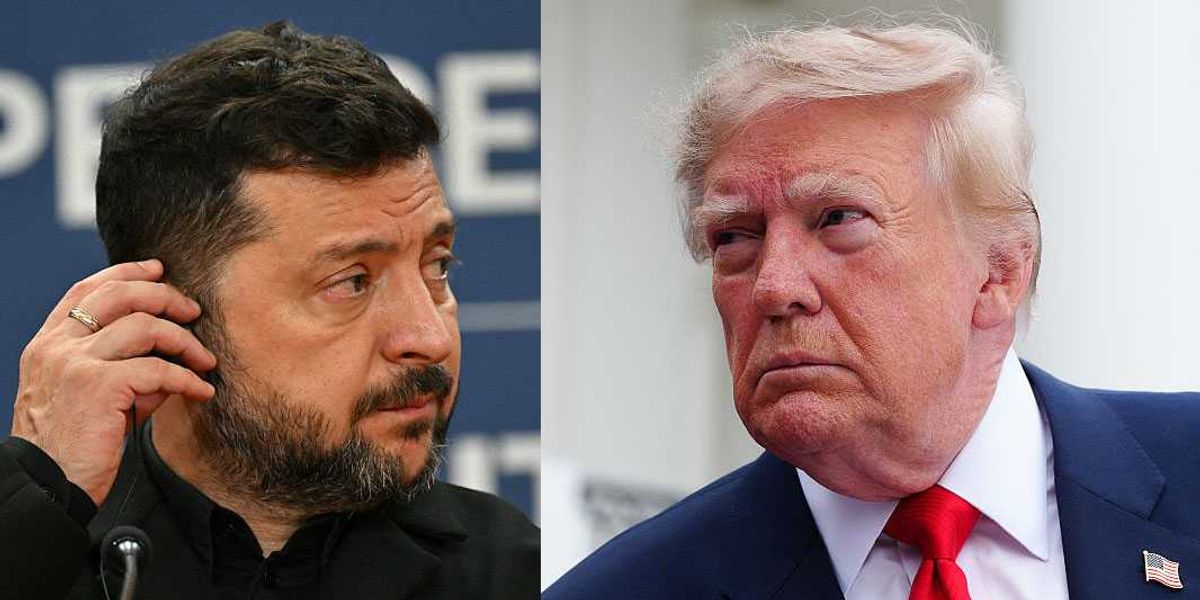
Volodymyr Zelenskyy is turning up the pressure on Donald Trump, arguing that the former president is lining up on the wrong side of the war in Ukraine and leaving Kyiv exposed at a dangerous moment. The clash is about more than personalities, because it touches weapons, diplomacy, energy politics, and the uneasy role of American support in a conflict that keeps grinding forward.
Zelenskyy’s criticism lands in a tense political moment, with Ukraine still leaning on outside help while fighting to hold ground against Russia. Trump has long pressed for a different approach to the war, and that has sharpened fears in Kyiv that a future shift in Washington could change the rules fast. The result is a bitter public argument over what toughness looks like and who is really paying the price.
For Zelenskyy, the message is blunt. If the United States backs away or starts treating Moscow like a partner instead of an aggressor, Ukraine could be forced into a far weaker position. That fear has only grown as the war drags on, with battlefield losses and political fatigue making every decision in Washington feel heavier than the last.
Trump’s critics see his posture as a gift to Vladimir Putin, while his supporters argue he is simply refusing to sign blank checks and is trying to force a deal. That split has become one of the defining fights around the war, because it goes straight to the question of whether America should keep underwriting Ukraine’s defense at the same pace. The answer could reshape not only the conflict, but also the broader balance of power in Europe.
The dispute also highlights how much of modern war depends on technology and infrastructure, not just troops and tanks. Ukraine’s battlefield edge has often been tied to access to communications, satellites, and steady international backing, which makes any political wobble in the West feel like a real battlefield threat. When leaders start talking about leverage, negotiations, and limits, soldiers on the ground feel the effect first.
Nord Stream remains part of the larger argument too, because energy politics never really left the room. Russia’s ability to use gas and pipelines as pressure points changed the strategic map long before the first shots in this war, and the aftermath still shapes how Europe thinks about dependence, vulnerability, and bargaining power. That history makes every argument over Ukraine feel bigger than Ukraine alone.
Elon Musk and Starlink have also been pulled into the conversation, showing how private technology can become a geopolitical lifeline almost overnight. For Ukraine, those systems are not a side note, but part of the communications web that keeps military and civilian coordination alive. Once that kind of support is in the mix, politics gets tangled with survival in a hurry.
Trump’s hard-edged style has always depended on drawing sharp lines and forcing opponents to react, and Zelenskyy’s complaints feed right into that dynamic. The Ukrainian leader is betting that public pressure will keep support from slipping and will remind American voters that this war is not some distant abstraction. At the same time, the fight is becoming another test of how far Washington is willing to go when the costs are real and the politics are brutal.
