
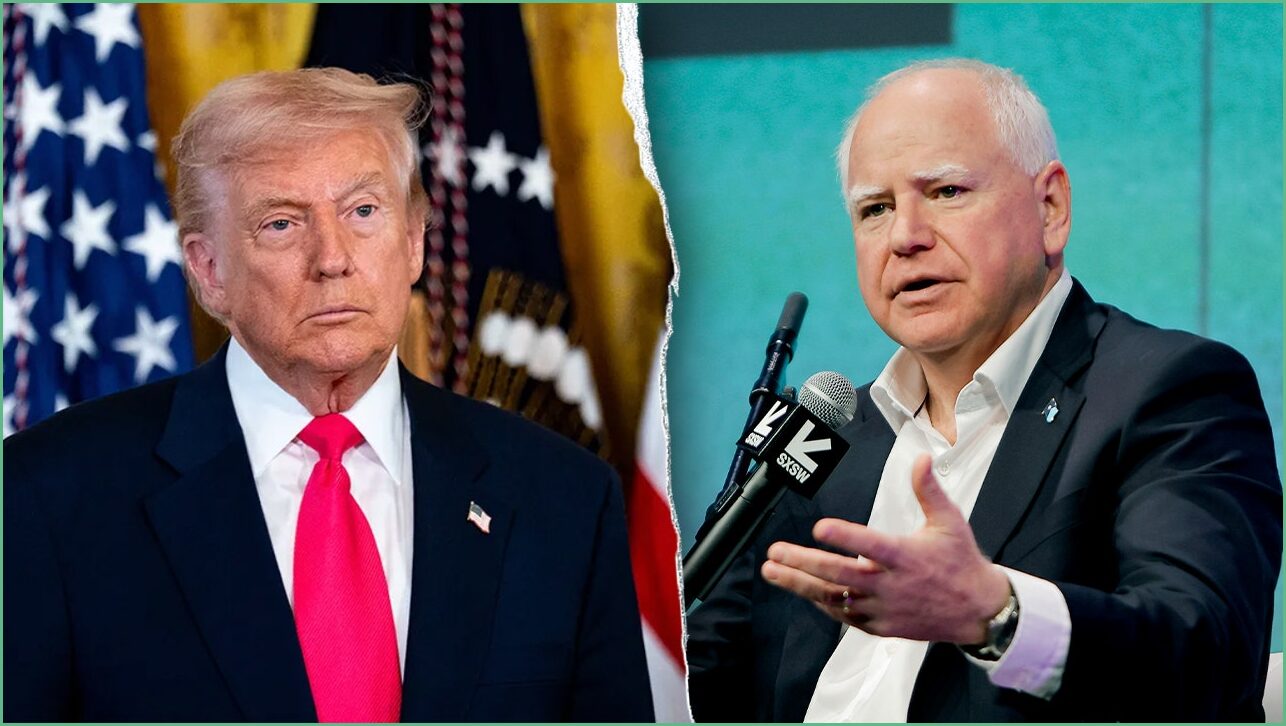
This piece lays out why local leaders in Minneapolis created the conditions for federal intervention, how street violence against ICE escalated, and why the president has legal authority to respond under the Insurrection Act while weighing the political and practical costs. It criticizes gubernatorial and mayoral rhetoric that fanned flames, describes the chaos that followed, and traces historical precedent for federal troop deployments when local authorities fail. It also notes legal pushback arguments and counsel for restraint from some quarters even as it defends the option to restore order and protect federal personnel.
When violence against federal agents spilled into Minneapolis after an ICE operation, the city’s tone set the stage. Mayor Jacob Frey dismissed the possibility of self-defense as “bulls—” and shouted for ICE to “get the f–k out of Minneapolis.” Those words didn’t soothe tensions; they lit a match.
Governor Tim Walz piled on, having previously labeled ICE a “modern-day Gestapo,” and then praising demonstrators while accusing agents of imagined “atrocities” and “organized brutality.” That kind of language empowered activists who screamed “Nazis!” and “fascists!” in agents’ faces and made a volatile situation worse. Fiery rhetoric from elected officials predictably escalated confrontations into chaos.
Crowds responded with predictable lawlessness: an American flag was burned, rioters blocked agents with SUVs, and organized efforts tried to “de-arrest” suspects while obstructing federal duties. After a second shooting and an ambush on a federal officer, the clashes turned more violent as rocks, bottles and fireworks were thrown and federal vehicles were vandalized. One smashed car carried graffiti reading, “Hang Kristi Noem,” while others spray-painted “The only good agent is a dead one.”
Throughout this unrest local police were conspicuously absent or ineffective, a failure that many see as inherent to sanctuary city politics where the priorities of illegal migrants are often elevated over the safety of residents. Deputy U.S. Attorney General Todd Blanche warned bluntly, “The Minnesota insurrection is a direct result of a failed governor and a terrible mayor encouraging violence against law enforcement. It’s disgusting.” That charge captures the outrage felt by many who watched federal agents become targets instead of being protected.
President Trump has made clear he will consider using the Insurrection Act if state leaders refuse to defend federal officers and federal property. The legal authority to do so is real and time-tested. Presidents have invoked that authority before: Eisenhower sent troops to Little Rock, John F. Kennedy acted in Mississippi and Alabama, and President George H. W. Bush deployed forces to Los Angeles in 1992, with a total of fifteen presidents over history using the Act when state or local governance failed.
Critics raise Posse Comitatus concerns to argue the president cannot use active-duty troops for domestic law enforcement, but that claim misses the point that the Insurrection Act is an established exception. Justice Brett Kavanaugh underscored “the president’s long-asserted Article II authority to use the U.S. military (as distinct from the National Guard) to protect federal personnel and property and thereby ensure the execution of federal law.” That is the specific power at issue if federal forces are sent.
Still, the decision is not purely legal; it is political and tactical. The Wall Street Journal warned that “events in Minnesota are so far nowhere near the standard for riots and destruction that would justify such a move” and cautioned that federal troops “could incite more protests.” Those are fair tactical warnings that factor into any sober assessment.
Having the authority to act does not require using it, and prudence matters. There is a clear conservative argument for defending federal law and protecting officers, but there is also a separate, practical argument for avoiding measures that could inflame an already-tense electorate in an election year. The president’s choice will reflect a balance of law, order and political consequence, not just raw power.
