
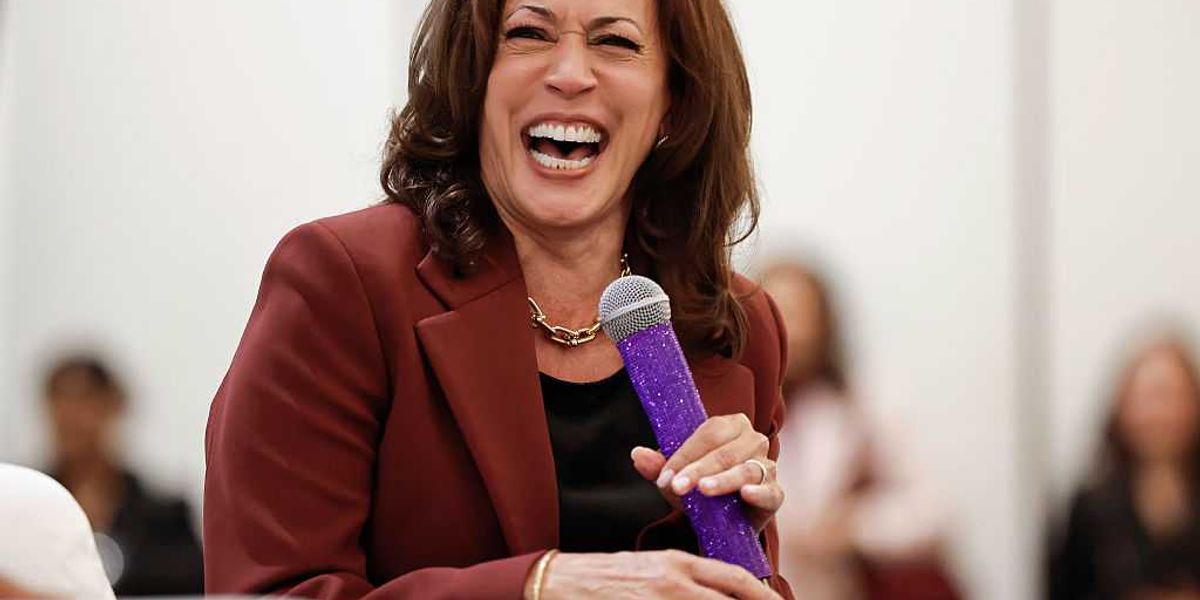
Kamala Harris is once again at the center of a loud fight over voter rolls, and this time the blowback is landing hard in blue states. The issue is not some abstract policy squabble, but the simple question of whether election systems are being kept clean, accurate, and limited to eligible voters. When that standard slips, trust slips with it, and voters notice fast.
In places like California and New Jersey, the pressure around registration lists has turned into a political headache. Supporters of stronger safeguards say the problem has been obvious for years, with bloated rolls, sloppy recordkeeping, and too much faith placed in systems that invite mistakes. The argument is straightforward: if states cannot even keep their lists current, why should anyone believe the rest of the process is airtight?
The debate has also pulled in federal agencies and broader election rules, with the Department of Justice and the Department of Homeland Security both part of the larger conversation. That matters because voter integrity is not just a local clerical issue anymore. It sits right at the crossroads of citizenship, identification, and whether election officials are doing enough to separate legal voters from everyone else.
For many Americans, this is where frustration turns into suspicion. People hear about voter ID, voter registration cleanup, and election law fights, then watch politicians act as if concerns about fraud are somehow offensive. But ordinary voters understand a basic truth: elections only work when the rules are clear and enforced without excuses.
That is why the SAVE Act keeps showing up in the conversation. The push behind it is rooted in the belief that states should be forced to do more to verify who is on the rolls and how those rolls are maintained. It is not a flashy idea, but it hits a nerve because it speaks to something bigger than one campaign or one election cycle.
Kamala Harris and her allies have often framed these concerns as overblown, but that approach is losing patience fast. When voters hear constant lectures about democracy while seeing state systems struggle with obvious flaws, the message rings hollow. People do not want speeches about confidence in elections, they want proof that the system can stand up to scrutiny.
South Korea came up in the broader debate as a reminder that other democracies often treat election administration with a far more disciplined mindset. The comparison is uncomfortable for the United States, where partisan spin too often buries common sense. If another country can take voter list accuracy seriously without acting dramatic about it, then American officials have no excuse for lowering the bar.
That pressure is especially intense in races where the margins are tight and the stakes are high. Figures like Mikie Sherrill and Tim Walz have been part of the wider political chatter around how Democrats are trying to manage the issue while still defending weak systems. The problem is that voters are no longer buying the old trick of dismissing every integrity concern as a conspiracy.
Election officials are now stuck in the middle, and their credibility is on the line. The public expects them to protect the rolls, demand real citizenship verification, and tighten registration standards before problems spread. If they keep dragging their feet, the suspicion will keep growing, and once that happens, every close result will be viewed through a darker lens.
What makes this fight so sharp is that it cuts across party lines in a way few Democrats want to admit. Even in blue states, voters want order, accuracy, and fairness, not bloated lists and defensive talking points. The real test is whether leaders will finally treat election integrity like a duty instead of a political inconvenience.
