
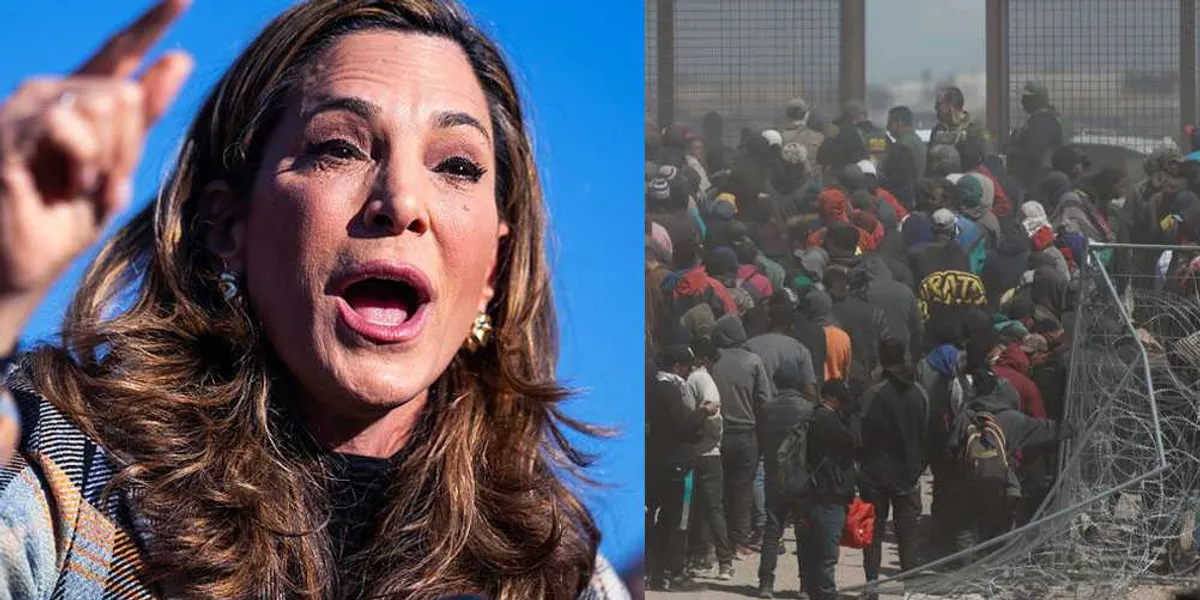
● Growing support is forming around Rep. Maria Elvira Salazar’s immigration push
● Several Republicans are willing to back the Dignity Act despite the controversy
● The plan centers on amnesty-style protections and the future of DACA
● Trump-era immigration politics still shape how the proposal is received
● The debate is exposing a split between hardline enforcement and compromise
Support is picking up for Rep. Maria Elvira Salazar’s immigration bill, and that alone is enough to stir up trouble in Republican circles. The proposal has become a flashpoint because it mixes legal status questions, border politics, and the always explosive fight over how to deal with people already living in the country illegally.
At the center of the fight is the Dignity Act, a measure that tries to carve out a path forward without pretending the issue is simple. For supporters, the appeal is obvious: it offers a framework that they say brings order to a broken system. For critics, it sounds far too much like amnesty dressed up in polished language.
The growing list of Republican names attached to the effort has made the bill impossible to ignore. That matters because immigration has long been one of the clearest fault lines inside the party, especially when voters expect toughness and lawmakers start talking about compromise.
Salazar has framed the issue around dignity, stability, and realism, which is exactly why the bill has found a foothold. The pitch is designed to sound practical, not sentimental, and that gives it a different tone from the usual Washington immigration talk. It is not a quiet proposal, and it was never likely to be one.
DACA remains one of the biggest pressure points in the whole debate. Any plan that touches on young immigrants brought to the U.S. as children immediately triggers old arguments about fairness, legality, and whether temporary protection has turned into a permanent political crutch.
That is where the Republican divide gets sharper. Some lawmakers see a need to address the reality on the ground and create rules that can actually survive politically, while others believe anything short of strict enforcement sends the wrong message. Both sides claim they are defending the country, just with very different ideas about what that means.
The Trump factor is also impossible to separate from the story. His immigration legacy still dominates Republican politics, and any bill involving legalization or protections for undocumented migrants has to be measured against that standard. In practice, that means every endorsement and every objection lands with extra force.
For backers of the bill, the argument is that the party cannot keep kicking the same issue down the road forever. They want a proposal that creates legal clarity, avoids constant re-litigation, and acknowledges that millions of people are already tangled up in the system. That message resonates with a slice of the party, even if it drives the base crazy.
Opponents are far less forgiving, and for them the word amnesty is doing all the heavy lifting. They see this not as problem-solving but as surrender, especially if any path forward appears to reward illegal entry after years of weak enforcement. That is the kind of argument that does not fade quickly, no matter how carefully a bill is packaged.
What makes the current moment especially volatile is that neither camp is just talking policy. This is about identity inside the GOP, about whether the party is going to stay locked into a hardline posture or risk opening the door to a broader coalition. Immigration has a habit of forcing those choices into the daylight.
The bill’s momentum suggests the discussion is not going away anytime soon, and that alone is enough to keep the pressure high. As more Republicans weigh whether to climb aboard or step back, the debate is likely to get louder, sharper, and a lot more personal. In Washington, that usually means the real fight is only getting started.
